Desi Return
Financial Transition
ConsultationTransition Packages
Our Services
Transition PackagesInner CircleFinancial Blueprint CourseAll Services
Free Tools and Guides
RNOR ToolFinancial Checklist15-Week SeriesAll Guides
Stories and Community
Returnee StoriesInner Circle
Plan Your Return
Blog / Real Stories / Comparison
Comparison

Netherlands vs India: Why Sidharth Said No to Bengaluru, Then Stayed Three Years

Avinash, article author
Avinash
Published 13 Nov 202611 min read35 min watchUpdated 13 Nov 2026
Our take

Sidharth built a life in the Netherlands and turned down a job in Bengaluru. A week in the city, a conversation with his wife and an expat contract later, he has spent three years there. He explains the work, the money and the question of home.

Compared on
  1. 01Why did he say no to India at first?
  2. 02From TU Delft to three Dutch employers
  3. 03The dinner conversation
  4. 04A coffee at Schiphol and a week in Bengaluru
  5. 05A Dutch passport, an OCI card and an expat contract
  6. 06The hard first year
  7. 07Why being near parents mattered
  8. 08How two years became three
  9. 09House, pension and tax across two countries
  10. 10Work, traffic and healthcare side by side
  11. 11Where is home?
  12. 12The short version
Free tool · no signup

Should I move back?

Eight questions on money, family, work, and timing - scored, with the gaps named.

Open the tool
Compared on
  1. 01Why did he say no to India at first?
  2. 02From TU Delft to three Dutch employers
  3. 03The dinner conversation
  4. 04A coffee at Schiphol and a week in Bengaluru
  5. 05A Dutch passport, an OCI card and an expat contract
  6. 06The hard first year
  7. 07Why being near parents mattered
  8. 08How two years became three
  9. 09House, pension and tax across two countries
  10. 10Work, traffic and healthcare side by side
  11. 11Where is home?
  12. 12The short version
Return Stories | Europe to India
Netherlands vs India: Why Sidharth Said No to Bengaluru, Then Stayed Three Years

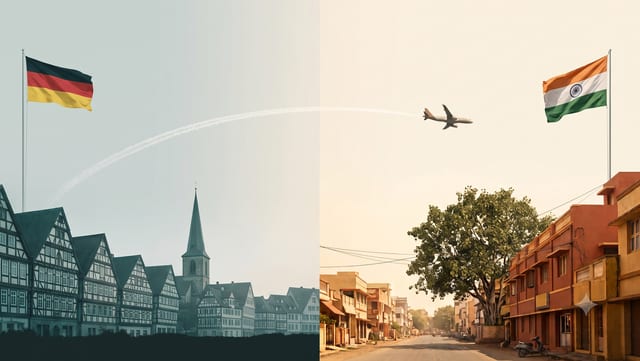
A stable career, a house and a close community in the Netherlands. Then a coffee at Schiphol, a week in Bengaluru and an expat contract that turned two years into three.

By AvinashNovember 13, 2026
  • Why he said no to India at first
  • From TU Delft to three Dutch employers
  • The dinner conversation
  • A coffee at Schiphol and a week in Bengaluru
  • A Dutch passport, an OCI card and an expat contract
  • The hard first year
  • Why being near parents mattered
  • How two years became three
  • House, pension and tax across two countries
  • Work, traffic and healthcare side by side
  • Where is home?
  • The short version

Why did he say no to India at first?

Sidharth had no reason to leave. He worked in the Netherlands for three companies, owned a house, belonged to a close community and had a job with a start time and an end time. Everything was predictable, and he describes that as a plus. Moving back to India was nowhere in his plans.

When his employer, SBM Offshore, offered him a role in Bengaluru, he declined. Two things changed that answer: a conversation with his wife about where they would grow old, and a week in the city. What began in September 2023 as a two-year expat assignment has now run past three years.

From TU Delft to three Dutch employers

After his undergraduate degree in Delhi, Sidharth considered an MBA or a job. He did find a job in Delhi. At the same time, his mother was posted to the Netherlands by the Government of India to promote the Incredible India campaign. On a Skype call she suggested a master's degree there. He applied to a couple of universities and joined TU Delft.

He liked the system, built a small community and looked for work in the Netherlands after the degree. Over the next years he worked at three companies and enjoyed the boundary between work and life. After the end of the working day, his time went to hobbies, and he saw work as the thing that paid his bills and funded a good life.

The dinner conversation

In his first six or seven years of work, his friends began to talk about returning. Most of them had married during that period, often to partners who had been lifted out of a life in India. After games, over a drink, the question came up: what next?

At a dinner at home, a close friend said he was thinking of moving to Canada. His wife used the moment to say something Sidharth had never examined: she could not imagine growing old in the Netherlands. He had never looked that far ahead. The sentence made him realise the Dutch chapter might have an end date.

His reasoning from there is simple. If one partner wants to go back, someone has to make a compromise. Around the same time, his employer opened a door.

Done with you

The whole move, one plan

Most people assemble a move from six providers who never speak to each other. This is one plan and one quote covering the parts that actually depend on each other, built for your family.

Question 1 of 3

No spam. Unsubscribe whenever you like.

A coffee at Schiphol and a week in Bengaluru

SBM Offshore runs a global competency centre in Bangalore. In 2022 a senior leader, his manager's manager, visited it and liked the technical skill and the way work was run. She wanted to set up a digital capability centre there. On her way home she had a few hours at Schiphol airport and messaged Sidharth to meet for a coffee.

She described him as a good mix: Indian roots and a working knowledge of the Western way of doing things, a bridge between the two. He asked for time to think and, a day or two later, declined. He liked his small team and his life in the Netherlands.

His wife pushed back. An opportunity had come to him, and she asked him to at least hear the offer. A few weeks later the same leader planned another trip to Bangalore and invited him along to look at another company office. He went for a week. He was introduced as part of her team doing a scan of what could be done. By the end of the trip, after meetings with vendors and local leaders, she introduced him as the new digital manager for India. Neither he nor his wife had been told.

That evening he asked where it had come from. She said she was convinced he should take the opportunity. He took it back to his wife. Because the opening arrived unprompted, he decided it was worth considering.

A Dutch passport, an OCI card and an expat contract

The leader had assumed he held an Indian passport and planned an India-only contract. When he told HR he holds a Dutch passport, the situation changed. For specific roles it creates, the company uses a long-term assignment. It carries extra benefits and a fixed duration, and his began at two years.

His setup had many layers: an OCI card, a Dutch passport, an expatriate contract and an entity in Switzerland. The company provided an adviser who took care of tax filing support, which he calls a major headache removed. If you hold a foreign passport and an OCI card, see our explainer on the difference between NRI, PIO and OCI before you sign anything.

He treated the move as a social experiment: finite, a time-limited trial of what India would offer. His wife had a job in the Netherlands and left it to come with him. She was happy to return in any form.

Free tool · no signupShould I move back?Eight questions on money, family, work, and timing - scored, with the gaps named.Open the tool

The hard first year

They moved to Bengaluru in September 2023. He calls the first stretch challenging in several ways. Colleagues in the Bangalore organisation had far more experience in the business than he did and tested his seniority. He felt imposter syndrome for the first months and asked himself why he had been chosen.

He also worked two shifts. First came his India working hours with the local team, and after that calls with European counterparts in the Netherlands and Monaco. For at least the first six to nine months he asked whether double shifts could last.

In December 2023, three months after he arrived, a reorganisation moved him into another department, and the leader who had brought him to India left the company. He had to find his place again. He says he did think about whether the choice was right and probably said so to his wife. Two things steadied him: his habit of going with the flow, and seeing how happy his wife was to be in India.

Why being near parents mattered

His wife cares about small experiences and about keeping her relationship with both sets of parents strong. Sidharth's sister lives in the Netherlands with two children. His wife's brother lives in the US with two children. Children tie people to a place. Sidharth and his wife have none, so they are more mobile, and they decided to be the ones near both sets of parents. As parents age, he says, they need their children more than the children need them.

In three years in India they have spent more time with their parents than before. When you live abroad, you see a rosy picture of their life and they see a rosy picture of yours. Being in India gives both sides a better sense of daily life. Bengaluru to Delhi is still about eight hours door to door, with two hours to the airport, a three-and-a-half-hour flight and two hours home. The shared time zone closes some of the gap. If you are weighing the same question, read bringing parents abroad or moving them home.

How two years became three

Around the 18-month mark, the company offered to extend the assignment by a year, and that took it to September 2026. After two years, the stay turned into the norm.

A friend of his describes life in the Netherlands as a straight line. In India, he says, you can have great days and bad days depending on traffic, weather and mood. The compensation is convenience, especially for people with a lot of privilege, which he says he and his wife have. In his words, it is like living in a golden cage: you make life convenient for yourself and find the right people around you.

A group of friends to play cricket with in Bangalore helped. He can play all year, against about four months in the Netherlands. No single milestone told them they had settled. They took it one day and one week at a time.

House, pension and tax across two countries

The couple bought a house in the Netherlands six years before this conversation and still own it. It is rented out, and the rental income is taxed in the Netherlands with an adviser there. His Dutch pension stays in the Netherlands and will be paid when he reaches pension age.

On Indian tax, he says that for his first couple of years on the assignment he was treated as not ordinarily resident, and that he is now treated as a resident because he passed a day-count threshold of about 720 days. He has also moved from the expat contract to an Indian payroll, so his salary is now taxed in India. Your own status depends on the days you spent in India in earlier years, so check it with the RNOR status tool and read how the 182-day rule and RNOR work before you pick a date.

If your finances span two countries, cross-border tax planning is worth doing before the move.

Work, traffic and healthcare side by side

AreaNetherlandsIndia (Bengaluru)
Work hoursFixed start and end timeNo hard stop; a break at 5 PM, then later calls
PredictabilityA straight line with few surprisesGreat days and bad days
MeetingsA 4 PM meeting starts at 4 PMPeople are often late and traffic is the reason
ConvenienceCalendars followed to the minuteAlmost anything gets done for a fee
Reaching a specialistGeneral practitioner first; a specialist can take weeks or monthsMany visitors come for dental and other checks
CricketAbout four months a yearAll year

Two items surprised him. Despite two years of Bangalore traffic, he still arrives when he says he will, and he sees others use traffic as an excuse to run late. In the Netherlands, calendars are followed to the minute. The other surprise was the convenience: he had heard about it, but living it is a different thing, and you do become dependent on those services.

On work-life balance, he says it matters that he has no children. With a child or a parent to look after, he would reconsider how much he works. For now he manages with a break around 5 PM, coffee with his wife and calls later in the evening, and he has made peace with the lack of a hard stop.

Healthcare was the hardest part for his wife. In the Dutch system the general practitioner is the first step, and in his experience you must describe your symptoms strongly to be taken seriously, because the system assumes people come from overly medicated countries. After a proper diagnosis, emergency care and specialists are good, though getting to a specialist can take weeks or months. India is where many visitors come for dental and other checks, because those can be costly or uncovered abroad. For returning families, our guide to health insurance cost for a returning NRI family covers what cover looks like in India.

Where is home?

The couple's answer is still open. In the last two years they have asked whether to have children, whether to sell the Dutch house, whether Bengaluru or another Indian city is home, and whether he is an employee who moves from assignment to assignment, perhaps to Brazil or Porto.

His answer so far: home is where he and his wife are together. He rules out any assignment that leaves him in one part of the world and her in another. For now, India feels good, convenient and nice, and he says they have met their parents far more in three years than in the years before.

If you are choosing a city, our comparison of Bengaluru, Hyderabad, Pune and Chennai for returning NRIs shows how they differ. A good test comes from Sidharth's story: a trial with a fixed end date lets you learn what India feels like before you decide, and keeping the Dutch house means the choice stays reversible.

If you want help scoping a move like this, see the cross-border transition packages, or start your own sequence with the Return to India planner.

The short version

  • Sidharth turned down a Bengaluru role at first. A week in the city and a talk with his wife changed his mind, and he moved in September 2023 on a two-year expat contract.
  • The first year was hard: a seniority challenge from experienced colleagues, imposter syndrome, double shifts across two time zones and a reorganisation that removed his sponsor.
  • His wife wanted to be near both sets of parents. They have no children, so they could move more easily than their siblings.
  • The two years became three. He now draws an Indian salary, rents out his Dutch house and keeps his Dutch pension.
  • The question of home is open. His answer so far: home is where he and his wife are together.

Planning a move back to India?

If you hold a foreign passport or an OCI card and your finances sit in two countries, our cross-border transition packages cover the planning side.

Personal experiences vary. Confirm tax, immigration and contract terms with qualified advisers and your employer.

Share this article
WhatsAppLinkedInXFacebookEmail

Done with you

The whole move, one plan

Tax, money, logistics and paperwork - quoted together for your family.

Question 1 of 3

No spam. Unsubscribe whenever you like.

FAQ

Questions people ask

Sidharth did. He holds a Dutch passport and an OCI card, and his employer moved him to Bengaluru on a long-term expatriate contract for two years, later extended by a year. His company handled the tax filing support through an adviser, because the mix of an OCI card, a foreign passport and an expatriate contract made the tax picture complex.
It is a company arrangement for roles it creates in another country, with benefits beyond a normal local contract and a fixed duration. Sidharth's began at two years. He describes it as far more generous than an India-only contract, which is why he treated it as a time-limited experiment.
In the Netherlands Sidharth had a fixed start and end time and used the rest of the day for hobbies. In Bengaluru there is no hard stop, and he spent his first year working his India hours and then calls with European colleagues. He now takes a break around 5 PM, has coffee with his wife and takes later calls in the evening.
Sidharth says the Dutch system starts with a general practitioner, and in his experience you need to describe symptoms strongly to be taken seriously. Once diagnosed, emergency care and specialist care are good, but reaching a specialist can take weeks or months. He notes that many visitors use India for dental and other checks that cost more or are uncovered abroad. This is one family's experience.
Sidharth kept the house he bought six years ago and rents it out, filing tax on the rental income in the Netherlands with an adviser there. His Dutch pension stays where it is and is paid when he reaches pension age. His salary is taxed in India now that he is on an Indian payroll.
He is still deciding. He and his wife are considering whether to have children, whether to sell the Dutch house, whether Bengaluru or another Indian city is home, and whether he takes another assignment elsewhere. His one fixed point is that he will not live apart from his wife on an assignment.
Keep reading

Related guidance

Moving Back to India from Germany - cornerstone guide
Guide · Relocation Planning

The Complete Guide to Moving Back to India From Germany

Neeraj comparing life in India and Germany after 20 years abroad, including family, career, children, health, and retirement
Comparison · Real Stories

India or Germany After 20 Years Abroad? Neeraj's NRI Dilemma

Hemanth discussing his return from the US to Bengaluru on Desi Return
Podcast · Real Stories

Why Hemanth Left Microsoft and H-1B Uncertainty for India

The whole move

Hand the move to one coordinated team

Tax, career, money, schools and shipping scoped against your dates, then quoted as one plan instead of five vendors.

See the transition packageOr try it yourself: Should I move back? →
Desi Return

We help NRIs and the Indian diaspora who are considering moving back or retiring in India make their transition smooth and successful with expert guidance, community support, and tailored resources.

Useful Links
AboutServicesContact UsFind Us Online
Explore
Resource HubToolsPlannerBlogPodcastFAQ
© 2026 Desi Return. All rights reserved.
Privacy PolicyTerms and Conditions
Partner services are fulfilled directly by the independent companies named above; Desi Return may earn a referral fee at no extra cost to you. Nothing on this page is tax, legal, or financial advice - always confirm specifics with the partner or your own advisor.
Your bag

Your bag is empty. Add a service to get started.