
Desi Return
ServicesToolsResource HubBlogAboutContact Us
Plan Your Return
Blog / Comparisons / Comparison
Comparison

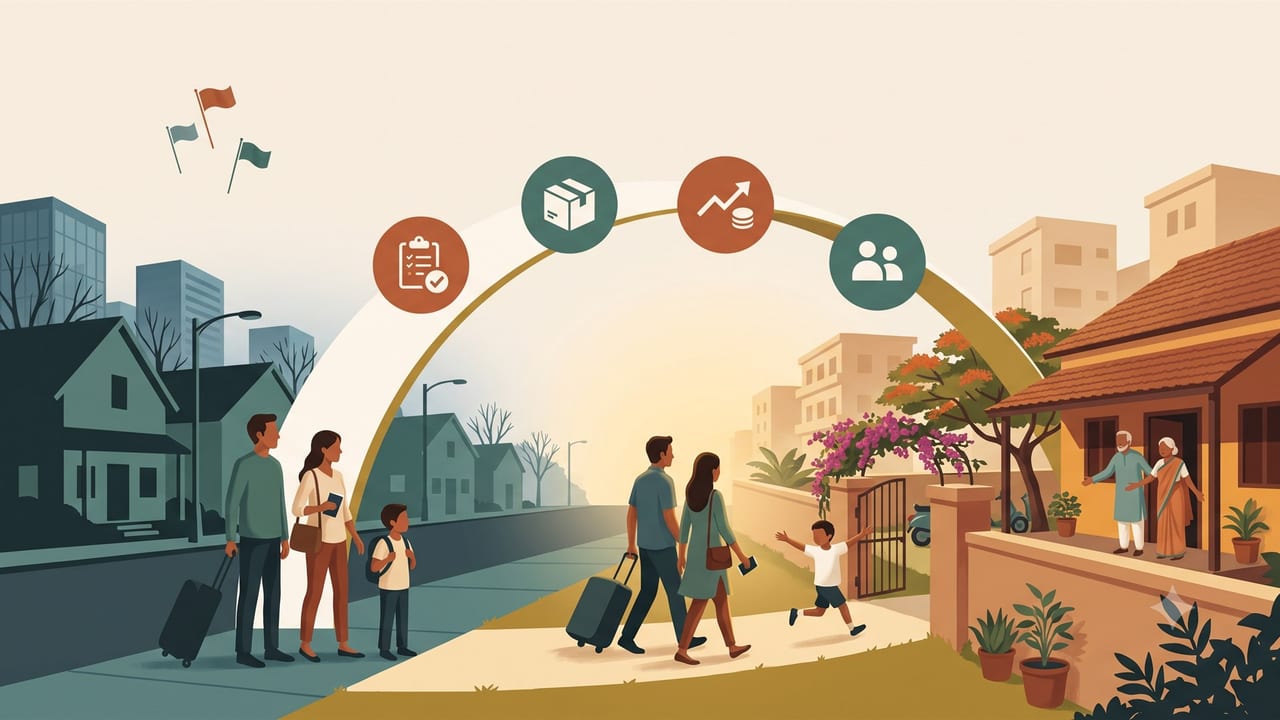
Bringing Parents Abroad vs Moving Them Home: Cost, Visa & Care Compared
Bringing Parents Abroad vs Moving Them Home: Cost, Visa & Care Compared
Avinash, article author
Avinash
24 Sept 20269 min read
Our take

Should you sponsor your aging parents for a US Green Card or bring them abroad on visitor visas, or is it fundamentally wiser to relocate the family back to India? We examine healthcare costs, climate isolation, and legal realities.

Compared on
  1. 01The defining family crossroads for overseas Indians
  2. 02Bringing parents abroad vs moving home comparison table
  3. 03The US medical insurance reality for elderly parents
  4. 04Sources
Free tool · no signup

Should I move back?

Compare the two options that actually matter — staying put and coming home — on your numbers.

Open the tool
Compared on
  1. 01The defining family crossroads for overseas Indians
  2. 02Bringing parents abroad vs moving home comparison table
  3. 03The US medical insurance reality for elderly parents
  4. 04Sources

The defining family crossroads for overseas Indians

For millions of first-generation immigrants in the US, UK, Canada, and Australia, the emotional weight of aging parents in India eventually forces a profound decision. As parents enter their late 70s and 80s, living alone in Indian metros becomes unsustainable.

Families confront two contrasting pathways: bringing parents abroad permanently (via family-sponsored immigrant visas or extended visitor visas) versus relocating the family back to India to be physically present. Understanding the medical, financial, and emotional realities of both choices prevents heartbreak.

Bringing parents abroad vs moving home comparison table

Comparison Parameter Bringing Parents Abroad (US / West) Relocating Family Back to India
Healthcare & Insurance Costs Extremely High; US visitor insurance is restrictive; ACA health plans for elderly new immigrants cost $1,200–$2,000/month with high deductibles Highly Affordable; premier multi-specialty hospital visits cost ₹1,000; private comprehensive insurance costs ₹40,000–₹80,000/year
Daily Social & Cultural Life High isolation; car dependency; language barriers; cold suburban winters; confined indoors Rich social fabric; familiar language; walking access to temples, neighbors, and extended family
Domestic Caregiving Support DIY or prohibitively expensive ($30–$45/hour for private caregivers) Affordable full-time domestic support (cook, maid, 24/7 bedside nurse for $400–$700/mo)
Immigration & Visa Friction Long processing times; US Green Card creates worldwide IRS tax reporting for parents on Indian assets Zero friction; parents retain full sovereign domestic citizenship rights
Career Impact on Children Children retain foreign corporate career momentum Children transition to Indian GCCs, startups, or remote global roles

Done with you

The whole move, one plan

Most people assemble a move from six providers who never speak to each other. This is one plan and one quote covering the parts that actually depend on each other, built for your family.

Question 1 of 3

No spam. Unsubscribe whenever you like.

The US medical insurance reality for elderly parents

The single greatest shock for NRIs who sponsor parents for a US Green Card is the cost and complexity of healthcare. New elderly immigrants are strictly ineligible for US Medicare for their first five continuous years of permanent residency. Enrolling a 74-year-old parent on private Affordable Care Act (ACA) marketplace plans routinely costs $1,200 to $2,200 per month in premiums, with individual deductibles of $6,000 to $9,000 before coverage kicks in.

A single major cardiac event or hip fracture can trigger tens of thousands of dollars in out-of-pocket costs, exhausting years of family savings. In India, the identical surgery performed by leading surgeons at Apollo, Fortis, or Max costs ₹3,50,000 to ₹7,00,000 ($4,000–$8,000) in total.


Sources

  • Centers for Medicare & Medicaid Services (CMS) — 5-Year Residency Rule for Immigrants
  • USCIS — Permanent Residence for Parents of US Citizens
Share this article
WhatsAppLinkedInXFacebookEmail

Done with you

The whole move, one plan

Tax, money, logistics and paperwork — quoted together for your family.

Question 1 of 3

No spam. Unsubscribe whenever you like.

FAQ

Questions people ask

For immediate relatives (parents of US citizens aged 21+), visa numbers are unlimited. Consular processing through the National Visa Center (NVC) and the US Embassy in India typically takes 12 to 18 months from I-130 filing.
No. Under US federal law, lawful permanent residents must reside continuously in the United States for a minimum of 5 years before becoming eligible to purchase Medicare Part A and Part B.
Yes. As lawful permanent residents, parents must report their worldwide income to the IRS, file annual Form 1040, and submit FBAR and Form 8938 declaring all Indian bank accounts and financial assets.
The primary drivers are acute social isolation, inability to drive in car-dependent suburbs, cold winter climates, lack of spontaneous peer interaction, and the cultural comfort of familiar food and languages in India.
Standard travel/visitor medical insurance policies cover only 'acute onset of pre-existing conditions' (sudden life-threatening emergencies). They strictly exclude ongoing routine maintenance of chronic diabetes, hypertension, or dialysis.
Keep reading

Related guidance

RNOR Status Tax Benefits: Eligibility, Duration, Foreign Income Rules guide image for Desi Return readers
Guide · Financial Planning

What Is RNOR Status in India? Benefits, Duration and Rules

Guide to NRE vs NRO accounts for returning NRIs, including account choice, redesignation timing, repatriation rules, and post-return deposit handling
Podcast · Financial Planning

What Happens to NRE & NRO Accounts When You Return to India?

What to Ship vs What to Buy in India: The 60-Item Decision List (2026)
Comparison · Comparisons

What to Ship vs What to Buy in India: The 60-Item Decision List (2026)

Care at home

Arrange care for your parents while you are abroad

Daily care, medical monitoring and updates, across 500+ pincodes, set up before you move yourself.

See elder care
Desi Return

We help NRIs and the Indian diaspora who are considering moving back or retiring in India make their transition smooth and successful with expert guidance, community support, and tailored resources.

Useful Links
AboutServicesContact UsFind Us Online
Explore
Resource HubToolsPlannerBlogPodcastFAQ
© 2026 Desi Return. All rights reserved.
Privacy PolicyTerms and Conditions
Partner services are fulfilled directly by the independent companies named above; Desi Return may earn a referral fee at no extra cost to you. Nothing on this page is tax, legal, or financial advice — always confirm specifics with the partner or your own advisor.
Your bag

Your bag is empty. Add a service to get started.