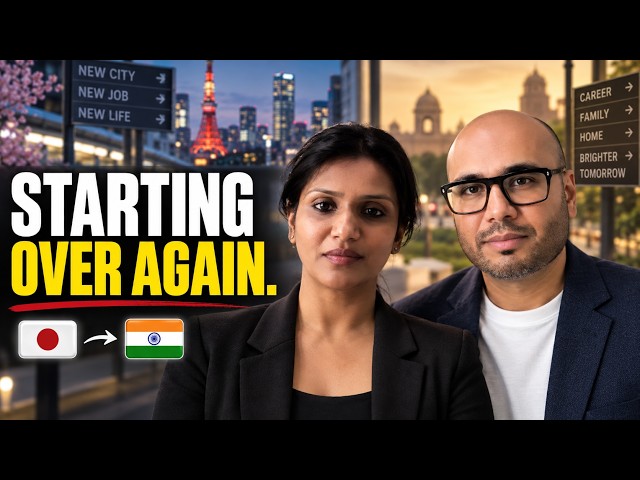
Watch: Why We Left India After 12 Years and Moved Back to the US
Shreya explains why her family moved from the US to India, built life and businesses in Kolkata, expanded to Europe, and then moved back to the US for education, business, and next-stage family planning.
The full write-up, with the numbers and the links.
Chapters
- 0:00 Intro
- 2:22 Background
- 3:26 Why move back to India?
- 6:30 Decision process
- 10:11 Planning the move
- 12:36 City to relocate
- 15:31 Life in India
- 20:30 Kids education
- 32:02 Why moving back to Netherlands/US
- 38:39 Logistics of moving two continents in 2 years
- 44:23 Overall reflection
- 46:42 Advice
Transcript
Auto-generated captions, lightly cleaned
0:00 Meet Shipra who went to US in 2005. And after [music] staying for 6 years, they returned to India. Stay abroad and stay in a country like US, >> [music] >> it's very predictable. You know what you're doing on Thanksgiving, doing the same thing on Christmas, doing similar things at home. So, they have very [music] similar patterns which kind of repeat itself. So, this one movie and this one person's advice, I think you know and four and half and you need to make a decision. >> So, we've made very unconventional decisions. You will see that in our story. She talks about their life in [music] India, kids schooling in ICSC, IGCSE, and home schooling. She also talks about how their careers have evolved.
0:46 Previously, when you were growing up here, you didn't even realize or notice these things. Yes. But once you go out and you've lived and then you come back, you kind of notice these things again. But things have changed. Yeah. We ended up doing two different countries in continents in 2 years. So, that was one of the main reasons, you know, not to do US. And and then we wanted to be a little bit closer because you know, we've been there in India 12 years. So, Europe was actually you know, closer to home. Yeah, so this time around it was different. We It was like a family decision. Yeah. And why we are moving Now, >> they're living in US and their elder son is in college. Lot of insights >> on kids education, entrepreneur journey, and how life evolves, and how to select a place at a given phase of life. So, tune in.
1:42 We also have a financial planning course, especially if you're moving back from US in terms of what to do with your stocks, 401k, house. Do you need to rent it out or sell it? Social Security. If this is something that's interesting to you, check out the link in the description below.
2:22 >> Thank you very much, Shipra, for joining us. So, let's start a bit about your background and what made you to move to US initially. Sure. So, in 2005, you know, October, me and my husband, we you know, we passed out of the school in Bombay and my husband got a job in Delhi. We were there for around a year after our marriage and he was working with a tech company, actually a BPO and he was setting up the BPO. So, that's how long ago this was. And so, Patni Computer Systems and that's the company that wanted to send him abroad kind of for the job. So, that's the reason we shifted from Delhi to Boston in 2005.
Read the full transcript (53 more sections)
3:09 And we were there for 6 years. So, we went there for work and we made you know, kind of moved apartments. both our sons were born there and then finally bought a home there also. So, that's the reason to go to US in the first place. Got it. And
3:27 When you're moving to US, do you have any like some time frame in mind like that you want to move back or why move back after 6 years? Yeah, so interestingly, yes. So, I mean, you know, we would always maintain that this is a temporary thing and we both like to go back to India. But I'd like to say one thing, this was something everybody would say. So, you know, whenever you met your Indian friends and you met them for tea, this was like, you know, the favorite chai and samosa topic that haha jayenge din wapas. You know, and we are going to like go back and we would talk about the politics there and you know, stuff like that and you feel that you're going to do something to you you know, for your country and you would go back. but it became more serious once our children were born because I still remember and that you know, sometimes one person's advice can play play such a big role in your life because this one person told us that if you're really serious about moving back,
4:27 You should do that before your child is 5 years old. Mhm. Because after that and this came from experience, we actually saw some of our friends who you know, waited till their children were probably they had started schooling in US. And so, the reason they gave us was after that the child has an opinion and they're going to compare the education here, I mean, the facilities, everything and they may not adjust and it actually happened to a friend of ours. They had to kind of move back. And then the family split because you know, just the mother moved back, the husband stayed, it was like chaotic. So, we kind of took that to heart and said, "Okay, fine." So, you know, our elder son was four and a half years old and our younger one was one and a half years old and we went back, you know, to India. So, we agreed with that. Our elder one had only started his kind of his pre-nursery in Boston Yeah. before we moved. And I think, yes, it it did make a big difference. So, the age of the child does matter. When you're moving back, especially when you're moving from you
5:28 Know, the shift to a easier kind of a more free kind of situation is easier. Yeah. But to to move back from US to India for a child, especially from the education point of view when you will compare the schooling here and how the teachers, it's much less stressful and demanding. So, it is an easier shift to you know, shift from India to US but not vice versa. So, I think it was great advice because my son didn't know any better. So, he kind of started his kindergarten there and then moved on to you know, primary and you know, secondary. That was good. Yeah. I can now understand that had he kind of gone after he's done primary here and then if he had moved back, it might have been a more difficult shift and he may not have adjusted. So, thankfully they moved at that age. They could pick up the languages. So, these are very important things which can make a difference. They were able to pick up because they went there at such a young age. They picked up the regional languages and they could just blend right in. Got it. And I know you kind of
6:31 Touched about I think the key reason is to upbring the kids or do while the kids are still young. What about other aspects because you are like in the career journey like you know, you are growing in your career like so, you can talk about that like work-life balance. Maybe it's not always rosy in India, right? So, how did you >> Yeah, yeah. decide you know, US versus India, why move in 6 years? Maybe you can talk through some of the thought process that went in behind it. Sure. So, again, that's a very interesting topic. So, my husband was doing that with very well in his job. I think he was getting those you know, typical the promotion sales job. He was doing well so, he got promoted and you know, and after some time it's kind of like you know, you're able to do it. You already know those clients. You know when you need to send which you know, email and you know, the it will close kind of thing. So, it's not really challenging.
7:22 And the second thing which happened is I think the movie 3 Idiots released and all you know, his batchmates, they actually called him up and said that you know, you were like Rancho where you used to be the one who used to say and you were always this guy who would do something different. You would start a startup or something like that. And what are you doing like you know, where are you? And that kind of I think sometimes you just you know, I just made him think that yeah, I had told myself that I'm going to come. I'm going to kind of like you know, save some money. I'm going to go back and I'm going to do you know, a startup or I'm not going to be the one who's always going to be working for someone else or for a boss. I'm going to be the own boss. But then you start working and you know, days turn into months and months turn into years and you forget that. And I think then a very just a change moment happened for him when he was signing a bond for something and it's very I mean, very common to forget the month.
8:19 But he forgot the year. Okay. >> And he realized that every year was the same. If he tried to think every Christmas, every that it was just kind of the same cycle and that does happen when you stay abroad and you stay in a country like US, it's very predictable. You know what you're doing on Thanksgiving, doing the same thing on Christmas, doing similar things at home. So, they have very similar patterns which kind of repeat itself. Yeah. And he realized he cannot remember the year and that's when and then the whole 3 Idiots thing, he kind of realized that yes, and if this is the time, then we need to go back and you know, I have to live up to the promise I kind of made to myself. And and then the age was right. The kids were under five. So, I think we just we just kind of made our move and you know, otherwise we kind of already had the ticked off the success parameters of you know, a beautiful home with a front yard and you know, backyard and you know, kind of cherry blossom tree, two cars and the typical stuff.
9:14 But we just kind of gave that all up and went back and he invested in a startup and no looking back. He's been his own boss since that day and not worked you know, for someone else. So, yes, So, that's fantastic to hear. Yeah, you know, following your dream and what you have you know, want to do and then just do it at the right age. So, just to confirm, you know, were you on H1B when you moved back to India or yeah? So, he was he came to US on L1. Yeah. So, I was on L2 and then I had an EAD. And both the children were US citizens. So, when they went back to India, at that time they had the PIO card. Yes, so that has been discontinued now and there is a card called OCI and so they both have the OCI. They have not given up their citizenship and India doesn't offer dual citizenship so they are American citizens with OCI card. Got it.
10:12 So let's talk through a little bit about the planning now that we understand the reasons. So this one movie and this one person's advice I think you know and four and half and you need to make a decision. So for how long have you planned and you know the planning in terms of the financial side or schools maybe you can just talk through some of the planning the duration and what went into it. So I would say I mean we made big moves like this which we will talk about it more later but I think that move was easier in terms of planning that way because the kids were very young. There was no I mean although my elder one had already started pre-nursery but there was not so much of you know you have to collect the kind of the transcripts and you know what will transfer, what credits will transfer.
10:57 All of this is you know very difficult if it's an older child. So and the younger one had not even started he was one and a half. So I think from that point of view from the children's point of view there was not much of planning. It was more for us. It was at least the decision was kind of one year before it actually happened and then the move we kind of and then we had a lady who was kind of there with us you know at home with the kids when we were doing the whole wrapping up three months across three months to kind of plan what we would take back with us and where would we stay when we go luckily we had my in-laws over there so we initially just moved in with them for a couple of months till we found a place. So it was not that difficult a decision that we have to be looking at rental properties sitting over here. So I think that part went easier. We kind of just had to figure out what we are going to take with us and which movers to use kind of thing because more so from that point of view yes we did which
11:59 Kindergarten my elder one would go to and we kind of at least six months in advance we made the application for that and it always helps if you have a family member who's staying in the city you plan to go back to because then they were able to at least get those things done. It is difficult to just kind of be writing emails from here so it helped that my father-in-law could procure the admission form and do some of the because he's a guardian he can do that. So that made it easier for us if suppose we are going back to say Bangalore where we don't have any family it might have been you know a little bit more difficult. Got it. And then also let's
12:37 Talk about the place where you want to move like the city. So how did you choose? I know you mentioned about the family. You also mentioned about I think your husband planning to do his own startup. I mean you know it it it kind of has to fit in a nice way. So maybe talk to the planning on how you chose the city. So again that's So we made very unconventional decisions you will see that in our story. So typically you know when people are thinking especially when you're going with the thought process of startup and we face that question a lot of times from our prospective investors that why aren't you based out of Bombay or Bangalore and at the most Delhi like why Calcutta? And the idea was A my husband is an only child and my in-laws were there and you know my parents are based out of Bombay but then my brother was there so it just kind of made sense and I think unconventional yes and also there is this thing that you know if everybody is
13:37 Kind of saying that it's difficult to do it out of Calcutta you know and then it's like okay then we just got to do it and show that we can do it out of Calcutta like why can't you? Because you know sometimes you realize that people have I think in today's time they're seeing it even more that there are cliches. People just kind of have this idea about the place that oh Calcutta means that it's only labor unions and you know nobody works and it's not like that. So it's it's it was kind of going back and for my husband it was going back after a long time because he had almost not been living in the city since after his you know class 12 because he went to engineering then for MBA and then you know Delhi and then abroad so we were like no let's go back and let's see for ourselves and not go by what other people are saying. So let us see and then if it doesn't work out of course we can shift to another city but we kind of wanted to give the hometown a fair chance and not go by what other people are saying. So I think that's what drove us and we definitely at least once
14:37 Wanted to go back. We had been living so far away from family. We and then the kids we did want them to have you know the grandparents and that support really helps. We kind of brought up those two babies and people who given birth in US will will know what I'm saying where you have no support and no help you know and then you have the situation where they can have their grandparents and you know you can have that situation. I think that becomes a very important factor. So we definitely wanted them to get that which they had been missing in the US. And it's definitely true I think you know once you have you know the young kids that's when you realize the support system quite a bit especially in the western world and that's the thought becomes much more serious in terms of you know returning to India and so on. So that's great. So you chose Calcutta because it's a you know hometown and makes sense so you wanted to establish. So let's talk about
15:32 The life in India. So you know you moved in 2011 how did it go maybe on the career side, kids adaptation, your social life. Yeah let's touch on those points. So I'll go with the easier one first which is the kids adapting. It was obviously a very very positive change for them because if you think from their point of view their father would be very busy you know he was in sales role over here so very busy there and then he would travel a lot so it's just me and them and there's not that much of during the weekdays there's not that much of social interaction. There's no neighbors coming down and there's nothing like that you know only on the weekends when you have your family group so I mean friends and family. So I think going from there to on a daily basis you know having so much attention and they being the center of that attention you know where there's so many relatives and there's grandparents so I think for the children it was a very positive change. It was a easy change because you know suddenly they were kind
16:32 Of getting a lot of you know attention and love and food and you know everything. They got an early exposure into the festivals so there were a lot of cultural inputs also which could go in the regional language which they could pick up because they went so early and also the schooling for my elder one he didn't get to compare too much because he had hardly gone for a couple of months. So for him that's what he understood you know so for him when he's comparing himself to the peers who were also in that pre-K and luckily that's the first kind of joining when other kids kids are entering also he didn't feel like this outsider. So although he came from abroad yes for a couple of months their accents they are also speaking English but their accent was different but I could see how quickly that changed because children adapt much faster than adults. Yes. You know we will be worried about them but they just they will they will copy their peers so his accent changed and because they want to fit in and they actually really you know took to the change
17:32 Very quickly. Yeah. Coming to a little bit of the tougher I would say change would be the career as you said. You know when you are working in US you know for a company you have the insurance taken care of you have you know your reimbursements and you know what are your rights and you know everything is taken care of. And then you kind of move back to India and then not only that you're actually you know going for a startup so the smallest of things suddenly are so different for you because you know whether it is your insurance medical whether it is the transport previously you knew that based on your designation you know you can go by business class and you're going to get this rental car kind of level and then you suddenly realize that you know you're kind of reversing you know this is my own money I'm just going to go for the cheapest thing you know so when starting off all over again so yes the other difference was the professionalism the what people said
18:35 Versus what they actually mean the getting used to again the Indian standard time so which is not how it was in the US so when somebody is giving you a meeting time of you know 10:30 it was perfectly normal in India for them to come at 11:00 and you know you've kind of forgotten that. So getting used to those kind of things people promising something but not being able to kind of you know deliver that so you kind of getting back used to this new normal I should say that took a little bit of a time and and some of the small irritations and more so for my husband that you know when you're driving so some things which are the same thing which has a different meaning in US versus India. So in India if I'm driving and then there's another car coming and they want to turn if they blink their lights it means that they want to go first but in US if they're blinking their lights they're asking you to go first.
19:33 So it's things like that you know so there there are these differences and that kind of gets at you that why why is everybody kind of why is somebody cutting in? Why is somebody honking at you? Again honking is something you don't hear when you're here. So things like that. Previously when you were growing up here you didn't even realize or notice these things but once you go out and you've lived and then you come back, you kind of notice these things again. Yeah. So it took some time to kind of just get adjusted to being back in that kind of a scenario and the work situation. people coming for interviews showing great enthusiasm, accepting the offer and then not turning up, you know, on the first day of job. So those things, yes.
20:19 Yes. >> It took us a little time, but then once we understood this is how it works, we kind of we also found our how to work with the people. So but there was an element. Okay, great. So let's I think focus a
20:32 Little bit about you know, kids education. I know I think you know, want to understand the curriculum they went through and maybe the schooling, right? I think you know, in our conversation earlier you mentioned about homeschooling especially during the COVID time. Let's I think talk through that journey of the kids education from when you went to India to till where they are right now in terms of yeah. So interesting I mean both of them they studied in ICSE curriculum in India and they were in Heritage School and which the reason we chose that was the it had a day boarding concept and so the idea was that instead of coming back from school and then again stepping out for tennis class and you know, swimming class and all of that it kind of had all the activities there. So what we felt is they just going to whatever they need to learn they're going to learn there and then come back home which means they were always the last children in the building coming back and so they
21:32 Couldn't join anything, you know, any classes available around us because they didn't have the time. Yeah. But unfortunately it didn't work out that way because I mean not all the activities were taught in the way we expected, not everything was covered but and also the curriculum itself and since I think my husband has done ICSE, I've done CBSE, we know that you know, it kind of relies a lot on the rote method of learning where there is only one right answer and you kind of have to just mug it up even if you don't know the logic and you know, history, civics and again one point of difference with the way you study in US, you don't get to choose the subjects of your choice. You kind of have to do all the subjects. Yeah. >> So all the children and they're all studying at the same level. That's the second difference. You a brighter child does not get to you know, skip a year and the child who's struggling still has to study at the same level and still has to get those grades. So this was the you know, kind of the way it was being done and
22:34 Some of them it was a little stressful for my children. Again, it's not for everyone and some children of course do very well in that kind of system and you know, being the topper and doing that. So my children would always have this question or they would they would want to know the reason why and you know, it was not enough for them that you know, if the teacher said because I said so. So they were I could I could sense that they were looking for a different way of being taught. So actually interestingly one year or a few in one six or seven months before COVID hit, I had started researching alternate methods of education. So you know, and and two years before that after actually pretty much after going through back to India, I had started something called as D Club which was you know, learning by doing.
23:24 So I was already doing because I was looking for something like that for my children and it didn't exist, I started it and there were around 10 12 children and there was like you know, whether it's about the five the six senses and everything was with experiments. So how do you learn by doing? So I was always into this experiential way of learning. So when I realized that you know, I don't want my son to you know, do his class 10 boards in this very stressful you know, ICSE format, I started researching alternate you know, kind of ways and there were very interesting formats in Bangalore and Pune which I was kind of looking at where they go by this experiential learning and not one right answer and these are and I had also looked at IGCSE and IB. So we had kind of decided and their school itself has also decided at that point that they would be launching it.
24:14 So we'd already decided that they're not going to do class 10 boards in ICSE because we did not believe in that form of education and then COVID hit and then the schools were just having to kind of overnight learn from scratch this online method. The teachers who had never done Zoom and you know, they suddenly had to learn and and there was a lot of I mean obviously they were not used to it and it was very stressful and apart from the stress of the children for the first time in their life seeing that the adults in their life who they're dependent on for being sure and having all the answers which is the doctors and so forth and the parents. Yeah. They suddenly saw all of these set of adults in their life helpless. They didn't have all the answers. They couldn't tell the children when what to do, right? When is it going to end? When everything's going to be okay? They were no answers. So this was a very stressful time for children and then on top of that they're having to learn Zoom and you know, study online and you know, attention span and that's when I found that okay, if you're anyways going to do online
25:14 Instead of you know, sticking with the school who's learning from scratch, why don't I find a school who has been doing the online format? And I had kind of already liked the IGCSE and that's when I found the school called Wolsey Hall Oxford based out of UK and then you know, we kind of shifted the kids to that. It was the best thing we could have done but again for my children, maybe not for everyone because to give just a small example like for something like English, I remember when we had that introductory kind of Skype call with the the tutor who they don't really teach but they will correct your assignments and she kind of gave that introduction that there is no right or wrong answer as such. For example, if you're going to be analyzing a poetry you know, by William Wordsworth and if you say that this is actually there was something sad about this and he's actually talking about something sad.
26:05 I am not the poet. So I don't get to tell you that no, that's wrong. This is actually a happy poem. As long as you give your reasoning behind it as to how did what did you read into those words and what did you analyze? If your reasoning is fine, I'm going to and this was this was completely you know, revolutionary for my children that the teacher I mean you know, can say that and they they like it was it was refreshing. They liked that whole stress being taken away and that you know, you were learning English like this or you have you can have your own analysis and somebody else can have a different analysis of the same poem. Yeah. And that's what I realized too maybe because I have you know, studied CBSE, I never questioned. Yeah. There was only one way of analyzing the poem which was there in our textbook and you couldn't think of it. So I think it it it opens up the mind and then you realize when you actually see it in action that a lot of our I mean you know, old ways of and luckily it's still changing in the Indian
27:06 Curriculum too but a lot of the old ways they kind of hammered down and they stop creativity in the children's minds and then when they go to do MBA they are told think out of the box. And the child is like sorry, you just kind of closed that for me that every time you just crossed it out if I gave an answer which was different. So you know, that that needed change and luckily that is changing and seeing that change, it wasn't there when we were studying but that was really needed because we were killing creativity, we were killing the ability to question and to have a different way of looking at something. Yeah. So that was our main reason and the homeschooling went beautifully for them. They because now they wanted to learn. They were looking for so the education had a positive kind of association in their and I felt they were truly learning. And then when they were vaccinated and didn't need to be online anymore, they continued in the IGCSE curriculum in the school close to us Vision International.
28:06 My son gave his 10 boards there and that went you know, very well and then we had to shift to Netherlands. So we kind of made that decision that again took some time. We were so we decided our business which we had grown for almost five years since till then, five to six years which was in India, we were now deciding to make it global and so we kind of had a lot of options on the table. We decided Netherlands and we were moving there. Again, the so the difference this time was that we had grown up children who were going to be in high school. So this time they were a part of the decision. So I would really make that very strong recommendation for anybody who has teenage children and if they are thinking of changing whether cities or countries, if they are a part of the decision, you get their buy-in and it really makes because it is a very big transition. It is a very big transition and this time it is a bigger transition for the
29:06 Teenagers than the adults. Yes. Because they are friends at this that very critical time in their lives that they are discovering themselves and you know, there is confusion, there's a lot of and this is the time where they have known people, they're leaving them behind and they're going into the unknown. So it's it's really scary for them. So if you have their buy-in, so we kind of when we used to go to YouTube, even the city we selected, you know, within Netherlands where we stayed and we kept seeing all the videos. They would sit right by me and they would be like okay, we like you know, Delft or we are liking this and so they were and then they are searching for houses and we looked at schools. They were you know, sitting right with us and so they were a part of that decision. Yeah. So that I think really helped the move because otherwise you are just kind of telling them. Yes. You know, that we are going, this is where we are going and pack your bags kind of thing and I think that can be tougher. So yeah, so this time around it was different. We it was like a family decision. Yeah. And why we are moving
30:09 And you know, why Netherlands again they had a play in that because we had the option of UK or Singapore or Dubai and we all kind of agreed to it. We wrote down our pros and cons and so it was a very very democratic kind of way of decision making. Me and my husband kind of already had made up our minds but I think it really made a difference that they were playing a role in the decision making. It made the move easier. Yeah. They went to an international school of course and because otherwise they would have to learn in the Dutch medium and we cannot do that at you know, grade eight and grade 11. Yeah. It's not possible to be done in Dutch so we had to choose international so IB and so that was you know, the decision we took. And but within a year we realized that for my elder one when we started looking at colleges and we went down for the college tours, he was liking the US because you know, the way of education he wanted liberal arts and we were
31:09 Anyways planning to grow the business here. We had thought we are going to do it after 4 years. When my elder one kind of finishes his undergrad then we realized. So then so we had to end up doing that was not planned but we ended up doing two different countries in continents in 2 years. Yeah. So but then I think again the children were a part of that decision. We flew down for a week. We made them in the school. Flew down for a week to US, picked the place to stay and decided on the house and then went back. So I think that helped. Yeah. So just to summarize or like you know, wrap up on that discussion. So the kids were able to adapt from you know, I C S E to I G C S E you know, at 10th grade which is a key you know, milestone and then to I B and so on. I think right now in college. So let's I
32:04 Think switch gears a little bit. I know you kind of gave a peek into moving back to Netherlands and then to US. So let's I think which year was that? Was it like after COVID in is it in 2022? Yeah, after COVID yeah. So we shifted to Netherlands in 2023 15 July. Yeah, 2023 July. 2023 July. So let's talk through that. I mean you know, when you moved to India I don't think you had plans to go abroad or anything. So maybe what changed you know, what evolved where you have to make the decision? You are right. I mean the fact the shift to India was at that point it was permanent for us. I mean we never really imagined and that's why I mean we had purchased an apartment and we were staying there and doing it up and like there was no question in our minds that we were going to shift anywhere. It didn't enter our heads also. I think it's just that I think post COVID there's this is huge I mean so we are in the refurbished electronics market so you know, business so I think
33:07 For us I mean it kind of just I remember that we had made like our projections you know, annual and all that just before COVID and it went way beyond that. Suddenly because everybody was working from home and studying from home suddenly the demand for laptops and phones in one household kind of tripled. And so I think it just so it it really I think it happened faster. Maybe it would have happened down the line but the and that's the reason we realized that this is not just domestic need. This is a global requirement. Yeah. So I think COVID kind of just opened up new avenues which we had not thought of before and and then we did know that you know, if you want to grow a global business you cannot be sitting out of India and say that you know, you are going to grow a global business. Yeah.
33:57 So that's the reason we had to choose between one of the places we were going to go and we did our research at that time and you know, which would be a good place and in terms of safety in terms of you know, that there is I mean our Indian community or that kind of a lot of criteria we had and from that point of view and then again US was an option obviously because we had been there before but we spoke to some of our friends here and my younger one would have been in middle school if we shifted and so we heard horror stories from them that if you are shifting especially from India you know, middle school is the one where you know, you see in all those English movies and they'll always talk about how they were bullied as kids and they'll have these horror stories and most of them happened in middle school. Mhm. So that's the time So we felt that it might just be a very very like you know, a very negative shift Yeah. and may not be the right thing to do.
34:53 So that was one of the main reasons you know, not to do US and and then we you know, we had been there in India 12 years so Europe was actually you know, closer to home and that is initially where we were starting off also. Yeah. So we wanted as co-founders and owners to be there. So actually that was also primarily the reason. So that is why Netherlands and otherwise yes, we actually did not have plans to move out and it was a difficult one because we had developed this whole friends and family and like you know, Holi, Diwali, Durga Puja and you know, all this happening and suddenly you know, we are out. So initially I remember the first Diwali or the first Durga Puja those are tough. Yeah. You know, when you move out from India the first festivals, the first of everything is tough. Yeah. You are used to your whole community and you know, all of that happening and suddenly it's quiet. The houses are not lit up and you know, things are not it's not holiday at
35:54 School. You need to go to school on Diwali and you know, kind of like that. So it it's a little it can be depressing. So again I would strongly recommend the first one of the first things we did we became involved with the with the Bengali community when we went to Netherlands and we both me and my husband participated in the in the in a play they were doing on one of those you know, days of Durga Puja so that we had a community and we still because we knew that it's going to hit us hard because you know, when you are in India you just it's like so colorful and so loud and everything you know, and then you miss that. So I think you need to do that. If you are going to shift out of India and you have little bit grown children, you definitely need to you know, get involved outside your work space even if not just for yourself but for your children. You do need to get involved in your community, make an effort and you know, go to those you may feel oh yeah, it's okay. I don't need it. It's going to hit you. On the day of
36:54 The festival it's going to hit you because you know, you you miss it. It's it's inside you. You don't realize it but when you are out of the country you realize that yes, that festival was important to me. Yes, that food which I ate on that day was important to me. Everything becomes nostalgia suddenly even the things maybe I think if you were in India you probably wouldn't eat but now everything is nostalgia. Yes. So yeah, so you need to make an effort to keep those traditions and rituals alive for your children. Yeah. Because I will I will say that again. It's very easy for them. You may think oh they have been brought up there. How will they just forget? They can forget. Yeah. If you don't speak your language at home they are just going to switch to English and stay with it. If you don't keep those rituals alive you know, whether it's your Diwali Puja or if anything it's going to take them 2 3 years and they are going to forget it.
37:48 Yeah. They will learn the new thing. So you so when you move abroad you need to make a conscious effort to keep those you know, those values and those roots alive in them at the same time of course you know, letting them adapt to the new world they are coming to and the last person is going to say that only stick to yours and don't blend. My children had you know, Dutch friends and then I you know, all they were in an IB school so and that's what should happen. The whole point is exposure. But you should try and you need to make an extra effort to keep your culture alive. Watching those regional movies with them, listening to those songs so that [clears throat] otherwise that language which they spoke for 12 years within 2 years it's going to disappear from their vocabulary.
38:34 Yeah. True. So that's that's what we did. Yeah, I think that makes sense. So let's
38:40 I think talk a little bit about you know, moving two continents right in 2 years. I know we understand talked about I think from a kids adjustment and you know, the reasons why you want to move. Maybe just from a logistics side like you know, financial like taxation, you know, physically moving. Anything that you wanted to share it's a big big changes. So yeah, I know what are the things that went into mind or any any input or anything that you would suggest because they are big moves especially when you have established yourself well in India and moving to different continents. Yeah, oh that's crazy. So that's the craziest one I think and we we spoke to a couple of accountants. I think after one country by the time you are moving to the next one they are like I I can't do this anymore because there are so because now you know, there is there is taxation you know, applicable for the previous year and then the financial year is now broken into one half being from this country and the one half so yes, it is confusing. I will recommend don't even try to do any of this by
39:42 Yourself. Luckily now, because there are many such families and and it has become a global work world today, there are professionals doing this. There are professionals who handle this for organizations. They also do it for, you know, for people. Just go to a professional who works with global clients. Yeah. Who are the reason why that's important, the tax rules are very, very different. What is, you know, what gets you a kind of a concession or what is It's very different from, you know, in India, in Netherlands, and the US. Yeah. And it is not our business to learn that from scratch. We will not be able to. And it is a much more costlier mistake to make than when you move to move abroad rather than if it was in India. I can only say that much on air. So, you know, but basically, yes, you need to work with a professional and they will do it. They know how to do it. They will And the other thing is once you move abroad, because of the whole how
40:42 When does that NRI status kick You need to keep track and especially say for a country like Netherlands, to keep your the PR or it's called something else there, I forget, the permit alive, the you need to keep track. So, if you move and you travel a lot for work, you need to get into the habit of tracking your dates in a in a physical diary or online, whatever works for you. Which dates you are in your country and which dates you traveled on. Mhm. Because that also can affect your kind of your tax applicability, your visa status. Many people don't realize this and they make a mistake. They actually need to keep a track because that total number of days if you don't you know, don't meet that, actually your your permit can kind of expire and you know, out of status. Got it. So, these are important things. So, people should be keeping a track of that. When did they move out of the country? Because that will determine their tax
41:43 Application. Especially that year which they move because they may be paying kind of in Both countries. Yes. Definitely with a professional would be my advice. And we need to do that. The bank accounts. So, yeah, these things are a little bit like we went and we opened a bank account, we had a locker, and we had, you know, we had all those things. so, yes, you know, you have to sell off your car if you bought a house. So, those things are difficult. Luckily, we just rented because we were only for a year. And we rented a car because getting a driving license or a car in Netherlands is a very difficult proposition. So, you know, so luckily for us, that to them that was easier. But if you had made a purchase, then again, that's a little bit of a longer planning period which you need because you don't want to sell off in a in a hurry. Unless it is, you know, you're going out of status and for some it's not in your hands and you need to move back. Because then you will have to sell distress sale and you know, all of that. So, when you own a property,
42:46 You do need to have a longer planning period so that you don't make a loss on it and you know, you're able to complete you're able to sign off and you know, whatever is needed you're able to complete documentation before you're moving to another country. So, a longer planning period if you own any kind of property and you know, something like that and you should finish off anything which you need to which you're needed physically for. So, even in the in the children's school, I made sure that I went down to the school and checked with them that when his say his report card would come in, would they allow somebody else and you know, a colleague to go and pick it up? And they made us sign because I asked that they made us sign an authorization letter because these rules are a little bit stronger abroad. Yes. because of privacy and because of in the child especially for the children, they will not just give it off to somebody else. Okay. So, you need to make sure that you given signed you know, authority letters and done those things if you need to shift say in the middle of an
43:47 Academic year, make sure you've spoken to someone in the school and you know, given whatever signed letters need to be given because otherwise that becomes very difficult to manage when you're already abroad. Got it. And then just to confirm like when you moved to US, what visa did you come in? Just if you're open to share, yeah. So, my husband came on the O-1 visa. O-1 a person of extraordinary ability and so under business, so that's the visa. So, I'm the dependent on that and my children were just on their MIT passport. Got it.
44:23 So, now looking back, I know like it's kind of a full circle to some extent. You know, you started in US 6 years and then in almost 12 years and then kind of back. How do you feel like when you reflect it back? Anything that you wanted to, you know, when you think through it like what what are your thoughts, yeah, on that? Yeah, I think coming back to US, I'm telling you within the first 2 months, I think maximum, maybe even earlier, all of us, and this was true for all four of us, we felt we were home. And we were analyzing I feel the language played a big role because, you know, we could just immediately blend in and you know, we didn't feel like an outsider or a foreigner. And although we came to a different city, Dallas is a different animal compared to Boston. Completely Boston is a student town and a very different vibe. But we found a lot of warmth. Again, I think we came in with certain cliches in our mind, oh, it's Texas, it's desert country, and it was a There's so much greenery and the people
45:24 Are so warm and friendly and welcoming. So, we had a very positive experience. And the children, as far as the schooling was concerned, compared to ICSC and then IGCSE and IB which are very, very rigorous courses, I think they just found it really easy to shift to those because the the demand on the children and more important, the freedom. So, the maximum freedom they have ever seen in an education system has been in the American curriculum. Where they have chosen which subject they want to study, you know, you don't want to do You're not interested in them, they don't have to do it. And the electives. Yeah. Because the theater for my elder one and the robotics for my younger one, that gave them the community which they needed, which helped them fit in because this was now other students of similar interest who were doing something. And the best part is they can be children of different levels studying together.
46:17 Yeah. So, grade nine and grade 12 were studying in the same class. That is also something which never happens in our education system. And that helps. That helps them kind of, you know, learn. Yeah. The ninth grader is learning from the 12th grader and you know, you're working together. You are able to you know, skip a year if you are able to get the required credits. You are able to apply for gifted talented. is
46:42 There any topic that we haven't covered or any advice that you wanted to give for, you know, people who are aspiring to move back to India from your experience? Yeah, people moving back to India with teenagers, I would say because I know that I'm seeing that happening. If you have really young kids like I did where they've not started schooling at all, just that's fine. That's not going to be from the children's point of view, that's not going to be tough because for as far as they know, they are just you know, that's where they're going to grow up. They're going to learn the language, the culture, the values for them. But if you have grown-up children like middle school and upwards, there is but obviously, you still have to go because there is no other option. You do need to go back. definitely again, a democratic way you need to kind of let them know that yes, this has to happen. But so, maybe not the choice in going back, but you know what, involve them in the apartment selection if you're going to be renting thing or kids, teenagers especially, middle
47:43 School onwards, they like to be treated like because they are thinking of themselves as that I'm I'm grown-up. So, they they like to be respected and you know, being treated like that and being part of the decision and what's going to affect their life in a big way. so, definitely, you know, if you can do that. But I would strongly recommend if you're planning to go back to India with teenage children, please only consider international curriculum. IGCSE or IB. You will find more IB options according to me than IGCSE. But if you plan to shift them to a I know some people and they were planning to, it will be a very difficult shift to shift them to Indian curriculum because it's very rigorous, a lot of, you know, stringent and when they will compare it to the freedom they had here and the way they are taught here, it's very different.
48:35 So, I would strongly I mean, not recommend you know, go against that, but if you if you're not in favor of international curriculum as a different setting, it's highly possible for some people who have been here and are going back, it's just possible if even if you're not coming back to say US, you might just say shift from Bangalore to Bombay. Yeah. So, the other advantage of international curriculum is not necessarily just for you need to move abroad, which was again something people thought when they were doing home schooling. It's also that it gives you the freedom to move wherever. Yeah. You are now mobile. You're not stuck to a city like SSC was a curriculum in Maharashtra only or you know, the West Bengal board. So, I think it it it really helps. You are not shifting curriculums. So, if you are going back with middle school or high school children, I would highly recommend IGCSE or IB. It will be tough in the beginning, but Yeah, completely agree. So, thanks a lot for your time and being with us and
49:37 Your journey especially on the kid side you know some of the you know on the financial aspect like you know in terms of the accounting the taxing and also the career like how things have changed and evolved and the democratic approach of involving the kids and making the decisions as they grow up. So really appreciate you taking the time and walking through you know your journey and the insights from your own experience. So really appreciate it. Thank you. Great.