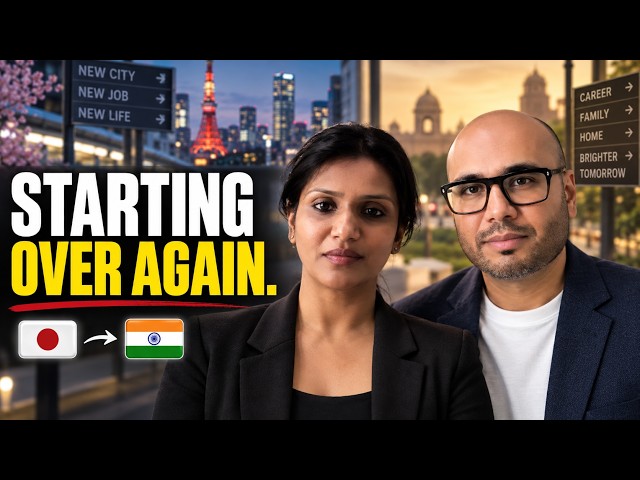
Watch: We Tested India Before Moving Back | 17 Years in US
Selva shares how his family planned and tested their move from the US to India with phased relocation, school timing, and contingency planning.
The full write-up, with the numbers and the links.
Chapters
- 0:00 Introduction
- 4:21 When the move to India triggered?
- 10:53 Decision making process
- 15:10 Pragmatic approach of returning
- 20:44 Kids initial adjustment challenges
- 24:21 Work culture and transition
- 26:16 Financial planning
- 28:05 Life in India
- 32:04 Anything you miss from the US?
- 35:10 Advice
Transcript
Auto-generated captions, lightly cleaned
0:00 Okay, we missed the boat or like at the time when our kids were of your kids' age, the opportunities in India were not a lot. We don't know what to do when we move back when we move back if at all we were to do it. And then some of them said like now it's too late. Now our kids are in later in the high school or in college. So maybe once they are on their own, me and my wife will move back. I have heard such stories. In case if something goes wrong, we still have time to go back, right? Because school starts there only in August and we can go back and continue. Having all these, I don't want to sugarcoat that it's all rosy here or it's all good. So sometimes the parental guilt that everything was going well there and I kind of bring them or uprooted them from there.
0:49 That is That is there on the on the corner of my mind. Then I decided okay, like I'm going to take it with me on the flight and go through the red channel. >> [music] >> So thanks a lot, Selva, for joining us today. And let's start a bit about your background and what made you to go to abroad. All right. Okay, hey Avinash. Good to see you again.
1:34 Hey, just a quick introduction, right? So my name is Selva Swaminathan. I'm originally from South Tamil Nadu. So I went to US in 2008 as a student. So it's been like close to 17 plus to 18 years, right? So between 17 and 18 years. So I went as a student right after my college here. So I went to Ohio to do my industrial engineering. and then, I kind of stayed there since then. [laughter] So, I mean, obviously we visited India in between for vacations and what not, but but basically lived in US since then until we moved last year, right. So, yeah, right. So, [clears throat] yeah, a quick background, right? Again, I'm like I'm So, after my masters in Ohio, that was a peak recession period if you remember, like 2008-9 time time frame.
2:26 So, I I secured a job in a California after that in 2010. I moved, to semiconductor industry. I was working there for about, 5 years. And then, during that 5-year period, I got married and I got two back-to-back kids. So, you know, like a Bay Area, how expensive it is with that entry-level job still on that and with the kids and I mean, like so, it was expensive and I I started looking out for a job and then I moved to Midwest. And we moved with the very young kids at that point in 2015 and stayed there several years and and then I made one more move within US, like 4 years ago to Austin, Texas. And me and my wife were talking, like, "Hey, we are not moving anymore within US. If at all we move, that would be India." And that came true, you know.
Read the full transcript (49 more sections)
3:19 So, we moved to India, last year. So, when I moved back to the same company, actually, like when I moved to Austin, I moved back to the same semi semi industry, the same company, but to their Austin location. And then, even now also I'm working with the same company and in a in a Bangalore office. So, basically, I took an internal transfer. So, so far I worked for only two companies. So, one in the Midwest and this one. So, Great. Yeah. That's a quick background, yeah. Thanks a lot, Selva, for the overview. So, just to confirm, were you in the hardware side, like I know you said industrial engineering as a background and then working in the semiconductor like maybe the professional non-IT. Is that right? So you just >> No, no, I'm a supply chain guy. Supply chain / IT. So it's a combination of both, but but primarily supply chain. Yeah, right. On the business side. Cool.
4:04 You know. I know you mentioned But I do Sorry about that. So I do work with IT teams on a daily basis all the time, but but mostly on the same business side. Business side. Yeah, understood. So I know you mentioned about you know, life in US for almost 17-18
4:21 Years. yeah, with young kids and all that stuff. Like when did this idea about moving to India occurred? you know, is this something that's always there in the back of the mind or is there something that triggered this thought? you know, you give us a little bit of background about that. Yeah, suddenly. So it the first one like you basically it is always on the back of the mind. Like I have watched so many videos from you, right? You interviewed so many people. So pretty much like most of them it it was always on the back of the mind, but more seriously we started considering was in 2024 summer. So 1 year before our move back. So we started thinking about it and then started to map out the timelines and all. So that is when we started and then we give ourselves enough time to think through and and talk to so many people like who have done it in the past and also who are in US like more like I have friends in all age groups with the different kids ages and also we
5:22 Talked to them and then nurtured the thought, you know, and then bring it to a good shape and then plan out like hey, how do we do this? So and also talking to the company. I was not ready to fire. So so I wanted to continue work in India also. So talking in the company. So all those things took time and then what do we do with our jobs? And my wife is a preschool teacher. So what do we do with that? And then, especially the kids, by this time, like when we were talking, they were like 11 and 9 at the time. So, now when we moved, they were 12 and 10. So, they were joining 7th grade and 5th grade in India. You got it. So, yeah, right. So, we took 1 year to do this. And then, like after a few months, okay, we decided, okay, we are moving next summer. Then, we planned planned our timelines and other other stuff. Got it.
6:14 So, I know it's always there in the back of the mind, but what changed in 2024 summer, right? I think why you started seriously considering talking to people and then make a, you know, informed decision whether to stay in abroad or in India. So, what is that like? Is there anything that triggered or, just wondering like what happened in 2024 summer? Right, great question. And so, especially the kids' ages, right? That's what That was the main driving factor to make that decision. It was more like, now or never type situation at that point, because, I told you that, we started talking to many of the trusted friends and family members. So, a lot of them said, like, "Hey, we missed the boat or, like, kids' age, the opportunities in India when we move back when we move back, if at all we were to do it." And then, some of them said, like, "Now it's too late.
7:10 Now, our kids are in later in the high school or in college. So, maybe once they are on their own, me and my wife will move back." I have heard such stories. And, some of them, telling along those lines. So, we we decided, like, probably then, is then we will also be in the same boat, like we may have to move only by ourselves, not the kids. So, if you want to take the kids now, I mean, we already feel like we were slightly late, but not too late. Before elementary age would be ideal. Would have been ideal, but Yeah. >> Yeah. At least at least it was not too bad for us. Though we do have challenges. We can talk more about that after we moved what what all the challenges we faced, but still that was the main point. In fact, like I was not fully ready to move. I initially thought like maybe I we will take one more year and then move back, but my wife was adamant in a good way. I know like hey every year we delay that would make much more harder on the kids. Especially my daughter, she was already already studied one year in the middle school
8:12 There. so last year would have been ideal, but it's okay, but at least now eighth grade would be too too late is what with I mean not I don't want to discourage people who are with the eighth grade or older kids, but comparatively it will be harder, right? Every year passes by. So that's why we decided okay, next year 2025 summer would be the time. Got it. That's the thing. Yeah. Yeah. I think it's a kid plays a big role. So I think let's I think understand I think you mentioned one year would have been better, right? From your perspective. Is it because of some financial number or is it because of like some career? Like what's going on in your mind? Where that timeline is coming from? And then the decision is based on because of the kids, right? Just wondering if you can share anything on that perspective on that point.
8:58 Yeah, mostly on the financials like I better be prepared financially to move back to India. And also more stabilized stabilization and also think through all those stuff. So one more year is what I thought. But but anyway, it worked out fine even though we moved 2025 itself. So that was the main plan. As far as the moving back like multiple reasons we were like one is like both of our parents are still active and the kids can spend time even though we don't live in the same city. They they live in our native town in Tamil Nadu. We live currently in Bangalore. Though like but still more face time comparatively, like, at least three, four times a year, either we go or they come, right? So, so, that that's one factor, and then, also, like, we grew up here, and I know, like, kids growing up here will go through different experience. They have seen, like, you know, I mean, the considerable amount of their childhood in US, so, maybe they can
9:59 Experience this as well, and, I thought, maybe with both the perspectives, they can become more versatile, and you know, like, they can they can develop different perspectives and, and value both sides, right? So, that was another another factor. And then, the one other factor is, like, we do have a small plantation in Tamil Nadu. So, maybe not not right now. I'm focusing on my job right now, but later, right now, my parents take care of it, and, I visit there once in a while. But, we wanted to build a lifestyle around that later, as well. So, that's another another pull, as well, you know. That's great to hear. I mean, it's very rare to hear like some people interested in this, you know, the farming side, and that's one of the motivation to, you know, move. But, it's a good to have that kind of The slow life, and yeah, you know.
10:48 It's a remote hilly village, and, yeah, that's that's So, while considering
10:53 About moving to India, I think, you know, the kids, I think, the factors that you, mentioned played the role. Was there anything that kind of, you know, put a pause in that decision? Like, you know, "Hey, not so sure about the career prospects, or maybe financial or the lifestyle." what are the, like, some of the, you know, challenges or things that you were thinking, when making the decision about moving to India or not? Like, about move. Yeah. Yeah. Financially, we knew that we have to compromise, right? because, I will become an Indian employee, and I'll be paid accordingly. but, the career-wise, we saw a opportunity here, compared to there, because more US is more saturated in our company also they were growing India and this side of the world with ecosystem more like we are trying to identify more suppliers in this region and so the prospect wise for me to develop myself here and as well as build a team things like that those were all
11:54 Like more more possible in this in this location compared to US. So career wise yes but financially obviously like but again with the PPP and like the expenses that we have here it will be still be decent so so that that's one point and the kid side like yeah we had a lot of confusion and also a lot of decisions to make in general like what syllabus to do and there are ton of schools here and what locality to choose from especially like I'm not familiar with the Bangalore call me crazy like I I made a bold move to move to a new city without knowing much right. So all those things and uncertainties were there but still we we try to manage and then talk to different people different schools and not many schools I would say but initially our plan was to move to Coimbatore and then me somehow manage my work travel because of the two reasons
12:54 Like one is it's a it's our home state and the other thing is that it was closer to my our farm as well like 4 hour drive and then kids will also I we liked the school very much and we even got an admission there but later my parents were insisting and others my friends are also saying like hey for you to travel on a weekly basis or even every other week that will be too much and missing family all the time it may not be worth it so try try move to Bangalore itself then we kind of decided and then started over on the school school identification process. And then we talked and and but one thing we were clear was on the syllabus. Like IGCSE, the Cambridge curriculum, is what we wanted to because we knew IB would be like not very mature in India. Only some schools have it and also it's a it's a very expensive as well. but at the same time CBSE or any other board would be too harsh on them. So we wanted to give them this transition period. if
13:54 They're interested to go on a STEM and all like maybe in down the road probably when they get into ninth grade or so we can change it to other boards. But for now we are sticking to IB. even then we can talk more about a little bit on the schools but even then with this we did have challenges. It's not all smooth but still those were all some of the factors that we considered. and also the timing the move another thing like we were going back and forth like how to plan this move because I was still on visa like even after so long I delayed partly on me. So I used up all my that CPT, OPT and all those things. By the time I got into my H-1 I had already kid you know. my wife came as a student dependent H-2 visa to US and then by the time I moved to H-1 and then I was also lethargic not keenly following up with my employers on green card application and all. So by the time it started it was late and I still had not gotten it when when we decided.
14:55 So it was not a easy going back if the move were to fail for any reason. So we wanted to plan accordingly and what I did was like a two-part move. So family moves once and then I moved. if you'd like we can talk more about
15:10 That as well. >> Yeah, let's talk about it. I think you know thanks for sharing that. So you were on H-1. I mean I think the green card it's little bit uncertain when you get but it's mainly the other factors and the kids timing so you made the decision. So, let's I think understand about how you mitigate that because there is no backup plan, right? I think, you know, once you make a decision. So, walk us through like how did you approach that like the family moved first and then you like how did you evaluate? What was the criteria you were thinking in your perspective that this is a this going to work out and then for you to move permanently like yeah, walk us through that. Yeah, right. So, when we were thinking about it like I mean not having a green card certainly has it like every time you have to find appointment when you visit India and they're getting stamped and all. So, that's a hassle for sure, but it was not a main reason for us to move like a we don't have a green card yet or a citizenship yet. So, should we move back to India? Well, because I had a stable job and only hassle is getting
16:11 H1B stamped every time, but that was not a deal breaker for us or a primary factor for us to move out of US. No one pushed us out. So, that was not not a driving factor as I mentioned, but when we planned so my employer was also supportive of this. My manager was also very supportive of this idea. So, we said like okay, we during May and then so that we align with India school starting days and all. But, I will still be an US employee and then I move 6 months later. So, that's how we planned it and so and then both sides there were flexibility like both in the US school side and also the Indian school side. They said yeah, you can leave if you would like 2 weeks early because there is no final exam concept at this age in the in the US side. So, they said like if you want to move you can move 2 weeks before. And in India also they said like if you want to join you can join 2 weeks later. But, it was our kids that they want to be here for last day of the school and sorry, they had to be there for the last day of
17:12 School and then they want to be here in the first day of school. So, that gave us only 1 week time. So, May 22nd or so it ended and then June 2nd it started and then one week in that in between we traveled. and then I also came with the family. so I worked from India office for close to 3 months and the settling down. So we were initially in a service apartment here and then we found a rental place very close to office because everyone advised here like if you don't have to really travel, better avoid it or commute. So we took a like a 1 km drive so it's like a 5-minutes drive from here. So don't have to deal with the traffic everyday. so we took a we found a good place. It's a Brigade apartment, one of the Brigade apartments. So it's a good quality and then we liked it here. Though it's expensive, but I still it worked out okay. But still that first initial couple of months were chaos and since in case if something goes wrong, we still have time to go back because
18:12 School starts there only in August and we can go back and continue as normal. So only thing is we would have wasted $20,000 or so, but at least we tried, right? You know, there is no regret at that point. But I knew like 90% of it it should be okay is what I I thought and it worked out. So what we did was like we vacated our house before we moved. That was very stressful times like during May like all the packing and moving and we moved all our stuff to storage and then we listed the house for rent and and we moved. We basically carried several suitcases and flew to India. And then we managed with the very basic stuff. Even the service apartment it was very different and the living here and then we moved to the place and then managed with the very basic stuff like and obviously we got some stuff from our hometown. Our parents and my wife's parents sent it and all. So and then way bought few things like a small TV and a sofa and
19:14 All. Basics we bought and managed to live here. And then I moved back wrapped things up there and then hired logistic and shipment company and then shipped our stuff from the storage. We couldn't bring everything so I I rented a 20 ft container and still we had more stuff which I managed to give away or sell and then >> [clears throat] >> and then I finally moved back in December. So, that 6 months period was our contingency and in case if something goes wrong I can continue to be a US employee and my kids can go back. I mean our house would have been on rent but at least we could have taken another rental place and then move in again when we get a chance, right? So, later. So, that was that was our backup plan to in case I had to go back. Thanks for sharing that.
20:05 Is there any specific milestones that you're looking at in those 3 to 6 months or is it just like more of the feel like how kids adjusted, how family adjusted? It's not like anything any specific criteria. Just curious if they if you had any feel and we periodically check in with them and also me and my my wife always talk, right? Hey, whether can we continue this or is it a good good idea that I mean that we worked out and all. So, and then the kids obviously had challenges but no red flags though. So, it is not that they absolutely we need to go back. No, not like that. Got it. I know you kind of mentioned
20:44 About some challenges with the kids with the schooling, right? Maybe yeah, let's talk about it. Like what was the initial hiccups and how that got sorted out and all that stuff, yeah. [clears throat] Yeah, some of them sound very silly but still for them it's a big deal, you know, like starting with like a first of like a uniforms that's new to them. So, wearing uniform to the school and then the way teachers talk here very commanding and and the way they expect them to respond right here like a yes or yes ma'am type responses always. So, in fact, even in the parent teachers meeting, they said like a "Oh, they are coping up well, but only thing I would improve is that like they need to tone down like when they're especially asking questions and all." So, there they are encouraged to like have a discussion or even I wouldn't say argument, but still debate, right? So, debate with the teachers and all, but here it's you have to be very humble, very respectful and that the tone you ask the questions and all has to be very polite. So, they said like they need to tone down and
21:44 Under a lot of restrictions like you cannot wear these like dangling earrings or even like a bracelet type like a my daughter wears these like headbands as a bracelets and all. Like so, all those things are controlled. Very small minor stuff, but those are all very different. And then, kids I think there are other kids from different countries. Not very many, few per class at least. So, that's not a huge difference for them. And then, some kids obviously like made fun of their slang or like they said like a even a comment like you don't belong here something like that. So, but but those things are getting better and by by this time they're almost completing 1 year. There is only 1 and 1/2 month more left in the academic year. So, by March end everything ends here, right? So, so and after they started in a school going in a school bus and all, they started some developing friendships and all. Those were all okay.
22:40 And then, marks and the grades wise, we don't compel them or push them to be always on top or something like that. First year, our intention is to survive. and then make this move successful, right? So, we encourage them to like do their own things and then, but the marks they gotten on after end of the first exams and all was low and then we gave them some tutor help tutoring help within the community within the apartment and math tutoring and all. So, now in the second exams they they are making progress and sure like by end of this year I think they will be okay. So, they are things are progressing in the right direction on that front but again some of the misses like my daughter used to go to Spanish class there but here French was only thing available. And they used to be part of violin group but here violin was not available. But we did got her a violin and she practices at her own on the side
23:41 But not on the school band or anything like that. So, those are all some of the compromises we had to do. Initial complaints but they get something else in lieu for that, right? So, got it. It's always the give and take, you know. Yeah. I know you mentioned I think yeah you have your house very close to the workplace. So, I'm assuming the school is also [clears throat] very nearby. Is that right? Yeah, it's about 4 km but it's not bad during the time like they go [clears throat] and they come back. Yeah, right. So, 7:20 7:25 is a bus and then they come back at like 3:05 3:05 3:10. So, traffic is mild during that time so it's not too bad. Got it. So, let's talk on the career transition side. I know now you are now
24:22 Part of the Indian entity like in terms of the work culture and especially for someone who never worked in India, right? I think pretty much you studied and then went to US and then pretty much all your professional life. So, what was your experience in terms of the work culture? I know it's the same entity but you know, how how has it been going for you? Yeah, that's a great question. So, yeah I felt it very differently here. So, yeah you said as you said like I never worked in India so that the transition period that was that was my first official I mean not official in fact like my first working day in India, but I once I moved like last month is when like my official first day here. But, it was very different in terms of like socialization. And then, to some extent, I think office politics also is a different level here.
25:12 So, those are all some of the differences that I that I observed. And even they make fun of me like I I just say good morning to everyone on the way and then come directly to my desk. But, people here stand there, talk to everyone for 5 minutes and then they come to the desk. And I [clears throat] take coffee and directly come to my desk and start working and drink. They say like, "You're like a robo." Like you But, there's people there they chit-chat in the break area with the tea or coffee for 15-20 minutes and then come back to work. So, those are all that I find it very differently. But, but I I had a same I mean, I have a same manager and same responsibilities with the same additional local responsibilities, but other than that, yeah, those are all some of the difference. But, I heard if I were to move back to Indian company or India-based companies and all, it is at a different level, I heard, but I don't see that very very big difference here other than this minor
26:13 Stuff, you know. Okay, cool. So, let's I think talk a little bit on the from a
26:17 Financial planning side, right? Anything that you can share like in terms of your assets. I know living in abroad for 17 years is a significant amount of time. You're more familiar with that process. You kind of touched about your house that you rented it out, you know, like anything that you can talk about from a financial planning side as a part of the transition. yeah, financial side, I mean, I don't want to make any big decisions because moving itself is a big decision. So, I wanted to differ it as much as we can. So, I didn't think about selling the house or so continue to be on the I mean to be on the run. So and also like I don't have this a 401k and other brokerage accounts and kids college and also everything we leave as it is. Only thing I did was basically consolidated everything into Fidelity. So I do have in a different places but brought everything into one one entity. So and also I do have heard through our groups right that basic return groups. Fidelity allows
27:17 International addresses. yeah and then my 401k was also in Fidelity so that made sense to bring everything into one. So and then I opened different accounts to segregate those funds and I kept everything and I transferred very minimally whatever we need here to to live during those transition months. I transferred and and we already had a bank account here more of like NRO NRE account so I moved my funds some of my funds what we needed here. Got it. But settling down here is it's a whole different thing. I mean we can >> [laughter] >> cover that later but that was like we had to go through a lot of learning curve. Being there and pretty much all through my adult life right so here like I had to start over basically like at this age you know. Yeah.
28:03 >> So that's yeah.
28:05 >> Yeah let's talk about how the transition worked for like you know overall right like settling like you know after the travel and trying to settle here in India. How did it go and what are some of the challenges? yeah right. So we only visited India during all these years right so but one good thing is I used to drive car before I leave India and two wheeler also so that thing never left I mean I still I still drive when we come to here I mean come to India during vacations and all I drive car even the stick shift is okay with me and two wheelers also the same. So that part is a less hassle so I can be on my own like we used my our parents' car during those transition months when I was here in Bangalore. So, I used to drive, but the traffic was at a different level and when to go there even on the weekend mornings, it still take like 20 km like 1 plus hour on a 1 and 1/2 hours or so. So, but that one is okay, but I didn't have
29:06 An India phone number. We managed with my parents' phone number when we are here for 20 days or so. But, got a India phone number and then no UPI. no, the just on a funny note. So, like when first initial 2 3 weeks, I was surviving on cash and there here especially in Bangalore, at least in small towns, they still use cash. But, in Bangalore and all, it's all pretty much cashless. So, if you take a Uber for let's say 70 rupees, like you have to give 100 rupees and walk away. They don't expect change from them back. So, those things are really different and to some extent it was very hard as well. But, I did have Aadhaar card and a PAN card. So, but those addresses are not updated, but still those things helped and then and then slowly I set up with the phone number and then UPI payment linked to my bank with the UPI and all. Then, I mean, it took us a while to settle down and my wife also the same and then we did again all those things for her.
30:08 And then once it is all set up, then it's it's easy. Like, you can pay any amount. Pay it 10 rupees or any amount through UPI and all. Those are all like nowadays convenient. And then also I got a two-wheeler. A car we plan to buy once I finally move back. But, the two-wheeler I got it and that is convenient to just quickly go nearby and all. Kids also started slowly enjoying these things street foods and all. So, so that was okay. But, initial first few weeks were harsh, I would say. Even the service apartment, it was booked through my company. It's It is supposed to be very good, but still, you know, like the access roads are bad or even the parking. Like they park one after the other and sometimes they knock on our door. I will like I come early in case and I park and then some some guys park in front of me. They wanted to take a car at like 11:30 in the night. Yeah, so they asked me knock on our door and asked me to or and then the one of those weekends the IPL
31:11 The RCB won, you know. I gave a party until like 1:30 like a loud So those are all like These are all harsh. Especially the first 10 days if it happens then that kind of impression on the kids and all it was not so great, but I mean because I'm sharing all these I don't want to sugarcoat that everything is all rosy here or it's all good, but you know, for a for a major portion we still think it's a we made a good decision, but still this kind of minor nuisances are there. Yeah, definitely. Yeah, I mean thanks a lot for [clears throat] sharing. These are some of the minor details and minor details that plays a a role, right? I think I think it's about distance. I think even the initial hiccups you still wanted to give you know, a try like you didn't aware of. I think the kids were able to adapt and families are doing good. Yeah, right. Along the same lines is there any time like that you felt like
32:05 You know, [clears throat] you missed US or you know, anything that you like made a wrong decision like in this last one year? not a wrong decision, but obviously many a times we miss US. In fact, after all like as you mentioned like I have pretty much all my adult life I lived there. So it shaped me as an adult. So I'm grateful for what US has offered to me and my family, right? So obviously we missed many times and especially like I run. So like there outdoor trails and parks, endless trails, right? So, I miss that. Here I run around my apartment community or on the treadmill on the gyms. Sometimes we go outside, but still it's not as great as those trails, you know, in US. So, those things we certainly miss.
32:55 And then some diversified food. Though here it's available, but still the taste original taste from there. Even as simple food as like a Chipotle, right? >> fan of Chipotle. So, those things we miss. And pizzas are tastes differently. Here they make localized, which is also great, but in a different way. So, kids misses those. And here obviously we go to this California burrito and all to to substitute that, but still. But again, Indian food and street foods are plenty here. So, those are all good. But still we miss US in that. And then I drive a pickup. I used to drive a pickup there. So, obviously like I miss that. And here I mean there are options, but still that kind of market is still very immature in India. If it were it is too bulky and not so great.
33:44 So, but still those are all some of the things I miss. And then then my wife especially. She used to be preschool teacher at the academy. So, she loves these four year olds. She have a lot of patience. She can deal with 20 of them at a time. So, so we knew that she won't work in the first year. We we planned it that way because I will be away for four or five months. So, she need to take care of the kids and all. So, the coming year we plan to look around for opportunities, but it cannot be far because of the driving. She don't drive yet here. But there she used to drive on her own. She leaves at My son also going to the same school. So, they both leave at like 6:45, 7:00 before 7:00 a.m. there. So, that that we miss.
34:30 I also feel sometimes the parental guilt that everything was going well there and I kind of corner of my mind, but hopefully it all it's all turns out to be for good." Yeah. I just want to be want to be very honest here because this is something parents needs to deal with as well. This kind of feeling. Yeah. >> Mhm. Especially when you see kids struggle sometimes, right? So, hey, if you had to be there this kind of things wouldn't happen, right? So, Yeah. that's the thing, yeah. Is there anything that we haven't
35:10 Covered that you want to bring up or any advice for future aspirants from your perspective? yeah, certain several things like one thing is like how to emotionally handle the move, right? So, especially with the kids like we broke the news to the kids like several months before. We gave them enough runway, but whenever we go to some events or some some places like they say like, "Oh, in a few months we will miss this and all." Like those are all some tough tough things to deal with. And then especially the days leading up to move especially like when you are like packing and the house is a mess and packers and movers come and take all those stuff and all. So, it it was very hard and last few days like our friends helped a lot and and even on our way to the airport, kids kind of broke down and it was like we did not even talk to each other for so long even after getting into the flight. So, those were all very tough and I didn't sold my car. Both of our cars were there still because I will be back anyway at that point. Yeah,
36:11 Right. Mhm. So, but kids for them it was more of a final move for the kids and my wife. So, it was very tough to handle. And even two months before when I I moved like I kind of secretly broke down during the flight like because I mean that's where I I felt was not ashamed of it but still that's respect and the love that I had for the country right you know. so so that was very tough to handle but once we moved back here I mean things are okay because we get busy with the day-to-day stuff here but still now and then as I mentioned before we miss US that will be there for there always I guess. So that's one thing I wanted >> thanks a lot for being very honest and you know sharing those thoughts so really appreciate it.
36:58 >> Yeah right. Yeah right. and then regarding the move like so as I mentioned we put our stuff on the storage so there were like not the one company I contracted out for the move and also we thought about like maybe selling everything and start fresh here but either way it's going to be a lot of work and pain. You have to make hundreds of decision even here what to buy where to buy things like that whether there also it's a lot of physical work and coordination work to get everything here. So we put them on storage we I hired a local movers they packed and they put everything on the storage smaller stuff we we also packed and then we stored them for several months and then I went back and then I went with the company called R7 Seas. So they did this move because everything is packed all they need to do is like a come and pick it up and put it on the ship. So since I am in Bangalore that was in Austin so nearest port was Houston so they sent a container from Houston and then I hired the same local
37:59 Loading crew to put everything onto the container and then it was and then they it was delayed by a month or so not too bad but that is something normal to expect. They initially quoted two and a half months but by the time we got it it was like close to four months. So and then it came to Mumbai port and from there it was railed to Bangalore there is a dry port they call it as ICD inland container depot and we were we went there and we cleared our shipment. Again, some surprises like they don't collect any Indian fees here on the through the air services. So, the shipping line sent about like 25,000 27,000 rupees of payment for to handle the container in Bombay in Mumbai. And then here obviously the custom fees and then again there is another some port charges and local handling is included. So, they don't drive the container on Indian roads. So, it has to be transported into the local lorries and then it was delivered to house. So, multiple handlings are there. So, it is
38:59 Possible but pretty much all of our stuff were good except some legs are broken on the table or small pieces or chips. So, but other than that everything was intact. So, I'm quite happy with that entire logistics deal. So, that was one thing. Like any reason to select them versus like maybe other companies if you want to [clears throat] share. Yeah, so if I had to go for a full service move selecting those companies made sense. But since we have done like packing and packing was a major work that was done by the local people. So, I thought like maybe I will go with some economical freight transporters. So, I did I mean obviously quoted with few people and also I talked to one of my relative who did the move and he also suggested this company. So, and they were quite responsive. They are based out of Bay Area I think. So, they were good and they had a local custom brokerage partners here. They were also following up with me on a daily basis here once
39:59 Our stuff reaches and all. So, overall decent experience. But yeah, that was okay. So, that's with the logistics. And one final point was regarding the customs like I brought it back some precious metals with me and I was to evaluate whether it's worth to take it back or maybe sell in US and buy back in India. But selling in US invite I think 28% tax regardless of whenever I bought. It was bought over the years, right? So, then I decided, "Okay, like I'm going to take it with me on the flight and go through the red channel." So, that's what I did and I went through the red channel after arriving in India and they treated me very well. The customs officers, they were treated me very respectfully and for honestly disclosing it and all.
40:48 And obviously they checked that they weighed, but they themselves don't know what's the percentage of duty to charge because I don't think people of this kind comes through normally. Probably maybe they may be bringing gold jewelries and all from Midwest and all, but this kind of raw metal. So, then they were going back and forth and it was like 1:00 a.m. in the airport. I was sitting on the sofa. And the time to time I go to their desk and check, "Hey, what's up?" They said like, "Sir, please have a seat, sir. We will get back to you." And then finally they decided and and I think looked up Google and some other sites and all. So, they decided on I think a 6% they charged 6% from the market I mean it's not a market, it's a government guideline rate. And they do have a SBI counter there and it was a very straightforward process. I paid the duty and then they let me out. And then casually I was asking like, "What if people try to sneak out and you catch them?" They said like, "No, we seize it seize the goods immediately and then they have to go through a long legal battle to claim it." So, it was not worth it but going through this red
41:50 Channel if in case someone is planning to do something similar, I would strongly suggest like selling in US and the bringing back I mean buying back may not be worth it. so, I think you can try this out. So, that may be useful to someone, you know. Yeah. Yeah, thanks a lot for sharing this, Selva. Yeah. Once again, thanks a lot. Thanks a lot for being very honest in sharing some of these minute details like how the family went through after the move and I know some of the pragmatic approach that you and the family has taken to test the waters. so really appreciate it you taking the time and sharing your story with us. I think this were a lot of valuable nuggets for people who are watching that they can take out of this.
42:37 Yeah, absolutely. Yeah, so and also like special thanks to you and that the whole Desi Return Group, right? So I have I am one of the early followers of the group and I know like I also contribute to the group to some extent. I'm not as active as many others but still and a lot of people reached out to me offline and they have talked to me on the phones. So I mean even after seeing this video if anyone would like to talk, you can pass on my contact information to them. So I'm happy to help and in general like is as good or as bad as it looks or it sounds, right? So same thing goes to the So like this move or entire transition also. So we don't try to search US in India or India in US. So if you had to do that then you find peace, right? So like everything or both of these countries are great in their own way. So you just have to embrace and and live with it, right? So Yes. So that's
43:38 The one final thought I wanted to leave. Great. Yeah. Thanks a lot Selva. I really appreciate it. Yeah. Yes. Yeah, thank you. Thank you so much for you and the whole group as well. You have been doing a great job. Yeah. Yeah, thanks.