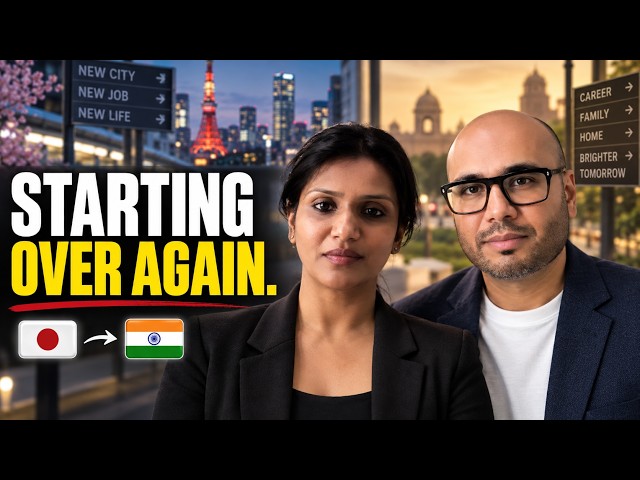
Watch: From UK MBA to Family Business in India: Aditya's Return Journey
Watch Aditya share his journey from London Business School MBA and venture capital career to leading his family's tea manufacturing business in Assam and Arunachal Pradesh. Learn about planning your return, modernizing family businesses, and opportunities in Northeast India.
The full write-up, with the numbers and the links.
Chapters
- 0:00 Introduction
- 0:58 Background
- 1:56 Work Culture
- 4:18 Moving back to India
- 7:42 Why Masters
- 8:26 Logistics
- 10:01 Business in India vs Corporate
- 12:49 Social Life in India
- 16:25 Advice for MBA aspirants
- 19:59 Globalisation
- 21:48 Growth in Northeast
- 23:53 UK as a destination
Transcript
Auto-generated captions, lightly cleaned
0:07 Welcome to Desi Return Diaries, Embracing Home Again, the podcast that shares personal journeys and expert insights on returning to India. I'm your host, Avinash Bhati, here to guide and inspire you on your Desi Return journey. Hello everyone. Welcome to another episode of Desi Return. Today I'm really excited to have Aditya on our show. Aditya went to UK for his masters after for his MBA and then completing the MBA he worked there for some time and then moved back to India and I'm really excited to look forward to this discussion. With that, welcome Aditya to the show.
0:54 Thank you. Thank you so much, Avinash. Glad to be a part of this. That's great. So Aditya, if you can
0:59 Share a bit of a background, that would be very helpful for the audience and then we can go from there. Yeah, sure Avinash, happy to. So I started off my career with engineering in India. I did computer science engineering at Delhi College of Engineering. Worked with Barclays for a while. I was working with Barclays as a quant engineer here. I decided I want to make a move so I went for the masters in management program at London Business School in the UK. So I was at London Business School for a year and then I worked at Fassnidge Capital. So Fassnidge Capital is an alternative credit hedge fund. I was working for their ventures strategy. So early stage equity investing and similar stuff. I was with Fassnidge Capital for a while and then I decided to make a move to India.
1:45 I'm currently working with my family business back in Assam and we manufacture tea across Assam and Arunachal Pradesh. So like that's a brief about my journey sorry, last few years. That's great.
Read the full transcript (34 more sections)
1:56 Yeah, thanks a lot, Avik. Yeah, so sounds like I think you worked in India for some time before going to masters and then, you know, work there. Is there anything that, you know, you can share your insights in terms of the work culture in India versus the work culture in UK? I know now you're in a family business, so that's why a little bit, so I'm just kind of focusing before you moved to there. Anything that you can share from that perspective? Yeah, of course, Avinash. Like my all my three experiences that I had working full-time, I think those have been very distinct. First was working with Barclays here in the Indian offices. Second was working at Fassnidge Capital in the UK, and third is working with a family business now. I think that the first two were much more within organized environments and I was supposed to do a certain set of tasks. I did those.
2:43 Family business, it was much more unorganized. I was supposed to take up tasks on my own and like it was more initiative-driven than workflow-driven. Within Barclays and Fassnidge as well, there was a distinction, Avinash, I'd say, like I think that the work culture in UK was very different than the work culture here in the way that I was more personally connected to my colleagues in India. I was not as connected to my colleagues in the UK at a personal level. Of course, there was a connection at a professional level. That was one of the things which I noticed very distinctly. Second was that work culture in the UK was relaxed. It was not as strict or as demanding as that in India. These were the two major differences I noticed, but I think that there would also be a difference because my work in India was mostly online because I started off when COVID hit.
3:39 And in the UK, I was actually working in the out of the office and everything. So, that was one thing. Also, I feel that my work at Fassnidge was very different than my work here. At Barclays, I was a small part of a very huge team working in one particular domain. The kind of difference in the companies that both these organizations are. Passionala is a very small, closely knit community, and we are often working on projects together. I was actually connected to the top management, and there was a link of direct communication and everything. So, I think that both of these organizations are so different that the work quality is bound to be different in both.
4:18 And it's interesting like you know, while working in India, while it's still COVID, you are able to make more personal connections with with the colleagues, which is definitely interesting than you know, like while working in UK, which is much more physically at the same place, or you know, and so on. Just felt a little bit you know, something different, so that's why I just wanted to highlight that. So, that's great. Did you always have this you know, plan to move back to India when you went for your masters, and is that part of your plan, you know, because you wanted to be part of your family business? So, as a part of it, you wanted to upscale or anything. So, anything that you can share your journey in terms of like why you went to UK, and then how did you even plan? Because if you have this in the back of the mind like while you're staying there in terms of your you know, materialistic things, right?
5:18 Like you know, logistics wise, you know, banks, you know, like living in a house, or you know, like like all these logistics. Anything that you can share, I think that would be helpful. Yes, sure, Avinash. So, like with me, the thing was that I already had this in the back of my mind that I am supposed to return back to India and work with my family business. That is what my family wanted me to do as well. but the thing is that it was never like a closed door for me. I always had the option that if I want to stay back, if I see something which is of as much value as something here, then I would have stayed. But, the thing is that after working for a while, after seeing lots of things, I could in some ways see what I actually want in life. and I could also like I worked in the venture capital industry and I I I was working in a market which was very tough for this industry in general. So, I could kind of see through the glamour on what works in the industry and how we often tend to ignore that traditional businesses are built up on something very strong and like very strong
6:19 Foundations in place and everything. So, that was one of the things which made it more clear that yes, this is where I want to come back. And this is why I want to come back to India and work on something which my family has already built over the decades in the past. So, that was one of the things, but I think that Avinash, going to the UK for my masters was was a very smart choice for me personally. And I think that the huge difference between masters in management in India and in UK is that India is much more job focused, but in UK it was much more broader in a sense finding a job was not the only thing I was doing in my one-year time. There were a lot of other things and in fact, job hunt was just a one-month process for me in the one-year time period. But, I had lots of friends who did their MBAs in India and and like at one of the top universities in India as well. But, their experience was revolving around the job hunt, finding an internship, finding I think it's called PPOPIU.
7:21 And then finding something else. So, that was more lined up towards job, but I think masters there was more about learning about industries and being open to exploring things in general. So, that was something that helped me upskill and that was something which gave me confidence that yes, this is something tangible that I've gained out of that masters.
7:42 Got it. So, sounds like I think when you decided to go for masters, it was not this intent to you know, be upskilling or preparing for the family business. You just wanted to venture or like you know, explore the other options. So, you have went with an open-minded, but there is always something in the back of the mind, but if you have other opportunities or options, you could have done a little bit differently also. Yes, definitely Avinash. In fact, my joining the venture capital industry was also one of the things because I was looking to explore lots of industries at once and wanted a higher view picture of how things work in the industry and everything. So, that is why I ended up joining the venture capital industry as well after my masters in London. Okay.
8:26 That's great. are there anything that you wanted to touch base on the logistics side? Like you know, once you decided, you know, when was the decision made and when you actually moved, you know, how long is the duration or maybe is it very quite simple, you know, just pack up your stuff and then move or or is there anything that you have to work with from a logistics perspective in your case? yes, Avinash. There were a few things that I wanted that which I had to work on the logistics side of things. I made the call perhaps in January February approximately and I made the actual move in August. So, 6 months down the line, there were a lot of things work wise. What I'll be doing here, figuring my work after coming back because once I'm working in a high pace environment, doing lots of things I can't just come back and sit idle.
9:14 That would That wouldn't be like very exciting for me work wise as well. So, I had things planned beforehand and these are the particular areas I look at and these are the things I'll try to grow within the business. So, that was on the work side of things. And on the logistics side of things as well, like not a lot, honestly. Just transferring over my contract of the house that I was which I had and everything Moving my stuff was much more difficult than I had actually imagined. So I ended up hiring an agency which helped me move like lots of stuff beforehand and then I actually came back slightly later. Apart from that, nothing much intensive logistically. Just just those things.
10:01 Got it. So sounds like I think there's a lot more preparation in terms of planning to have that high pace or you know from a work style you know before getting on this family like you know trying to set up to be more successful and that's what like a lot of planning went in. Is there anything that you can talk about like in terms of you know doing business in India versus a corporate world anything you did in the corporate side which you kind of touch a little bit but but it's a different journey right here as an entrepreneur as whether it's a traditional business or anything else. So anything that you can share from your perspective you know doing the entrepreneurship in And you have seen some of the other sides in UK while you were there.
10:47 Yeah I think that working in a traditional business and working at a corporate or even a startup these are very two different things. When you're working in a startup or a corporate you have someone above you guiding you directly throughout the process and those and you have certain things which you're bound to do which you're expected to do. If your like if your family business is not like a huge giant in the in the Indian space if if it's if it's still in the SME category then you have to be more initiative driven. You have to take initiative into where you want to grow it how you want to grow it. And you have to figure things out on the departments that you would be overseeing directly. Like I feel that until and unless you know that you can create value in certain aspects of the business you should go out and hustle and learn things in the industry.
11:36 Once you're sure that there are certain areas where you can bring value into the business, once you've discussed it with the senior management of the company, be it your family members or even external members who are there. Post that discussion and post a clear view of where you'll be working at, that is the point where I think a switch needs to be made and then a journey has to be done. I think that in in terms of difference in in the working culture and everything, of course it's much more unorganized if you're working at an SME in India which is your family business and everything, but it's your job to make it more organized, make things more work related. Because if you have worked in corporate for 3-4 years before, you have the experience on how things are and how things work.
12:22 Perhaps your parents might not have that because they are from a different generation where where even corporates was not that big of a thing in India. There were a handful of corporates operating in India, so that is where the generational change takes place and that is where you can take the setup to the next level. I'm I'm still very new, I'm still learning things out, but this is what I feel in the first few months of joining the business and having experience in corporate before. Okay, got it.
12:50 So, maybe switching it gears a little bit in terms of like you know, the social life or anything. Is there is there something that you miss from UK while staying in India right now? Yeah. Something I miss the most is the almond croissants in the UK. Yeah, but the thing is that I I have came back to India and I live I I make switches between Guwahati and Tinsukia which are tier two and tier three cities in India. If I were in New Delhi or if I were in Bangalore, things would have been more different. Again, the life there is also not very much similar to the life in London, but life in Tinsukia or Guwahati is much more different than the life in London. But the thing is that there are pros and cons both. The biggest pro is that I'm living with my family here.
13:38 There are a lot of comforts in life. I don't have to cook my own food. I don't have to wash the utensils myself. I have domestic help for that. So there are these kind of pros. Of course there are cons as well that I have not lived in my hometown for a long time. I was in New Delhi for 7 years. And then London for the next 2 years. So I don't have an existing social setup here personally. I have family connections. I have distant relatives and all that. But I don't have lots of friends whom I've been in touch with in the last few years. I have school friends who have been in touch with me for the for like when I was super young, but that is something which I'm still working on right now here. And that it it will take time of course. You can't just come overnight and expect to have lots of friends here and everything.
14:24 But that is something which I feel can be compromised on if if if your priorities are in that order of course. there there was a lot of independence living in London on lots of things. Coming back to a small city in India, it's not as independent. You know every almost everyone. Your family knows almost everyone. So it's not that open and everything. But yes, I think has its pros and cons both. living with your family is is a pro that which like very few cons can equate to. So Yeah, yeah, for sure. And as you said, I think you know, what is more important to you at this time of the life is you know, the important factor. And especially living in a tier two or a tier three, you know, city, there's a difference in terms of even some of the engagements that you can have, right?
15:18 The conversations that you're having with the people. as you said, it's the exposure experience of these people. And when you're having those kind of dialogues, you know, that that makes a difference. I mean, you know, having a physic like you know, those conversations and the discussions and so on. Yeah, those connections. Yes, definitely. And I feel that the that the judgment of talent or perhaps your expertise in your work life is very different if you're working in a corporate and if you're working in an SME. An SME like I see lots of people making huge sums of money with very less education or very less background in terms of but they are like I one might say that in terms of the money that make and in terms of the money in terms of the organization that they have created, they are like they have been pretty successful in life even without a certain level of education. There are other skills which comes into play when you come back to a tier two tier three city with and you meet across people who are working on their own stuff here.
16:18 So, that becomes one of the major things in the distinction between both the cities. Yeah, cool.
16:25 Is there anything you know, that you wanted to share with the people who are considering to move back to India, right? I mean, especially like you know, from your story, you were there you know, for certain specific plan, right? I mean, you know, do the masters, expose to different industries and then make a decision. So, somebody who might be in a similar boat, is there anything that you wanted to advise or tell them you know, from your perspective? Yeah, I I I feel that Avinash, the first and foremost thing which I want to like I want to say is that go and get some experience first. Like coming back without any experience and just the education side of things would not might not be of as much help. I see lots of peers around me who feel that it would have been better for them they would have gotten some industry experience. One or two years of the of experience in this phase of your life won't make much difference in the long term. Even if you get delayed by a couple of years now, it wouldn't make
17:25 Much difference, but like those connections, those interactions, and those experiences would still stay for a very long time. I think that would be one of the things. And then the second thing would be that you're not closing any doors by coming back. If you have a good educational background, if you have a good profile and everything, you can always go back to where you came from. It's not like you're closing those doors. It's just that you're making a call for this part of your life. I feel that like in this era, the the work place is so it's so agile that a person would have three to four careers in their lifetime in various industries, in various domains anyways. So, it's not like if you've worked in a traditional business for 5 years, you can't go back and work on something you want to in maybe in London or even wherever.
18:15 You want to even within corporate. They would be very open to accepting people who have worked in traditional businesses and everything. And the third thing, Avinash, I think that lots of things have changed after COVID. so, those changes have to be factored in. The first thing is that it has become so much more easier to work remotely. I can live in Tinsukia in Assam and I can still operate a business an e-commerce business in London if I want to. so, the ease of working remotely has changed a lot after COVID. The second thing is that which has changed is that people have become much more open to taking risks in their career, making switches within industry, making switches outside the industry, making switches into something of your own has become so much more common. So, you can always find like-minded people wherever you are in this world and also who share the same mindset with you, probably came from the same background as you.
19:12 And the third is that like people have become so much more open to traveling and things that it has become much more easier to go stay somewhere for 6 months, try something out there, come back later if you want to. Like after COVID if pre-COVID I took 5 10 flights a year, after COVID I'm taking 20 25 30 flights a year. It has become so much more easier to go and rent out an apartment, go and rent out a car, go and rent out most of the furniture, most of the devices which I use, get domestic help in a in an entirely new city where I have no one of my own. So, I think that these three things have have evolved the way we work or we would work in future after COVID. So, these things make this decision much more easier when you look at it from that perspective.
19:59 Yeah, for sure. I mean, I think the world is becoming more globalized. So, you know, you can do business in a different country while living in a some other remote place, right? I think with COVID, you know, that's a big experiment that has been done like you know, where things can be done remotely. as you said rightly, there are a lot of things that evolving so quickly and and it's just becoming the working style is also being very different. so, it's becoming much more a bigger global place. You know, people move around or go from one country to the other country and you know, depending on where they are. Yeah, definitely. And also like particularly for the Northeast India, Vinash, I think that so much of action has been happening in the last 3 years that things are transforming at a super rapid pace. Like it's probably faster than any other place in India at this point. There's a small town in Arunachal Pradesh called Namsai. It used to be like cut off from the entire world.
20:55 There used to be like a boat ride which had to take place before reaching that area and everything. Today, it is connected to Tinsukia and it's just a 2 and 1/2 hour drive from Tinsukia and Tinsukia is They are like one of the biggest cities of Assam. Namsai today has a four-star hotel that has opened there. There are lots of cafes cafes which have popped up selling all kind of European cuisines and everything. There are lots of bars and pubs popping up there. And Namsai is just one example. There are lots of other hubs being created in Northeast India. Of course, lots of activity happening in terms of government infrastructure projects as Road development has been rapid. So, like if someone who wishes to come back to the Northeast India, I think that this might be a good time to come back because there is so much of growth happening and tapping into that growth becomes a possible and viable opportunity for anyone belonging to this region.
21:47 Yeah, for sure. Is there any specific
21:50 Reason why there is a lot of development? I mean anything that you can share? I know for people who are not familiar I know and some people are you know not familiar with the Northeast or some other areas right because they are not grown up there and if they're consenting to move, anything that you can share for the audience? Yeah, definitely. Like I think that three major things that are driving growth in this region. First is government spending has increased a lot. New road projects, new projects of parks and cultural heritage projects. These sort of things are being passed at the state level at the central level on an everyday basis now. There are huge roads, dams being constructed. Arunachal Pradesh is getting five dams in the next five years and one of the dams is supposed to be the biggest dam in India at this point. So, the government spending has increased tremendously across all domains where the government can.
22:37 Second is that government has lots of special subsidy schemes for the Northeast specifically. If you're setting up a factory in the food processing sector, you can get up to 5 crore rupees of government subsidy which would come even before you start the project, which would come into your account and you can spend it accordingly. So, this spending has increased lots of growth and development within local industrialists in the region. People are looking to tap into new opportunities within the Northeast. And the third is that Northeast is a region which has not had lots of corporates in the past. in the last 3-4 years, lots of corporates have started eyeing into the Northeast region for growth. PepsiCo is setting up a huge plant. Patanjali has set up a huge plant already. Tata is actually in talks with the state government for a 40,000 crore semiconductor plant in the Northeast.
23:29 There are all major hotel chains coming into the Northeast, Taj, Hyatt, which have already come up. There are more coming again in the near future as well. So, these three things have have driven lots of growth in the Northeast region. So, I think that certain industry Northeast is bound to grow in the next 5-10 years for sure. Okay, that's cool.
23:54 Is there anything that you know, we haven't talked or touched base that you wanted to bring up you know, to the audience here? I would say that like one of the things that we probably haven't talked much about is that most of the people are confused between choosing US as a destination, UK as a destination. I also saw lots of videos which have been made about the US in particular, but not so much about the UK. I think that we can touch upon that a little bit if that's okay. Sure, definitely, yeah. I was in a similar situation when I was about to choose London Business School for my masters as well.
24:40 I had three major considerations which which I thought about at that point. The first was that the level of education or the quality of education which I would receive. that more than the region depends on the university or the school that you would choose as such. So, I had options in the US and the UK both. I I went for the Like, of course, there were a few options which I had, so I went for the better university at that point, and I did not look much at the regional aspect of things. The second was that the pay that you get after graduating from that university. US salaries are literally double of what the UK salaries are at this point. Like, even within the same industry, even within the same roles, or the same level of qualifications. So, that becomes one of the factors that you consider before taking that call. And the third, I believe, is the quality of life, or the the level of society that you want to live in and everything. I think that the UK, society is is slightly more
25:41 Safer than the US because there are lots of things happening in the US, which might not like the gun laws are slightly concerning for lots of people and everything. the quality of life, I would say I personally felt was slightly better in the UK because I've had some experiences in the US as well. so, these were the three things which I had in mind before taking the call between US and UK. But, of course, this becomes a major thing for people who are planning to move make a switch from India and studying abroad and perhaps working abroad for a few years as well. So, I thought might be worth discussing about that. Oh, yeah. Thanks for sharing that. I think it's a an important, you know, decision, right? Even like somebody moving from India to other countries for education, for job, or whatever. And then also like even from one country to other country. Somebody, you know, people just as we talked about like, you know, it's very globalized.
26:34 They are having opportunities to work in UK or Europe or Asia. it might not be India. They can just make the decisions also like accordingly like in terms of looking at these factors like how you kind of described. Yeah, definitely, definitely. Cool. So, thanks a lot, Aditya, for sharing your you know journey and and your thought process on how you decided to go to UK as well as like you know how you approach you know coming back in the plans that you have done and comparing you know traditional businesses versus you know some of the corporate you know job profile. So thanks again for sharing your journey with us. Thank you. Thank you so much Avinash. It was a pleasure being on this. Yeah, thanks.
27:24 Thank you all for joining us on this insightful journey of Desi Return. If you enjoyed this episode and want to explore more stories and expert advice, make sure to subscribe and hit the notification bell. Don't forget to leave a comment below with your thoughts and experiences. By the way, check out the links in the description below for our Facebook group and social media for updates and engaging discussions as well as connecting with fellow Desi Returners. Thank you once again and until next time, may your Desi Return journey be filled with joy, growth and endless possibilities.