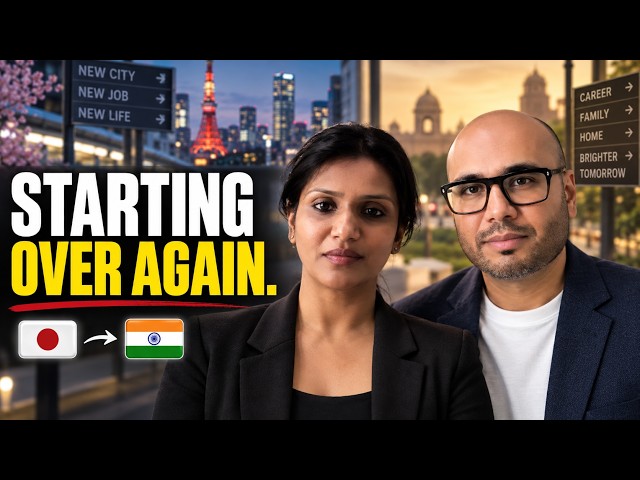
Watch: A Global Citizen Returns Home — Raising Children & Building a Life in India After Years Abroad
How Nishka raised her family in India after 15+ years abroad: education choices, career reinvention, and building a life back home.
The full write-up, with the numbers and the links.
Chapters
- 0:00 Intro
- 1:40 Background
- 5:44 Adapting different cultures as a kid
- 12:23 Why move to US and then to Europ
- 15:41 Why move to India?
- 20:46 Life in India
- 23:37 Kids adjustments & curriculum
- 27:26 Career Planning
- 33:25 Entrepreneur Journey
- 36:45 Advice
Transcript
Auto-generated captions, lightly cleaned
0:01 I had a conversation with Miss Nishka who spent majority of her life abroad. >> Technically left India I think at the age of 2 and a half done schooling in five different systems. >> She returned to India [music] like two phases of her life and has been living in India since 2009. >> Wanted to have children [music] close to home. close to I would say home meaning where my parents and where his parents are. It was harder for him to get used to and I would say even till date there are things that he finds challenging about living day-to-day things that he finds challenging. I think it becomes one of the hardest decisions to take cuz it's a very emotional one. You you are taking a decision for somebody else and it can impact their life positively or negatively and you don't know which way it's going to go. So as a mother yes as much as I've now spent maybe majority of my life in India now I still remain a very much a global citizen and >> she shares her journey and [music] insights about its upbringing life in
1:03 India career and so on we have a very active WhatsApp group where there's [music] lot of discussion happening on financial planning logistics kids education and much [music] more if you're interested to be part of this conversation and and mingle with like-minded people. Please check [music] out the link in the description below.
1:41 So let's start a bit about your background and what made you to go abroad. Okay. So I actually left India technically left India I think at the age of two and a half. my father was a government servant and worked with the Indian foreign service. So the way that his job was it required him to sort of be posted outside and represent India in in its sort of diplomacy abroad. so we lived in different countries. every 3 years we would move and that's what my childhood was about all the way to high school. So we my sister and I would travel with our parents and every 3 years we sort of moved to a new country new school, new friends, new cultures. So very much became what you know I like to term as global citizens. Both both Kanika my younger sister and I are very much remain even today global citizens. but I think one of the things that changed for me
2:41 While especially while I was in high school we I I did my last four years of schooling in in South Africa. >> Okay. >> and u of course a very large Indian diaspora and that was true of most of the countries we lived in. We got to interact with a lot of the Indians who some of them had migrated you know in South Africa there were Indians that had migrated almost 150 200 years ago and then they had become you know culturally very different from you know the Indians back home that we would interact with it when we went back on holiday and I think when you're in your teens especially you know high school years you wanted to sort of find your identity and try to understand who you are and I think I went through that phase in a very sort of sort of strong manner it kind of hit me in grade nine or 10 when or even a little earlier I would say in in grade seven I was in a French school at that time and there were I was a little bit of a sort of unique case because I was the only Indian in that school for that year I didn't speak any French and I was going into this French school in a
Read the full transcript (42 more sections)
3:43 Country called Angola in southern part of Africa coastal Africa >> and there is where it kind of I sort of started yearning to have an identity and that identity I got really from at that time there was you know the the UN had representation there from different parts of the world and the Indian army also had its forces based there and a lot of the army officers we would interact with they were as my parents' social circle. So sort of my Indianness came out of identifying with these people and I wanted to then sort of I started yearning to go back home and so after high school is when I chose to come back to India for university. So while my parents wanted me to go study in the US, I was in an American school the natural track was to you know take my SATs and go and do my undergrad in the US. but I sort of reversed that track and I came back to study in India and came back to Delhi which is where my my family was mostly based. and yeah so that was my first one phase of my life where journey started or you know
4:44 Returned to India to just find my and I think I got very rooted as an Indian because you know when you do college in India then that kind of teaches you all life's lessons and the reality of what it really means to live live in India. So I I I've done that and then I got the opportunity to live abroad again for over almost 10 years once I got married to my husband. So the two of Sadhhat my husband u had already lived in in the US for 10 years before we got married. >> Yeah. >> And then once we got married we took a conscious decision to move out of the US but we lived in Europe and the UK >> and so we were there for about u seven eight years and then came back to India again to raise a family. So the journey sort of been in in spurts childhood and now a large part of my adulthood last 16 years 17 years have been in India.
5:32 Great. No truly global citizen like I think you know in the several >> remain yes as much as I've now spent
5:44 >> so let's I think dive a little bit into the childhood I think u you mentioned especially as a kid going to different countries different culture every 3 years how was it for you like as a kid you know with the culture change with the languages the reason I'm might be specifically asking that is you know on a flip side when people move from abroad to India I know it's a culture change it's like just trying to understand as a kid like what was going in your mind or how you adapted so anything that you can share and then we can touch about the university especially this is also like some questions for people who who were born abroad and who are non- US citizens and you know kind of getting into colleges in India how the admission process works so if you can expand on those two points I think that would be very helpful for a lot of these families who are considering to move to India because that's another thing that they have in the back of the mind is kids adjustment, kids college and so on.
6:39 >> Absolutely. So I would say this that I had parents who were very adventurous. I don't know if I as a parent am as adventurous. I think my generation of parents we like to remain a little bit more in control. My parents you know went with the flow of of life and how how how things treated them. and they were none the worst for it. At that phase, if I recall, as a child, I used to find it very challenging. I was a very introverted child, very very shy. very hard for me to make friends, very hard for me to kind of settle into a new environment. So I know that when we moved it used to be the the f the first few months of moving to a new country were really difficult and I made life miserable not just for myself but also for my mother. I mean she will go to all lengths to remind me of of my childhood and of how she's I've made it so difficult for her. so I know that it was never easy but once I fit into the into that environment you know I've done schooling in five different systems. I've done you know the French system I've done the the
7:42 British system I've done the American I've done the international balorate and I've done the Indian system CBSC. So I really you know I've kind of done all of those as a student and while going through it transitioning from one to the other every time when I look back I used I you know I I at that time I used to really feel bad for myself because you know I would be leaving schools leaving teachers leaving friends and being a shy child it was never easy to make the transition. in hindsight when I look back I I really actually when I started raising my children I yearned for that for them to have that experience because I as an adult really started valuing the experiences that I had had as a child. You know we from such a young age we were exposed to so many different languages, so many different cultures, people made me such an adaptable person. I can today live anywhere in the world really and feel at home. you know, I I've been able to achieve that comfort level with with the world at
8:42 Large just because of the fact that, you know, I did this from such a young age. So, I think my I mean I I don't want to be advising people because it's all very individual. But I do feel from from a child's perspective, if you look at it from their lens, it will never be very easy. You know, they will come back to their parents with hundred reasons why they shouldn't move or why this or why that. But I feel children are so adaptable. I mean we were I was not an easy you know I think for me it was not easy but I managed and I think not just did I manage I thrived every time I went into a new environment the challenges and I was able to overcome those challenges settle in make good friends and that became sort of like an achievement you know every few years. So in retrospect as a parent I would say if you have the opportunity go for it because I feel it will you know give your children a sort of worldview or a perspective of life that is a skill that's you know really I I would say an essential skill >> in today's world and if I talk about you know coming back for university when
9:44 I came back and I chose you know chose to come back to India instead of moving you know to the western world the you know it I I did everything from scratch you know. So my my dad being a government servant we were limited in our budget of even you know travel. So I came I took a flight on my own from South Africa came back to Delhi University to apply for colleges. you know I was doing the IB system over there and in those years you know I'm talking now 25 I think 25 years ago is when I graduated. you know today you know we have international systems in India. people recognize these systems. there are children studying my own children have done the IB. So you know children the parents and children and the educational system understands you know all these various systems in those days that was not the case. there was you know sort of the the Delhi University had an entrance exam that you had to take and then your sort of report card was
10:45 Translated or converted into certain percentage that Delhi University or you know the the university system here understood. so of course entrance exam happened all of that and then coming in I think again so I was fortunate to go to a college which did have some students similar to me who'd come from abroad so I was at Lady Shriram which was an all girls my first experience of being in an all girls environment I'd always studied in a multicultural co-ed educational system so that was a first but it was an amazing experience you know those three years I think is when I really found you know at you 17 18 and then you three years of your life with all these women aspiring to change the world with professors who really are some of the best that the country has to offer. I got the opportunity to understand and live India. that was you know also a great experience. the transition academically was not really tough you know from a system the kind that I came from IB and American it was fairly easy to trans transition into figuring
11:47 Out how to you know and everyone was doing it because you know even if you came from CBSC and ICS when you get into college it's a very different environment so you figure it out everyone's figuring it out at the same time. So it wasn't really very tough. it was very helpful though that I did know Hindi that I could speak Hindi because surviving Delhi without that at least would have been very challenging you know so I think knowing the language was a plus for me while at college it didn't really matter so much but you know in your day-to-day when you're on the bus when you're taking an auto when you're going and buying something at a store it really did help that I knew the language. >> Got it. And then I know you mentioned
12:23 About moving to US after getting married. So have you worked in India before getting married? Maybe you can spend and then you know like how long you lived in US and then you mentioned about a conscious decision to move to Europe. So maybe walk through us in terms of what was going on and what made you to move out of US and so on. So that would be helpful. >> Right. So I yes I was very much working. I had finished my masters when I got married and prior to that I had worked two years in a in a media in a news channel called NGTV. So you know I came from a I I I was very focused at that stage in my life of of wanting to get into academia after having been in the media. I wanted to get into doing a master's and then follow it up with a PhD. so at at that phase it seemed very apt to sort of move to the US right after my masters and then look at opportunities there. and you know so when Sedat and I got married we decided that we would continue in the US. he still had his has
13:23 Had his job there and he had just applied for his green card in fact so it was going to you know come come through u but at the same time he at that phase wanted to start his MBA >> and so it was a toss between you know do I do my MBA in in the US or do I do it somewhere else and as a couple we at that time felt that you know if we had stayed on in the US for for me at least you know being on the H1B that I was on at that point his you know spouse I would not have been able to work so that was a limitation and if he was going in to do his MBA then continuing on that in case the green card get didn't come through was going to be something that was limiting from my career's perspective yeah and for him also he had lived in the US almost 10 years by that time and you know he'd been a student he' done his undergrad there and then he stayed on to work he sort of worked worked and seen enough and he wanted to wanted
14:23 A change you know we were looking at that point both of us I had not lived in US beyond that 6 months or so >> but you know I had earlier taken the decision of not moving to the US so it was not something that in in in my scheme of things you know I was equally happy to do a masters or a PhD at that phase even in in the UK or elsewhere and I since I'd lived so many places for me I was very open to you know moving anywhere and in fact I was the one pushing it So Sedat happened to apply also to to do his MBA at in SEAD which is in France. Yeah. >> One of the pushes was the fact that I had I had fluency in French and I had the you know lived in in Paris for a while at lived in a country couple of countries which were French speakaking. so when that opportunity happened versus American MBAs we took the call of doing the MBA at INSEAD. so we moved you know to Europe because of the fact that at right away for me to have get gotten work would have been very tough. I didn't want to be at that stage
15:24 Of my life I didn't want to take a break from my career and for Sedat it was a way to explore a new continent new region build a network over there. So we moved to France >> Got it. so I'm assuming you haven't taken the green card you just moved to France for the higher studies. Yeah.
15:42 So how long you lived there in Europe and before and what changed you know to move to India? >> Yeah. So we were in we were in France that finished his MBA then we moved to the UK. So he got work in the UK. We both started in in the UK then we were living in London and you know it's a very comfortable city to get used to to start living in a lot of our friends from INSEAD also you know family. So it's kind of a very easy place to get used to get start liking. So we were there about 3 years and everything seemed very settled but you know we were coming to a phase in life when we were wanting we were looking to start our family and I because of the kind of childh I'd had which it you know you know like I said to you it was as a child it was not easy as an adult in hindsight I see it as a very positive environment but as a child I felt like I missed out on having you know having had to move so often having had to make new friends every time and having had to live away from
16:43 Grandparents and family and all of that. So in my head I had always and this is something Satan and I discussed even before we got married. In my head I'd always wanted to have children close to home. Close to I would say home meaning are. >> Okay. So at that stage we took that conscious decision for the reason that we were thinking of wanting to start a family and I did not really want to I mean it's a it's a rare one because a lot of people would you know I know my kids joke about it that you know we would have been British citizens and now we're we're not because you guys didn't stay on and and so on but it was a decision we took because we wanted to start a family. what we did was a little bit off the beaten track also is we are both north Indian well actually we're east Indian we're from Bihar but a lot of our family is in Delhi in in North India so we would have the ideal thing to have done would have been to move to Delhi >> but both of us felt both from a career perspective as well as from you know the environment you know by this time
17:44 Sadhhat had not lived in India for you know almost 15 years. >> Yeah. So and I had also been in and out in sports you know so I only spent four five years of college and then work. So we decided that Delhi would be very overwhelming just too much both an overdose of family and an overdose of everything else and also from a career opportunity perspective it would there would be not as much I could have gone back to my media journalism so it would have been okay for me but for Sedat he was in the tech space and there was less much less than there is today. >> Yeah. so we moved to Bangalore and you know we felt that that was as good as getting as close to home as possible and starting out again so that's where our next move was primarily because we wanted to kind of start a family >> makes sense and you haven't thought about any other places even though you have lived in other places so but it's just like you know being proximity to the family is the driving factor and that made you to move to India >> for us family for when we wanted to have children so you know we we went we sort
18:46 Of we've led our lives in in in in in in phases and our phase of when we were initially starting out our career. It was great. I think have having that global MBA for Siddhhat really helped. it helped me to have gotten that global work experience because when I came back finding a opportunity in Bangalore also became equally easy. in the and then both of us while in Bangalore and while starting our family we realized that you know in those days now of course you know there are that many more flights and the costs have also reduced but flying from Bangalore to Delhi in those days was almost as expensive as flying from London to Delhi. So you know it was it was like a 20k fair and you know you the time taken to with the limited leave that you would have it felt like it was a you know again you were in a different world. So we did after our daughter was our daughter was born in our first child was born in Bangalore and soon after SIA was born is when we actually then chose
19:47 To move to Delhi. >> Oh okay. >> Yeah. because then the whole the whole purpose of our coming back was really like like I said the driving force was really family and wanting to raise our children around our family. >> Got it. And you moved in 2009 just to put some context in terms of the timing like yeah 2009. Oh, got it. And then so are you currently based in Delhi or >> yeah we have since been in Delhi we've raised two children here. we u both our kids have done their schooling throughout in in Delhi. in Gura actually we we moved to from Bangalore to Gura and both Sadat and I u in 2020 started our entrepreneurial journey together. So we both were working in Delhi Gura. Sat went back to his family business. So he came came to Delhi and started working with his family. I went back to a job and then in 21 we both started Dresma together which is the startup that we have.
20:45 >> Yeah. So let's I think talk about how
20:48 Was the life 16 years is a long time you know especially you moved for you know kids growing up close to family how did it pan out like career you know global experience so maybe how was the life in the last 16 years in India? So I would split it into two. My life for me and life for my husband. I think Sidhhat is very rooted. He his life was very different from mine. His childhood was very different. He he lived in in grew up in for 18 years in in in Patna and then he moved to the US for his undergrad and then he worked in the US for 10 years and then we were in Europe and then came back. So his for him I think because a lot of his adult life was spent outside of India it was harder for him to get used to and I would say even till date there are things that he finds challenging about living day-to-day things that he finds challenging about living in in a place like Gura which is I would say a fairly sort of it's a it's a it's an aggressive city for people who've not
21:50 Been or lived in Delhi Gura it can be a it can you know hit you hard a little bit so Sedat finds a little for example, using public transport is a little challenging for him, you know, like having to have to always negotiate with the auto person. it's not that it's just, you know, you now things have changed. Today, it's very different. You take an Uber and everything is on your on your mobile, but I'm talking about maybe, you know, 12 15 years ago, it was not as easy for him. You know, going to a park with your child and you've you've got your child on a carrier, you're constantly being observed because they're not they haven't, you know, like a lot of people will stare at you, a lot of people look at you oddly. so he did feel a little bit of the cultural you know I think challenges so that's and he continues to to some extent for me I think because I'd studied in India university it was much easier you know I was much more comfortable with the language I'd seen and done this I'd used public transport I'd run into government offices to get paperwork done so those were the kind of things that I think him he found
22:50 More challenging but the advantage with Gura for both of us was that it's it's It's a very again to a large extent it's a it's a moving populace. So a lot of people coming in were also welltraveled like us. A lot of people coming in had you know seen the world worked abroad for for phases of their life. So it was easy to sort of find people like you you know. So that was one very big advantage of Gurao say versus if we had lived in Delhi >> you so settling in both in by virtue of making friends and by virtue of having family around was easy to that respect dayto-day life was a bit challenging but it's gotten over the years things have improved so much now that I think and we've also been here that long that it's we've gotten used to it
23:37 >> makes sense and let's talk about the kids I think now I think you mentioned they were in ID curriculum like I don't know which grade they were in like and >> my older one is now in college in fact she's in the US much against our wanting her to go but it was her choice she we we would wanted her to explore Europe and the UK because we' lived in both those parts of the world and for us both Sada and I have a soft corner for for Europe so we were very keen that she try it out in her young adulthood but she was very clear she wanted to be in North America so she's in in the US for university my younger one is finishing her IB now so for them I mean they are Indian for all purposes. I mean they they grew up here. They didn't know anything different. They would travel a lot abroad. They have a lot of family abroad especially in the US. So you know our summers were always spent in California. And u my both my girls sort of when they compared their life with the life of their cousins, they always felt like oh you know we should have been in living in California. Why are we not there? and
24:39 A little bit especially as girls I would say because you know you'll become a little more sheltered here in in especially in the NCR I would say you know with just the way security can be especially for women so you know they wouldn't get as much of a you know opportunity to be as free with using public transport with using with being on the streets later in the evening as they could be elsewhere you know maybe they lived in Bombay or Bangalore it would have been different But in in NCR that was a bit of a limitation to an extent. So they felt you know therefore I think they are a little more curious. They are on the other side of the story. They now both are looking at going abroad exploring seeing what there is and then you know deciding what they do with their lives. >> Got it. And then in terms of the curriculum like have you always been keen on you know having them in IB?
25:29 So was there any contemplation between different curriculums and how did you go about it? Yeah. >> Yeah it was and that was an easy one for me. I know it's one that a lot of parents struggle with especially parents who've not had exposure to global educational systems. I I I know I became the adviser to a lot of my friends. We chose an IC school for them because it happened to be the best school in Gura academically at that point when they got admission. However, fortunately that school always also offered IB as a as an option in the 11th 12th and the switch is made in class six. In class six they did IGCSE which is the Cambridge system the British and then they moved to IB. >> so in in in class five we had to take the decision and I remember for a lot of parents it was very challenging to decide which way or the other but for us I I had been able to transition back to India from IB. So I was of the view that even if they choose to want to stay back in India it will not be very challenging for them. I mean I think in hindsight it's challenging if you
26:31 Want to do say engineering or medicine because IB in itself is a very intensive program and then preparing for engineering or medicine also equally is you know yeah strenuous so I I I wouldn't personally I wouldn't have you know I would have made my children switch in class 10 if that's the track but neither of them wanted that track they were very clear they wanted to study abroad and not appear for the Indian entrances by the 10th so IB became a was a very good choice for them. It I think it prepares you for because of my personal experience. Sadhhat didn't have that experience. So he was very open to them studying any curriculum. In my scenar scenario, I felt it prepares them very well for education anywhere and especially in America. I mean I think my older one settled very easily into the American system without having ever studied abroad primarily because she came from the IB system.
27:24 >> No, thanks for sharing that. So let's
27:26 Switch gears a little bit on the career side. I know initially the plan was to go to Bangalore from a career perspective before you know having the family. How easy was it to find the jobs with the global experience that's one aspect and you know especially for Sedad who never worked in India till then u you know the career like work life balance office politics you know the environment like how was it for the initial few years. So if you can talk on the career like the transition in the initial stage and then maybe how did you decide about moving to Delhi? I know the reason was for the family but also the careers I think the opportunities are minimal but there was a conscious decision of giving up on something while moving to Delhi like you know if you can talk through that. >> Right. So both Sat and I were fortunate enough to be able to when we were leaving London to be able to interview for and get jobs prior to coming into Bangalore.
28:18 We already had jobs in our hand. I think yes it did for both of us. It helped that so that being in the tech space it was a a great time to be coming back. There were a lot of these small startups that was starting out. He actually joined a a company by the name of which was a small consulting startup based out of Bangalore but selling to the US. So his in his experience and exposure abroad became his advantage. so and fortunately for him the founders of of the organization were also us seasoned people in the tech sector who had lived in the US and then come back to set up in India. >> so they came from a very global mindset the the team that was working. So I think he came had that advantage starting out for him. But having said that as that organization grew I I think he did start feeling you know what you you you you talked about the cultural difference I think between India and the US. One of the things that
29:20 Has been big in that in in Sadhhat's experience at least that he's shared with me and we have seen seen it also firsthand with Dresma has been the interaction with your your juniors you know you when you in companies that SAT started out in the US you're so you're given a lot more of a free hand or a lot more responsibility when you're starting out even as a fresher when you come in in your first job there is a lot of onus on you to do the things that to you know achieve your deliverables in India. even till date I think a lot of that handholding happens by your manager even now. and that is a big you know for Sidhhat that was a challenging when he challenge when he had to start managing teams you know when he came into positions where he was managing kids coming out of some of the best institutes in India he felt that they weren't prepared very well for the workforce you know and I think he came from the background that he done his
30:20 Undergrad in the US and he felt that his US education prepared him better for the workforce and for you know being able to even take up cultural and work challenges in India. then an Indian educational system college education system was preparing you know kids out of IITs and out of you know sort of regional technical universities in India. So that was an observation and that we something we've now consistently observed and that's something that you know we feel very u strongly that there should be something we you know we as our generation of of people you know people like you and me and and whoever else and there are many who are doing things to contribute towards this but I think there is that shift really has to happen I mean Indians thrive wherever they go >> but in their own environment I don't know whether it's the way that you know we are culturally it's that you know we like that we get spoonfed or we get directed we don't or that if we are not and we're given a free hand it's not
31:22 Appreciated I don't know what it is but that's something that we observed in the in the the space that I was in I I got into training and communications I came from the media background in training and communication I felt I had a huge advantage having lived and worked abroad you know I we were working primarily with corporates and I would be you know working with with you know very welltraveled you know CEOs and you know senior management and you know it really helped that I came with that global perspective I think that really helped me so in my in my career it was a huge advantage in Sedat's in the IT sector I think he felt like things weren't as developed as it seemed to be from the outside you know when you come back and you you at that time Bangalore everyone was talking about Bangalore and you had the talent of India sitting in Bangalore but his experience was that you know even the best there still didn't compare to the kind of experiences or the kind of
32:23 Challenges that were put forth to the best in the US. >> Got it. And then in terms of moving to Delhi like so Sedat has switched from corporate world to his own family business. Is that okay? Yeah. The transition happened there. That was of course a a very different. So his family business is a very traditional cement manufacturing business. Nothing to do with his professional background. but it was something that he had he took a conscious decision of wanting to move to that you know he did that for about 10 years of his life. that was a time when his family needed him to be back in the business. So he he did it and it was there it was you were dealing with government, you were dealing with you know sort of bureaucrats the experience that he'd of course never had before professionally. so those came with their own set of challenges. but you know I mean it was something that he I think inevitably known of because he was raised in that environment. He'd spent those many years in Bihar and he as a child was aware that at some point he would maybe want to make that transition and experience that as well.
33:25 >> Got it. And then yeah let's talk about your entrepreneur journey like I think you know from a corporate world to this journey >> 2022 so I was I I had transitioned into working so I I was in corporate training for almost 15 16 years and and then I there was a point when I got the opportunity to switch this is you know I was raising the kids and I wanted a break from my hectic life but I didn't want to stop my career. So Shat's family used to run sort of like a body shopping company. So they it was like a KPO where they were outsourced it was an offshore business for image editing. So a lot of Photoshop work that was required by large companies like National Geographic were being shipped to India you know for to be done. And so I got involved in that business and then that business I took over and it evolved into a business that essentially was doing high-end post production for a lot of large retailers across US
34:28 And Europe. My clients were both mostly based in US and Europe. So my entrepreneurial journey sort of started technically in a family business like that. But there is where I saw a lot of gaps. I saw a lot of opportunity. It was entire process of doing it essentially was very sort of labor intensive. you know and the only advantage that we had sitting out of India was was that you know there was access to cheaper labor here. and I started speaking to Sudhad and I I in my company I had a person who was CEO of that company Abhishek and I so Abishek and I were working closely and we felt there was a lot of opportunity to sort of you know make this more tech enabled. and Shat coming from a product tech background we felt we wanted we were started we were kind of sharing our experiences with him and showing him gaps here and asking him to give us ideas and that's sort of the start of Dresma in 2019 we started conversations 2020 we started building and you know we fully migrated out of that
35:28 Company Abhishek and I we left that company and we we joined Sadhhat together and the three of us started Dresma. We saw an opportunity we saw a problem that our customers we felt could you know work for the kind of customers we were serving and that's how Dresma came about came about at a bit of an odd time because it was covid hit us very soon after we started but you know interestingly we raised our our seed round during covid from an American VC so you know it was also very interesting journey as entrepreneurs by that time you know a lot had opened up India was sort of booming lot startups coming up. This space was a very interesting space to be in at the time that we were we got into it. continues to be very exciting space. so very very smooth for us. I mean fortunately I would say and and I think it really helped mine and Sadat's experience of having lived and worked in the US really helped in being able to you know just like even as simple as the paperwork involved in registering your
36:29 Company in the US getting you know legal help taxes all of that it became very easy because we had some understanding and background of of that already. >> Great makes sense all the best with the company sounds exciting and I think wish you all the best. So maybe to
36:45 Wrap up is there anything that we haven't talked about that you want to bring for people who are thinking about moving to India or any advice that you want to share from your perspective? >> So I'll share a a mother's advice because I think you know like professionally and personally the it's a decision that you know people have to take based on where they are in their in their lives. As parents I think it becomes one of the hardest decisions to take because it's a very emotional one. you are taking a decision for somebody else and it can impact their life positively or negatively and you don't know which way it's going to go. So as a mother you know my advice would be that you we should do what we think is best for us. I mean it sounds selfish but you know I think children are the most adaptable beings there are and it if they're not they should be therefore at whatever phase of of life if you're choosing to come back to India or move abroad whatever be the case you know don't do it for your children do it for yourself make it a decision that this is going to you
37:46 Know impact my career my personal life in a certain way and it's my decision for myself the impacts on your children are you know I mean they have a long life and they will make their own decisions and they will make their own mistakes and it's this this this decision doesn't impact them positively or negatively in any way either way I feel it's not going to have a long-lasting impact on them I think that phase of school is a phase that you know children go up through ups and downs in them and they come out of it they all do you know and some take longer some take less time but I think let it be your own decision as a as a parent as a for yourself rather than for them and I did it for myself. it. You know, my children often have said, "Oh, you were so selfish. You were so this." But in hindsight, they also they've had the privilege of growing up with surrounded by four of their grandparents, surrounded by uncles and aunts, surrounded by people who love them. They are very secure in in the people that they are today. Both my
38:47 Two daughters are extremely secure people. They are happy to travel the world. They're happy to come back and live in India. They, you know, they're very open to what life will throw to them. Yeah. >> And you know and they're risk takers. I mean they've seen their parents take chances and risks in their life and they're open to doing the same. So you know kids learn from experiences. They learn from seeing and observing. So as parents that is the best we can give them. We should do what you know we think our decisions for ourselves and their decisions will happen on their own. >> I think the key thing is they are so adaptable. I think we underestimate how adaptable they are and you know they learn through their own means I think. Yeah. I think you know >> absolutely and they make the most of all their circumstances you know whatever is thrown at them.
39:33 >> Yes for sure. And you are a living example like you know you've been through like different countries and like how you adapted and you become a global citizen. I think it's just a good representation. So yeah thank you very much for your time. Really appreciate you sharing your story and journey with us. you know a lot of different perspectives you as a kid growing up abroad as well as you know you spending in the last 16 years and moving for the family and how it has been in terms of the career in terms of the you and your husband you know a lot of interesting information. So thanks a lot again for taking the time and sharing with us today.