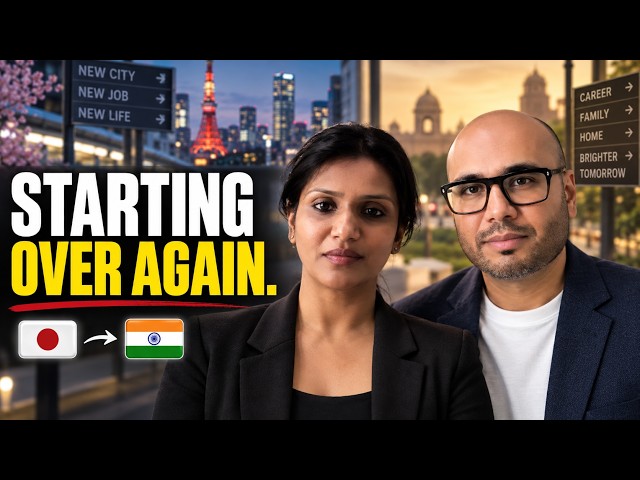
Watch: The Entrepreneur's Guide to Creating Social Impact in India: 20 Years After R2I
How this NRI couple built ItsyBitsy after 12 years abroad, now empowering 3,000+ rural women across 39 locations. Urban-rural partnership model explained.
The full write-up, with the numbers and the links.
Chapters
- 0:00 Introduction
- 2:33 Background and why move to India
- 6:55 Timing the move
- 9:28 Selecting place in India
- 11:40 Professional Transition
- 13:22 Entrepreneur Journey in India
- 16:14 Any thought of going back?
- 17:52 Kids adjustment and college admission
- 23:57 Advice for Social impact
- 27:06 Rapid fire
Transcript
Auto-generated captions, lightly cleaned
0:02 There was always this thought at the back of our mind that we wanted to sort of go back and give it back to the society, do something in our own country. Today it's a much different India. everything is it's a digital India where things happen easily. One foot in India, one foot in Australia. It never works that way. It never works when you compare India to another country. Somewhere you feel you've done the right decision. Yes. When they are successful and they are happy. Yes. Exactly. That is what we we call what we do as a urban rural partnership. Okay. You know where there are lot of expats.
0:48 So in Bangalore you know for instance if you were to live in Indranagar or certain other places where there are a lot of NRIs that have come back Hello everyone, welcome back to another episode of DIY return. Today I'm really excited to have Miss Rashmi on our show. so they went to Singapore in 1992 and after living 12 years abroad in Singapore and in Australia, the family has decided to move back to India in 2004 and they have started a social impact business. I think you know helping the rural women help out with the arts and crafts and then they have
1:49 Built this company called itsybitsy which is located in 39 locations and empowering and bringing lot of you know unique designs. This is almost like a mini Michaels in India. and I'm really excited to have this discussion especially from someone who have lived in abroad for 12 years understand the dynamics there and after returning and it's been almost 20 years to really understand how the life is in India after the move and the kids education how they you know went to the college and how they adapted and someone who went through this entrepreneur journey lot of things to learn and I'm really excited to have you on our show and you know welcome to our
2:34 Podcast. So thank you very much for taking the time and being with us today. Thank you. Thank you Avin. really happy to be here and share my journey with you. Yeah, really appreciate it. So let's start a bit about your background and you know the life in abroad. Yeah. Yeah. So yeah, I mean in ' 92 after I got married, I went and joined my husband who was living in Singapore. so we worked we worked for a Chinese company that was importing Indian handiccrafts. We were actually instrumental in importing it but we did it for a Chinese company and yeah it was really nice. I enjoyed our life in Singapore. But after a couple of years we felt it was a little too small for our ambitions and you know we thought we wanted to move to a larger country. So we migrated to Australia and yeah we lived there
Read the full transcript (35 more sections)
3:40 For about 10 years lived for a number of years in Sydney and then where we worked for a retail chain large discount retail chain. My husband worked as a buyer and I worked I was in charge of their wholesale part of the business. So that was a very nice learning we had and they were aggressive retailers. So we got exposed to the retail business overseas and then after a few years we thought you know the entrepreneurial itch started. So we wanted to do something on our own. So we quit the job and took a bold move of starting our own store. this was called New Age Bazaar and it we this was a store that sold Indian
4:40 Handiccrafts and then we moved to Melbourne. So where my husband worked for a chocolate manufacturing company and I worked for a plastic host manufacturing company. So that gave us a lot of exposure and insights into manufacturing as well. So yeah I mean we enjoyed that but then there was always this thought at the back of our mind that we wanted to sort of go back and give it back to the society do something in our own country which could impact the society. So and we also wanted to kind of move back when the kids were still young. So when my older daughter was about 8 years and my younger daughter was about just over an year, we moved back. we just packed her back, sold
5:40 Our house in Melbourne and just landed in India. It was just a leap of faith that we took. We didn't think too much about it. We just wanted to come and figure it all figure it out here. So yeah and in while I was in Australia again I did some courses in graphic designing. So we sort of had all these different skills you know retail, wholesale, manufacturing, graphic designing everything which we did not we couldn't connect the dots back then. Yeah. We didn't know how it would be useful. All we wanted to do was something where we could give it back to the society. Got You know we didn't want to do something. It was not like okay let's make money then give it back to the society. We thought let's do something while you know while we are working we will do it in our own small way. Do something that can impact the
6:42 People. So that was the thought process behind it and we jumped right into it. yeah. Okay. No, thanks a lot for sharing that. So, sounds like I think
6:56 It's the you know giving back and the social impact. I think that sounds like the driving factor for you to decide. Right. so I know you also mentioned that it's there in the back of the mind right about moving to so if you can talk like you know is it something that's been there for a long time or is it something during the last like you know few visits to India like you know when this thought occurred and then when it solidified by 2004 right I think you know 20 years is a long time and you know you can get settled u and get comfort with the you know the process the systems everything and for making that big change something has to be so driven and something has to be a big trigger to make the decision and make the change. So just curious on that. Yeah. Yeah. So we were always in touch with India. We always every year I mean if not twice or thrice we would come at least once. My husband used to travel more frequently because he was working as a buyer
7:57 Importing things of Indian origin. so he traveled to remote parts of India. He probably traveled a million miles to remote corners of India where he saw that there was a lot of skill in the people but then there were lot of women that was that were kind of unemployed and yeah so you know he used to come and tell me that you know stories about all these people and it sort of somewhere we thought you know if we could make a little difference in their lives we didn't know how we didn't know what we would do but that thought was always there. Yeah. And since we were I mean we used to bring kids it was not like kids were not aware of India. We we wanted to make sure they're very much in touch with the roots. Yeah. So that also helped us and yeah and in 2004 the kids were like the older one was about 8
8:57 Years. We thought you know if we want to go back let's do it now rather than wait you know once the kids grow older it's a little difficult for them to uproot them from another country and you know bring them back to India so we thought let's do it now and yeah got it if not now when was the question it's the leap of the faith and it's the timing you know just let's seize it and then just make a something that actionable So let's
9:28 Start with like how did you choose like which place you want to move back is it because you have the family back there in a particular city in India like how did you select a particular location where you want to move back to because you're also thinking from a social impact perspective so yeah yeah so our thought was to do it in the rural but then we are from Bangalore we both are from Bangalore so we thought yes let's start with Bangalore so we sort of got the factory built you know purpose we took a place our family helped us find the place so it was all ready by the time we landed in Bangalore and day one we went to the factory got it it was like there was kids were young but then we didn't want to lose any time so we kind of dived right in you know the very moment we started the factory went to the factory. So and
10:30 Then the first thing was in Bangalore where we started with 20 women and then we sort of then moved to Chamrajaka. You got it. Which is a rural part of Karnataka. So that was the place that had the highest unemployment and no rainfall. So I mean lot of rural parts of India have agriculture. Yeah. As their occupation. So this place didn't have rainfall also. It was a dry place. So we thought why not start something here. Yeah. And we partnered with the local NGO which is GSS. They are a large organization, social organization. So we joined hands with them and they provided the place and they helped us you know talk to the local women and yeah they started
11:31 Coming in. Initially there was a bit of resistance u but then yeah they started coming in and yeah that's how the whole thing
11:41 Started. So maybe also understanding a little bit about on the professional side right like so at the time of the move you are already into an entrepreneur right I think you were no longer working in a professional or corporate world and you know I think you mentioned sounds like I think you had some planning that was done beforehand like you have the factory already set up and good to go by the time you move which means then you have planned something so so it's like you have this idea and you started kind of implementing ahead and correct made the move. Okay. Correct. Correct. So we started a company there with an Australian partner. This was called AEC Offshore Trading Private Limited. Australian export connection was the thing. So we started that and one of the companies wanted to import certain craft things from India. So that's when we tried our hand that importing this was nothing to do with manufacturing. Yeah. We just spoke to some companies that were
12:43 Manufacturing. They were mostly handy crafts and some craft if we want to call it. Yeah. Nothing what we do today but some sort of some form of craft. So we imported that into Australia. So that was yeah just one import that we did. but then it strengthened our resolve to go back and have greater control on the whole thing and we thought we could definitely you know do what we always had in our mind to go back and do something some social impact. Yeah. Okay. Makes sense. Yeah.
13:24 So I think maybe just while we're on the same topic I would love to hear your experience right especially from someone who lived abroad where the systems are much more well established processes ease of doing business is much easier starting something in India again you know especially in 2004 it would have been a different experience so from your own experience like how was that if you and give an overview and also where do you see that now compared to what it was in 2004? Yeah, you're absolutely right. I mean now things are so different but back then now it's all digitalized. back then I told you this partner of ours we wanted to establish the factory this partnership factory in India where we were going to have a foreign investor.
14:22 So that process itself took more than a year. Wow. So the it just didn't happen and you know the partner lost trust and it all fell apart. Just the delays were unbelievable. So everything I mean getting to know what you had to do it was all very very you know difficult. You it it was not as easy as it is now. Now it's a breeze compared to what we went through. So I think the bureaucracy and you know all the delays were something that were completely unexpected. The only thing was okay let's go do something but the reality kind of was a little different once we move but we kind of persisted. We thought okay you know if there is no partner that is absolutely fine. We were
15:23 Going to go ahead with our resolve. So we weren't going to give up on our dreams or the you know the passion that we had. So we just persisted. U what it meant was everything took longer much longer. you need to have a lot of patience in doing anything. but yeah eventually things got better. Today it's a much different India where things happen easily. it's Yeah. So if somebody wants to come back today, it's not Yeah. It's not that difficult to come and start something.
16:09 Got it. Yeah. It never occurred to you that hey let's move back it's too much
16:14 Of hassle like you know things are slow I'm just curious like it never occurred to you or your husband or the family. No no I think that's the beauty of it I mean we a lot of our friends also tried moving back but they had one foot in India one foot in another country. You have to take India as it is you know for every thing if you think oh traffic is like this traffic was better there you know the government is like this it's better there it's everything I mean the food is better there whatever it is I mean I don't think we spent any time there was no negative energy so that it was like a wholeheartedly we came here we wanted to make this work.
17:11 Yeah. So this positive leap of faith was what I think helped us stay back and sort of iron out any challenges it came across. Great. We just wanted to make it work. Yeah. So yeah, I think yeah, comparisons don't help. Exactly. Okay, makes sense. Just want to definitely understand and especially you know working is a different but building something as an entrepreneur when things are not so smooth you know that's much more challenging so in terms of you know the day-to-day life as well as like in a new environment and all that stuff so let's switch gears a little bit I would love to hear about you
17:53 Know your children's journey right and you know how they adapted and you know which curriculum did you put them in and you know the education and what you know the higher education the colleges they're doing if you can talk a little bit about that that is very helpful because they moved about 20 years ago 25 years ago you know they went through this journey so just definitely would love to hear about their adaptation how they you know what they right so yeah the older one the younger one was still very you know very young so the older one we so coming from there We didn't want them we didn't want to put them in very westernized schools. That was a very conscious decision. So we thought okay we we coming from there we're getting away from the western world. So let's put them in something more local more you know regional kind of a thing. That was a conscious decision. So yeah
18:56 We put them in schools near our place yeah or bindu memorial school which was yeah more Indian focused kind of an education. So we got them into CBAC system. Yeah. yeah not the state or the ICAC. And initially there was lot of resistance from my daughter. So it was like you know why did you bring me here kind of a thing. so she found it very difficult to adapt. She children wouldn't understand her accent back then. I mean now there is you know it's a borderless world. People here are are exposed to all the western ways and accents are never a problem.
19:46 People sitting here know everything about every other country. But u you know back then it was pretty difficult for her to make friends. Yeah. Because she sounded different and her ideas were different. but then I think it took maybe an year or so and slowly she started understanding and she made very good friends and yeah then the other one also joined the same school and they have grown up to be such amazing people. So my older daughter has started her own business her own venture it's called Cosmix. It's a plant protein but it's a business of supplements and they do plant proteins. It's u it's a very popular brand and yeah she's proud of who she is and her
20:46 Upbringing and everything. So she and her husband run that business and the younger one now heads itsybitsy marketing. She did media and communication here. The older one did engineering, industrial engineering and they both are very entrepreneurial u and they have grown up to be really beautiful daughters, beautiful human beings. So I think we are very happy with the decisions that we made and yeah they're proud to be here. Yeah. Fantastic. Grant to hear and congratulations for the you know like upbringing and you know make them I mean that's the proudest moment for any parent. So yes yes you know somewhere you feel you've done the right decision.
21:39 Yes. When they are successful and they are happy. Yes. Exactly. Yeah. That's when you kind of realize your decisions. Yeah. Are right. Yeah. One practical question if you're open to talk about. So I'm assuming your daughter was born like an you know Australian citizen and so when she was going for colleges right like an engineering college like I think you mentioned about industrial engineering. So that's what I'm guessing. So I am guessing she might have done the like Indian entrance examinations to get into the colleges and all that stuff. Correct. So you know there are a lot of these questions about you know the kota right you know where does this you know kids who were born abroad is there a special kota for them or they go in the regular you know merit-based I don't know you know based on your experiences if you can shed a little bit of a light because this is a common question for a lot of people where the kids were born abroad and which curriculum to choose whether to choose with CBSC or IB study abroad
22:41 Or study in the Indian colleges like how promptly they would be and if they would be able to settle. So if you can share a little bit about the process like is there a special kota or is it a part of a regular process especially for a foreign citizen kids in our Indian colleges right so before they she got into engineering she was already I mean they were here for you know so many years like you you were supposed to be here for 7 years or something to get into the system through general merit. Okay. So, I do not know how it is now but back then they just had to take the exams along with the others and she got in through the merit. Got it. Although they like when they came they had the OCI they had the PIO which later became OCI it was replaced by that and yeah I think probably if you're just fresh
23:41 From another country I think from abroad then you will have to have a different quot that didn't apply to us back then okay so yeah it didn't apply in our case and Yeah. So maybe I want
23:57 To circle back to our initial discussion, right? so the main purpose of the move was the social impact. I think that was one of the main driving factor. So if you can summarize I think in the last 20 years you know you have gone through different you know as you rightly said like a roller coaster like you know you know some of the challenges some of the successes some of the but it's keep driving because of the you know several factors like you know the impact that you can make the changes that you can do to these women and all. So if we can summarize the social impact and how do you rate yourself like you know the goal that you had when moving to what you have done and anything specific from a social impact side that you can tell from an NRIs right so maybe someone couldn't move back but they can still do something or someone you know planning to move here you have you can do this maybe you know stats from your own experience and some advice I think that would be very valuable people from cities can always they are educated they can always find jobs they have the skills for them getting jobs is not a major thing. So our focus was
24:59 These women from rural because they do not have what the their counterpart in cities have. So rather than displace them from their homes in the rural and bring them to a city where you know cost of living is very high and displacing them from their own comfort homes. So we wanted to take jobs to their place to the village rather than bring them to the city. So that was the whole focus and I think India needs more and more businesses that can do some impact in you know we there's still a long way to go. I mean today we support 3,000 women directly and indirectly but then I am sure there's a lot that so many people can do and there's a lot that we can do going forward so I think that is in a country which is largely
26:00 Populated I think this is what is kind of needed giving the rural rural needs to grow on par with the urban that is when India can grow as a super economy. So that is what we we call what we do as a urban rural partnership. Okay. Where what you do in the rural can benefit the people in the urban who in terms support their livelihood. So every store that we open we can support some more women. And so it's our combination of our export and our retail stores. and we also are into wholesale in India B2B. Yeah. So we are now in quick commerce places like Zetto, Big Basket, Swiggy, everywhere else. The way people shop has also changed now. It's no longer you know opening one store and
27:01 Sitting there. So I think we just need to yeah gear up if we have to
27:08 Sustain what we started. Yeah. So to continue to create the social impact we would like to you know sort of generate more employment and support more women. That is the goal and we would appreciate if more people who are living abroad can do their own bit in their own industry. Yeah, there are opportunities in many industries. We chose this, but I'm sure there's a lot more thing that people can do. Got it. Yeah. Great. So, thank you very much. So, I have maybe two or three questions and I would love to hear like you know quick responses. I think these are like you know your nutshell like a rapid response questions kind of a thing. So what is one thing you wish you knew before moving to India?
28:02 I would say bureaucracy back then. Back then. Yeah. Got it. And what's your advice or strategy for future retinees you know how they can adjust in Indian work culture. I think you might have seen. So just wondering any advice that you can give to the people on how they can adjust in Indian work culture. Yeah. So it depends on the industry the the kind of manufacturing industry we are is probably a little different but if it's a tech based industry it's pretty much like the western world now you have work from home you have hybrid model so work culture is not very different compared to what it was ages ago it may take a little bit of adjustment but I would say say that you need to come with an open mind. every country has its own advantages and disadvantages. Come with an open mind and I'm sure you will enjoy
29:04 The new India. Okay. Got it. Yeah. What's one thing people assume about moving back to India that's not true? probably culture fit getting back. There's a big you know there is a culture change although things have changed you know from when we came back things have changed a lot u thanks to the digitalization the Netflixes of today's everything it's kind of a borderless thing everybody experiences everything but if you know there are certain pockets of India which are very westernized you know where there are lot of expats so in Bangalore you know For instance, if you were to live in Indranhagar or certain other places where there are a lot of NRIs that have come back, you can probably there are more people that can relate to you or you could relate to them. There are many
30:06 Pockets like that in India. I mean there will be in Mumbai, in Hyderabad, in Kolkata, everywhere there are in our eyes. So you might have to find pockets where you know it's you can relate to people who have come back. Yeah. So yes culture thing probably is a concern but I would say that it's not an issue. I think coming back with a open mind is the biggest thing. Yeah. Yeah. We didn't come with much of any expectation. Yeah. And I think that is probably great. Thanks a lot. I think the key thing that you mentioned before also is the comparison right when you have certain expectations you always compare. I think you know having that open-minded you know having a strong reason to move back I think those are the two important things and not to have beat on two countries so it's easy to give up when something is not working I think yeah yes yes if you have an option of giving back then you you know you give
31:08 It up easily yes yeah yeah great so thank you very much for taking the time and sharing your journey with us and all the best with what you're doing especially like empowering 3,000 plus direct and indirect woman in rural areas it's amazing right I think what you can do as an individual that's a huge right I think you know if all there are multiple people I think that helps in making an impact so wish you all the best with that and thanks a lot for taking the time and sharing your journey and inspiring us on what we can do to make an impact within our own circle of influence so yeah really appreciate it thank you thank you so much thank you for giving me an opportunity to share my story with you know your audience and if it can help you know even one or two people in making their decision to move back to their own country that would be worthwhile. Definitely. Thank you. Thank you so much. Thanks. Have a great day.
32:08 Appreciate it. Yeah. Thank you so much.