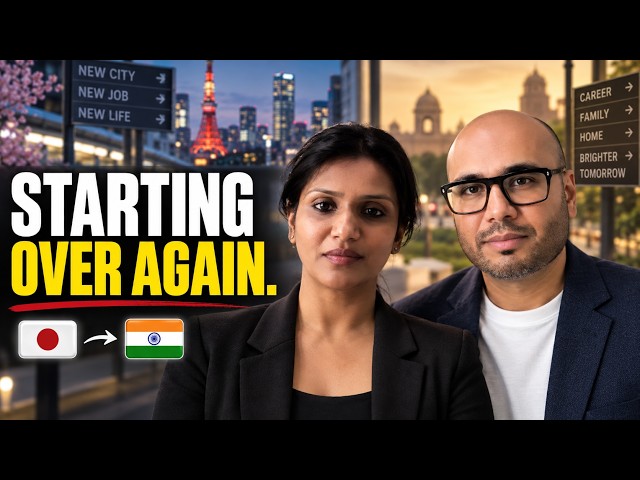
Watch: Career Opportunities for Data Scientists in India vs US: Sherog's Journey
Data scientist laid off in US, now Staff Data Scientist at Micron India. Compare salaries, job market, and why American companies in India offer better work-life balance.
The full write-up, with the numbers and the links.
Chapters
- 0:00 Introduction
- 1:47 Background
- 8:14 Education in US
- 11:53 Career journey
- 14:21 Social life in US
- 15:26 Why move to India?
- 16:57 Career opportunities in India vs US
- 18:36 Financial planning
- 19:40 Advice for future aspirants
Transcript
Auto-generated captions, lightly cleaned
0:03 Initial plan was for me to go back to India once my Visa expired in January and to come back in about October once they were able to file for a new visa for me and once the i140 was approved but there was a Workforce reduction at Walgreens which affected most of the employees in my team and data science in India is growing Tech in India is growing so there are many opportunities back home in India and you can spend some time in India and if you want you can go back to us as well it's not that difficult so I would say that it's a good idea to spend some time in India take a break and be with family hello everyone welcome back to to another episode of DAC return today we have sherog on our show sherro went to
1:06 Us for his Masters in 2014 and decided to move back to India early this year so he spent close to 10 years and some of the unique aspects that I'm very curious in our discussion today is how you know from someone who did his undergrad in India and what he learned during the time and how he evolved himself like while spending the time in us especially in the Masters working there and so on and what made him to move to India and how is the life in India after the move from a career perspective and so on and I'm really looking forward to the discussion with that Welcome sheral to our show thank you Vash for having me on the show
1:47 Thanks a lot so let's start a bit about your background what made you to move to us I think that would be helpful and then we can go from there if you're relocating to India after years abroad listen up I have created something that will absolutely save you precious time that most nris waste while Googling this is based on my interaction with hundreds of people about their move back Journeys and uncover the biggest frustrations nris face when planning their return so I came up with something that can help a 15we email series a free stepbystep road map to address these challenges and make your move PA smoother and stressfree with you're moving back for family retirement or VISA related reasons we got you covered here is what you will get each week actionable tips to decide if moving back is the right choice strategies to plan your move back whether it's from Logistics career Financial tax planning
2:48 How to choose the best school for your kids and we also have several checklist that help you with the move from a financial Logistics and much more this isn't just an advice it's carefully crafted Road map to save you time reduce stress and help you make better decisions ready to plan your move with a confidence click the link below in the description to join for free and start receiving actionable strategies right in your inbox so I grew up in mbai India and and I was in the ICC board exam and U and I was in my 10th grade I was a bright student throughout scoring 92% in the ICC board exams in 2006 and then after that I did my 12th grade from the the HSC board exam which is a Maharashtra state board exam and I had to take a drop here because I I I was going through some health issues during that time so then I I then I went for readmission of my 12th board exams and then I started my undergraduate degree in mechanical engineering from manipal the reason I took mechanical engineering
Read the full transcript (22 more sections)
3:48 Because manipal is highly ranked for mechanical engineering in India and it's very well known in mechanical engineering and my friends are taken mechanical and my uncle also is a mechanical engineer So based on all those I took mechanical engineering but I didn't really understand I didn't really love the the field that much I was always more interested in mathematics and statistics and and always I Am Naturally good at certain things and I taken an aptitude test in my 12th grade and they told me that I'm not good at mechanical of manufacturing so I was supposed to be good at computer science and statistics and and all that all those algorithms and all those things and actually but the thing is that let me explain what happened so in my sixth or seventh grade I I I took an introductory computer science course and I did very well like word excel PowerPoint and all that and then my dad took me to a 12th standard computer science class when I was in seventh standard so I was five classes behind and it really went over my head so then I thought that okay after that experience maybe computers is not good
4:49 For me so then I didn't want to go for computer science but I went for mechanical engineering got it and I struggled and I didn't do great and I I I I had back dos in my mechanical engineering cour work and and my GPA was around 6 out of 10 around around it's the six point range and I'm happy that I got the degree at the end of the day because I did struggle academically and with depression and all these anxiety and all these issues but the thing which help helped me turn around was in my third year in the GRE exam because I was consistently getting not great grades in in my in my undergrad so I I wanted to feel better about myself and I wanted to feel that okay you can go back to you were in in the first 15 years of your life 16 years of your life academically always the top in the class right it's only in the last four five years that you have reduced your average so then I I I prepared for the GRE and I prepared on my own with the help of some materials like Manhattan and all those good books of the G and I prepared for about a month
5:49 Mon month and a half and I got a score of 323 out of 340 with a with a 90th percentile quantitative 80th percentile verbal and a 93 percentile analytical writing so after getting getting that score in the G I realized that okay it's not a question of my IQ or it's not a question of my intelligence it's just that I may be in the in a stream that I'm not passionate about so then so then what happened was that that I got a job placement from by at the time okay in in in in the final semester I got an internship offer from byus and and I and I and I was in operations research intern and marketing intern at byus there I buil I used the Hungarian algorithm which is an algorithm in operations research to optimally assign students to centers okay in different cities of BYU and that work experience made me more interested in operations research and I taken an operations research course in my sixth semester of manipal and I done better than I done in the other courses so I thought why not explore Ms in operations research so then I what what
6:51 What I did was that I applied it was on March 29th that I decided to apply for an MS and April 15th was a deadline for that fall so I I remember I was in I was in Bangalore at the time and I told my dad that Dad I want to apply for Ms he's like no it's too late apply next year no no I have to apply this year and then I because it was clear that I had to do an MS it was not clear in what field I wanted to do it but now I knew that I had to do it in operations research and industrial engineering because that was something I like doing so then I applied to about seven universities in the US in in 15 days and I wrote my sop within half a day one day and because I was clear as to what I wanted to do and what I was passionate about and then I was and then and then I was rejected by University of Buffalo after after one week of applying saying that your undergrad is not good so you're rejected and then also I was rejected by University of North Carolina Chapel Hill which is a very highly ranked University because probably I applied late and all that because they didn't focus on J but I was admitted to Northeastern University in Boston which was one of my preferred universities and
7:54 I was admitted for the Masters in operations research and then I was also applied admitted by Wayne State University in Detroit Michigan for their masters in industrial engineering so that was a typical admit based on my profile but I was excited about the admit from Northeast because N is a good really good University for for industrial engineering and mechanical engineering all any engineering in computer science
8:14 So once you have these schools where you got the admission so how was the life in us which school did you decide and how did I mean I think I'm assuming you are able to find the the curriculum or like you know the program that you really enjoy with you thrive so maybe explain like how the story was how the life was in us oh it was awesome I mean it was a totally different experience for me from India and then I went to Boston and I remember the first for the first 15 days that we we went to the Boston Indian Students Association in August 2015 and there were 15 of us 25 of us staying in one one one one I think two floor house and we were just managing but after 10 days I moved out and I found an apartment in Boston and my and and I was very excited for my program because as the first time I was going on my own and I was leaving my whole family back in India and then yeah I mean it was typical like the first few courses at at at Northeastern were were engineering probability and statistics and deterministic operations research so then I decided to go to data
9:16 Science after talking with a few of my family members and after a few of the people in the area and then as a result I I I looked for courses I could take at Northeastern or other universities to transfer credit to Northeastern turn and then I I I I found the Stanford University was a great University where they had a summer session in which they could invite students undergraduate and graduate students from all over the world to apply and those students could spend three months at Stanford and take courses that they could potentially transfer back to the graduate degree and so then I applied for courses at St for the summer session as a graduate summer visitor at Stanford University and I was accepted and when I was admitted to Stanford it felt great because from someone who who had a challenging time in undergrad to get to get admitted to Stanford for any program was a great accomplishment and that was probably because I got a good GPA at nor Eastern and my GPA was always in a good range around 3.6 out of four throughout my time at nor Eastern and because I was pursuing something I was passionate
10:16 About and had a natural aptitude in so then I went to Stanford after my second semester and there at Stanford I met I met I made friends from Europe and from from Netherlands and from Denmark and from and from America there were people from all all over the world yeah and there that was when I got my first work experience because I joined a startup called Smiley go at Stanford which was a which was a early stage very early stage startup and and my role there was an algorithm lead intern so I was leading a team of interns to build a machine learning algorith first collect data and then build a machine learning algorithm where they could Rank and evaluate nonprofits in the US because it was a CSR Corporate social responsibility focus focus organization so the goal was to evaluate nonprofits and rank them based on their financial governance and social impact ratios and then so that so then any company that which wanted to find the best nonprofits to donate to would come on the smiley Go website and they could filter by by ranking of these nonprofits and find the best nonprofits in education or in
11:18 Healthare or in or in or in noos or different types of nonprofits in the US so I use the boosted decision free classifier to to rank these nonprofits based on all these about 30 different metrics and and I buil a probalistic based ranking system leading a team of five interns and I did my Co-op at Smiley go in the fall 2015 semester and I came up with a viable product which was then integrated into their website and and and they used that to to the search and ranking system it was called a smart search based system got it so
11:54 I think after the education like how was the you know career progression like you know the life there maybe you can talk through like that's that's part of it yeah so I worked at Aon for about five years and as a data scientist typically that was not my job title but that was effec the job that I was doing applied to tastrophy modeling and analytics and I built complex models which which approximated weather disasters like I worked on hurricane and tornado data you know using statistical measures like the like the IM algorithm then I use copular T copular normal copular basically techniques which could forecast where these tornadoes and hurricanes would strike and what could and using science and damage functions and all the catastrophe modeling terminology which could enable the companies to to predict where these where these to like forecast exactly the dollar value associated with the damage so what happens in catastrophe modeling is that you look at the historical data and you simulate thousands of years of data around that historical data to ensure that they follow the patterns in the historical
12:55 Data so that assuming you have 50 60 of historical data you use that and you use smoothing and noise and AI to simulate thousands of years of stochastic data around that data so that it covers all possible regions where these events could occur of course Guided by history so I worked for about five years in that and then then I moved to a couple of other companies for about six months or a year as a data scientist and then I and then I moved to Walgreens as a senior data scientist Walgreens boots Alliance yeah I worked as a senior data scientist where I built in where I built machine learning models applied to healthcare you know like XG boost and random forest and and stuff like that and I buil classifier algorithms to basically predict which Walgreens customers were likely to be approved for a credit card Walgreens credit card and my model was deployed in aor and led to a 35% increase in customers who were who were approved for the Walgreens credit card after that and then I also another another thing which I worked on was a Walgreens customer Behavior progression model where I analyzed the behavior
13:57 Change in behavior of customer purchasing behavior and I and I and I did operations research constrainted optimization as well as a machine learning technique to understand the customers better and do some analytics about that so that rounds up my time in the US for about 8 years from 2016 2024 and then and then and then maybe I can you can ask me the next question and I can move on the sure so I think before me moving on I think you know about
14:21 Moving to India I think you kind of touched quite a bit on the work experience right I think you know the career and all that stuff which is fantastic how was was the social life how was the you know the different things like life in Us in general like overall like you know other than the corporate and career career side of it yeah it was pretty good it was quite good I found it was good to watch people it was driving in the US was definitely easy and it was not that complicated I mean I drove a car in the US and it was nice to see people follow rules and and not fut each other and stay in the lanes and respect privacy and as a as a pedestrian you're safer you're really safe in the US because they wait for you to cross the street and they respect your personal space stuff like that so I like those aspects and I made some good friends through Art of Living you know stre R Shankar's Art of Living we also have regular Korea and meditation sessions in Chicago and I went there and I had a good time I made friends in the building and in the community and we used to do
15:21 Meditation together go on Hikes and biking and stuff like that so it was a really good experience that's nice so
15:29 What made you to move back to India and why things change I mean seems like you have been doing fantastic work you know on the data science especially a lot of these algorithms that you have done being utilized and all that stuff so what happened and what changed to move back to India yeah so Walgreens had filed for my green card and the perm application was being under process and there was a bit of an issue with the VISA because there was a because my Visa was running out and firm normally takes a long time to get a approved it takes about one year or even more than a year for the i140 to come through and the initial plan was for me to go back to India once my Visa expired in January and to come back in about October once they were able to file for a new visa for me and once the i140 was approved but there was a Workforce reduction at Walgreens which affected most of the employees in my team and I was laid off from the team and I I had no option and they and they said that they they're going to revoke the Green Card application and they're going to revoke the perm so I had no option but to go back to India because I couldn't get another job as well because
16:30 Once the after my termination date from Walgreens got over I had only about a couple of weeks left to on my Visa oh so because the Visa is expiring so that's why you have the couple of weeks and not like 60 days like when the H1B and all that stuff yeah yeah okay so you have to make six six years of my Visa was expiring so okay got it so once you have decided that you want to move back to India like how was the trans
16:58 Deion like you know was there anything that you did from a career side or you took some break and then look for opportunities here in India so just wondering on that and then how was the career opportunities for data scientists in India right now so I moved to India in January and 20124 and and I took the semester off and because I wanted to focus on my course at Georgia Tech and relax during the transition and then it was a great time I was in Delhi for a while with my family and and we had a good time and I was exploring Delhi and understanding and and getting used to India life and how things are in India again and then in May 2024 I started my current job as a staff data scientist at micro technology in Hyderabad and currently I work in the technology and products Development Group as a staff data scientist and I've been working there in Hyderabad since May so that is more about the fil that's fantastic so how easy is it to find the job here in India and also how are the career opportunities any any any insights that you can provide on that and for data scientist yeah I would say
18:00 It's easier in the US to find a job than it is to find in India because there are a lot of applicants for the same opening in India and and for I mean it's easier to find entry-level roles in in in us than it is in India because there are a lot of applicants in in India for the same roles I would say got it and anything that you can share like from a work life balance career opportunities between us and India anything that you can share or is it too early for you to comment on that yeah I think now it's too early but I think I like the work life balance where I am currently quite good so got it
18:36 Sounds good so is there anything that you can share some light in terms of anything on the financial planning or anything that you can I think you know at the time of the move when you decided that yeah you know you wanted to move to India yeah yeah so about the move there was no other option because my Visa had expired so I didn't want to transfer to like a like a visitor visa and go through all that so so I moved back but I would have liked to have a few more years in the US in terms of Finance but I think the finance is quite good so far so I want to continue with that and and and so far I like the Indian system where you we have sips and stuff like that you can invest in them and and you can get returns after some time so I like that system so I'm working on that so far got it okay so is there any topic that we haven't covered that you would like to bring up you know from our discussion today not really no I think I've covered everything so got it great thanks any
19:37 Final words of advice for the people
19:40 Who are thinking about moving back to India yeah I think it's certainly not a bad idea I mean if you can get used to the infrastructure change difference in US versus India then there are many positives like you'll be close to family you have the best food in the world you know you have so many aspects and data science in India is Tech in India is going so there are many opportunities India take a break and be with family and also work here there are some good companies like I would say work for an American company based in India because they give better work life balance and you know semiconductor manufacturing is a great great place and and and there are many opportunities so it's a good idea no that's fantastic So yeah sherak thank you very much for taking your time and sharing your journey with us and being very candid I mean I think the reasons why you moved back to India and how the opportunities here in India
20:43 I think really appreciate you taking the time and sharing your journey with us today yeah yeah thank you thank you so much