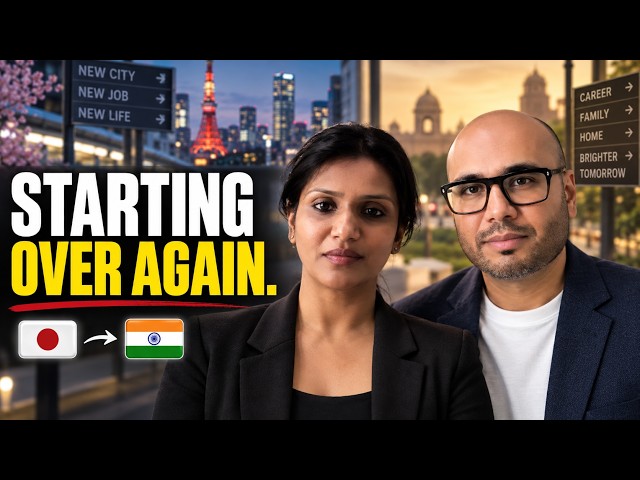
Watch: We Left Everything for Fulfilment — 2.5 Years Later, Was It the Right Call? | Anish & Swati Update
NRI family's 2.5-year update after US to Pune move. Get real healthcare experiences, cost of living (₹1-1.5L/month), career insights & practical return advice.
The full write-up, with the numbers and the links.
Chapters
- 0:00 Introduction
- 3:42 What’s new since last 2 years
- 6:50 Healthcare experiences in India vs USA
- 9:21 Family adaption in India
- 12:22 Opportunities to expand hobbies in India
- 15:25 New challenges and how have you dealt with them
- 19:21 Initial Challenges and hurdles
- 20:19 Career growth opportunities in India
- 26:42 Financial planning changes
- 32:37 What you would have done differently
- 33:34 Any topic that we have not covered?
Transcript
Auto-generated captions, lightly cleaned
0:05 But again it just reinforces our decision to come back because we were actually there to help them out. just you know it makes us feel so we feel that insurance wise India the the options that we have seen or we have investigated. Yeah I think out of the three of us she has been the biggest beneficiary of the move. She has been like we've seen her flourishing. That's the word I think that I we would use for her. instances where we did miss a lot of things of the US. we and we still do like start something new, take a break, take a sabatical obviously we were on H1B visa so that was very difficult for us to do in the US. Yeah. Yeah. A lot of people did this about job before moving in right that is one of the fear that they have and we totally understand that because we went through the same anxiety. I would say before we moved out we said okay you know what it's just going back to India right so it doesn't matter where we go as long as we have a job
1:07 But now we know it's definitely you know preferable Hello everyone. Welcome back to another episode of Desi Return. Today I'm super excited to reinvite our guests Anish and Swaki who were our first guests on our podcast. Actually, it's been about 2 years since we talked and we have started a new series where we are inviting some of our previous guests and hear how their journey has been since we last spoke and any new insights, any new learnings, any advice for the future retainers. So I'm really super excited to invite both Anish and Swati to our
2:10 Show today and glad to have you both of you with us today to share your journey in the last couple of years, any new insights and advice. Thanks a lot. Thanks a lot. It has been a great pleasure to be on the first podcast. last count is we have 58,000 people viewing it. a lot of people hundreds and hundreds of people have reached out to us through social media either through Facebook they have found us or LinkedIn they have sent us messages they have they watched the videos and they got a lot of information so that kind of you know helped us gain more insight on how people are thinking about this and we're very happy that we could help some families relocate back a lot of people now advise to watch our video refers to their families who want to return back. So yes, it doesn't feel like it's been 2 and a half years for us to come back. But the journey has
3:11 Been super exciting. That's fantastic to hear. So just for those you know new viewers you know please check out the link we will have the link here so that you can check out the first episode of our discussion with Anish and Swati about their journey where you get lot of details about their background what made them to move to India. So this episode is more about new updates from that episode. Please check that out before diving into this one. so
Read the full transcript (42 more sections)
3:42 With that Anish let's start a bit with like what's new in the last two years since we last spoke you know any new things new milestones would love to hear how how the life is in India. Yeah. So life is definitely more happening here is what I feel. Okay. So a disclaimer all the experiences are very personal and you know we we cannot prescribe any generic advice any advice to anyone. there have been people who think that whenever we are saying something that is the way they should also be thinking about but the journey has been very personal to us and therefore you know whatever we are going to say today also is very personal and it's our you know it's our thoughts that we want to put forth. So yes, the journey for two two years has have been you know has been very exciting. lots and lots of we know
4:43 People that we have met, new places that we have visited. you know re reignited with the Indian culture, reunited with the Indian culture I should say. our daughter has is now 4 and a half years old. So she has started school. So school hunting was a major it was actually going on while we did the first podcast. Yeah. Right. But we have settled on a good school. she likes it, we like it. there have been some serious health issues in our family in the past two years. you know there a lot of have there have been a lot of hospitalizations in the family and it has been stressful in those moments as well but again it just reinforces our decision to come back because we were actually there to help them out just you know it makes us feel fulfilled you know by helping them out. Yeah,
5:44 That's a very key word fulfilled like you know that's how you describe your journey thus far. Yeah, that's I think fantastic. So I think maybe you know just looking back I think you know this might be a redundant question but I just want to clarify or ask that. So looking back do you feel your decision to move back has been validated? Has anything changed in your perspective since we last spoke? I don't think so. Like we don't think so. But like he said especially because of the health issues that happened and the medical issues that happened it was even more reinforced like fortunately unfortunately actually but it it gave us a lot of u satisfaction or I don't know comfort knowing that we are here for them and just the thought of us not being here and being there and then all of this happening was a little scary. So we definitely felt really really good about the decision and we definitely don't
6:45 Regret or feel like leaving India again. Got it. Make sure. So continuing the
6:51 Discussion I know there are some questions about health care in India you know in terms of India versus abroad. Again you know for someone who have lived abroad you know for quite some time you have experienced the health care there and you might have experienced the health care firsthand you know now that you've been living in India for the last 2 and a half years. So anything that you can share I mean from your own personal journey from your own experience with the family members how it has been anything that you can shed some light there. Yeah. So we live in Pune in India. So definitely there are some very good hospitals here in India as well in in Pune as well. healthcare in the US primarily fortunately we never got admitted to a hospital except for when we were giving birth to our baby. that was a very good experience as well.
7:46 The doctors here at some of the hospitals are definitely you know at par at some of the with some of the doctors that we have seen in the states. I would say in general hygiene, cleanliness probably it's because it's the US and the way the they operate probably it's I would say it's better there but in terms of diagnosis or in terms of treatment again it's a personal opinion. Yeah. But so far because of our different issues that we have been through I think our families are are fine with the treatment that they're getting over here. Okay. So that this is the hospital side. The other side is insurance. Definitely the US insurance was more comprehensive.
8:37 You know it covered a lot of aspects. It covered annual checkups, blood tests and it was more it you know there there were more options to choose from. in India we feel that insurance is limited. they do not cover a lot of pre-existing conditions as well. Preventive care is limited. dental or vision is limited as well. so we feel that insurance wise India the the options that we have seen or we have investigated are limited in terms of as compared to the US the coverage. Cool. No thanks for sharing that. maybe switching gates a little
9:22 Bit right I think you know you you moved when the when your daughter was very young and in the last two and a half years just wondering in terms of how the family has adapted how you both have adapted on a social front the kid in the school how she's enjoying the life in India so anything that you can talk on that family social life aspect I think that would be great yeah I think out of the three of us she has been the biggest beneficiary of the move. She has been like we've seen her flourishing. That's the word I think that I we would use for her. Like the she's a social person first of all and she needs company. She needs people and she loves company. So she is doing fantastic here. She loves it and we can see her thriving in different areas of her personality.
10:12 And as far as family goes, initially we could sense a skepticism even with our extended family or even our immediate family they were not quite convinced whether this was the right decision or not. But now after 2 and a half years we can see it see the see it on their faces basically that says okay thank god you're here. So or thank god you made the right decision or something like that. So yeah that that's how we saw their perspective shift and as for us like I said we are really glad we made the decision at the right time and the right decision. That's fantastic. yeah please go ahead Danish. Sorry to add to that it's two and a half years is a big period you know to get adjusted to. So definitely you know our validations were were tested out and fortunately a lot of them or most of them proved out to be right. Our assumptions were proved out to be right. there are there were
11:15 Moments where definitely you know there were well I wouldn't say regrets but there were instances where we did miss a lot of things of the US. we can we still do like again I think this should have been a disclaimer in the beginning it's not I don't know if it came through in the first podcast or not but we did not come back because we did not like the US definitely like us we love the exposure it gave us the opportunities it gave us and there's nothing not to like as such but we just liked India more or wanted to be here more than we wanted to be there so but at the time we felt that India could give us more and now That assumption has been validated quite you know quite many times that definitely India has a lot more opportunities for us to you know expand our passions, expand our hobbies you know give exposure to our daughter, make sure that she gets the same familiar environment to grow up as we did when we were young. so yes so
12:17 That that that definitely was a success. Yeah, that's fantastic. So let's expand
12:23 That point right the one you mentioned about you know the opportunities in India the hobbies and all that stuff. So maybe you can expand a little bit to so that I think you know people can understand you know these opportunities and aspects of it too. Yeah. So when I say opportunities I mean there were some challenges as well but specifically about opportunities we have felt that you know our the the community lifestyle over here is definitely what we were missing in the US and we got it. definitely it's it's something that we would recommend that you know go out there and experience the the simple living. that definitely changes the way you look at your problems. talking about opportunities well I am into music.
13:19 So my passion is or hobby is u you know Indian classical music playing the sitar. India has given me a lot of opportunities in in that in that way to expand my hobbies and passion and that is where I find happiness the most. Yeah. For Swati. So I'm still trying to figure out exactly but I one of the things that I am passionate about is sustainable living and I found a lot of resources here or you know exhibitions this and that webinars workshops which I did not find in the USA whereas here I found so many organizations that come to your house and pick up your plastic waste or paper waste so that they can take it to recycling make different things out of it And in general, I think the the jugard culture in India where if something breaks and you go and repair it, the people who repair it are still sitting on the streets or they have
14:20 Smaller shops. That was missing in the US. So that is something that I'm really passionate about and I get that satisfaction here of not just trashing away things once you are once they're they're not working or something. So yeah. Yeah. And you mentioned about opportunity, right? just the simple opportunities to you know start something new, take a break, take a sabbatical obviously we were on H1P visa so that US. Yeah. just you know packing your bags going out and not worrying about saving saving leaves so that you can travel to India. Yeah, saving leaves. so yeah so those are the opportunity soft opportunities I would say that we have capitalized upon for sure. I mean I think the flexibility that you have living in your own country in some passion like you know versus like a you know not having that safety net
15:21 Makes a big difference in terms of like you know how you look at things. so
15:26 Let me ask you one question. So have you encountered any new challenges that you didn't anticipate earlier and how have you dealt with them? Yeah, good question. So I would say there are three things. One is lot of social engagements that that you get swamped into once you once you arrive in India. and all are surrounding all are you know irresistible food. So yeah, so all all around revolves around food and sweet food unfortunately. So a lot of sugar and carbs. Yeah, because when we were in the US, we got a pretty good routine, you know, around our workouts and what we were eating and everything. And we didn't feel like we are going to lose that anymore, you know, but once we were here, we found out that oh man, it's going to be difficult. Yeah. The the other challenge is staying in touch with our friends in the US. a lot of you know it's in life in India is busy very busy
16:27 It's very easy to you know postpone your engagements with or calls with the people from your friends from the US I I guess when we were in the US we faced the same challenge from people living in India at that time and now we are a part of the problem so yeah I think proximity I think is the main thing here when you are physically in kind of a same place as other people are you're more you tended to more stay stay in contact more yes yeah right and I think the last one I would say is although there are a lot of benefits here but one of the biggest con that we have seen is we are co-parenting with an entire village over here lose a lot of autonomy or we lose you know our way of parenting gets diluted and I feel that if we were not in India that would have been a there would have been a more concentrated efforts from our end to to do that parenting. Well, again as I
17:28 Said there are a lot of benefits as well because you know we can leave our child with almost any one of the relative that we have here or some friends over here and you know we can do our thing as well. but again it comes at a cost of your parenting skills or your parenting styles get diluted. So if somebody you know that's that could be a showstopper for somebody who's thinking about this move. That's a very subtle point and it's a very very valid point right I think you know because you are with a family and you know and grandkids get pampered or like you know there is a different style or like maybe you might want to approach in a different way for a particular situation but you don't have the same autonomy like what you would have in abroad. So this needs to be discussed before the move. So definitely yeah so just curious about your first point right I think in the social gathering social engagement so how are you dealing with that like you going with the flow or you have a nice
18:28 Snack or jard to deal with that so just curious on that but actually initially it was like okay we have this let's go we have that let's go but now we are like okay we really have to put things on the calendar and it is we just have to tell ourselves it is okay to miss certain you know events We just have to convince ourselves that it is okay and it's okay if you miss something and you don't have to go and attend every event. So that's how we are dealing with it and I think it's again a very personality thing like is more outgoing or extrovert I'm more introvert and I like to stay calm and at home most of the time. So it it depends on how it works out for your personality. So if if you're someone like Anish, you'll gain energy from these engagements. Yeah.
19:17 Yeah. Very true. Thanks again for sharing that. Yeah. So, continuing on
19:22 That conversation, so were there some initial struggles, hurdles, challenges, that you have encountered and how were you able to address them or you know able to adapt to it while living in in India? So I think I spoke about this in the last podcast as well and every country has its challenges. India of course has the obvious challenges of population first of all then hygiene poor hygiene or just the traffic and everything but I think if you come with that expectation or acceptance you gradually ease into that and that's what happened with us like we knew these are the problems and we just came here with that acceptance and then initially it was difficult obviously but we we just got used to it gradually. Got it.
20:19 So let's switch gears a little bit on the professional side on the career side. so how are the things on the work culture professional growth in India like since now you have experience the life working here in India? yeah anything that you can share from that perspective. So right so you know things are changing here. We were very afraid about the work culture before we you know moved in. one of the things that we would definitely advise somebody who's thinking about moving is either one you know if they are married then one of the two has to try to find you know they have to find a job in India. because that only that not only you know gives you some financial comfort or cushioning when you land here but also you know it also saves you from the anxiety once you are here. There lot of expectations immediately that that come to you or
21:19 Come upon you that you have to you know come on find a job you know get into that rut again. So that would be our advice. finding a job here definitely connections networks are something that definitely works still work you know they still work here there are a lot of smaller companies a lot lot of startups that are emerging especially I work with a startup company so I kind of know what the startup culture here is so I would I would advise somebody to be open to explore startup you know the culture as well because they offer you the biggest opportunity is to learn and grow. which is true with me as well in terms of work culture. the a lot of companies at least when I talk about companies I I talk about the software and IT companies in general, they have hybrid right now, a hybrid
22:20 Culture. So you know we have seen people we have met other parents who have kids twins two two children and we have seen them you know quite happily managing the hybrid work culture and I think that's what suits them that's what makes them happy. So there is opportunity in in India where you can take benefit of the hybrid culture. Obviously people who need to go to job every day they have their own different set of challenges especially logistic challenges if they live far because traveling definitely I don't need to talk about Bangalore even in Pune it's probably same you tend to spend upwards of 30 minutes traveling one way every day so that takes up a lot of time apart from that opportunity wise in general there is some slowdown that we are seeing. Companies are not very proactively hiring. But
23:20 Again, if you have good networks, good connections. if you want to start something of your own, it would be a good opportunity to you know explore that as well. Save some money before you come back and you know can put that capital in the new venture that you would like to do. in terms of growth it is pretty similar that we saw in the states. There are smart goals. you have to achieve your smart goals to earn a promotion. however obviously we cannot compare dollar to the rupee right now. But in in most of the companies that we have experienced so far the promotions are quite decent. you know you can get upwards of 10% promotion or hike which is you know you don't see this in the US obviously because there is a purchase price variance and parity and you know all those factors come into play inflation but a lot of companies
24:22 Do offer bonuses sign on bonuses you know some manufacturing companies offer Diwali bonuses here so that we have seen that fortunately for Swati she's been working from home for the past two years. Yeah, the last two and a half years, it has been really really nice like especially in this phase while our daughter is still young and she needs our time. I think it is working out best in in our favor. So and even the culture like my company the headquarters are in the US and their India office is in Hyderabad. So culture wise I have had no issues. It is a very nice culture, a very open culture that I have. My manager is very very supportive. So it has been I I think I've been lucky or I don't know maybe there's a shift happening in the culture in work culture in India because there's so much globalization now that I think the cultures are getting mixed in professional ways as well which is a good thing. Yeah a lot of people did
25:28 You know try to get a lot of certifications or parallel you know parallel degrees if you can because it is a competitive world out here. you know people you know you are competing against people who come from IITs because you come with a lot of experience but then there are some fresh graduates who come with that degree as well. So do not expect that just because you're coming out from abroad it means that companies will value you more than the existing talent and that is not the case now. So definitely you have to have something more than what you have on your resume or that can you know make you stand apart from the crowd. obviously it could be your experience dealing with international customers.
26:13 For me that has been a benefit because I you know I had a lot of exposure dealing with US customers. so that has been that was my benefit that you know that that I that the company saw in me. That's fantastic. I think sounds like I think it was a good experience from a work culture and lot of nuggets about you know how you can differentiate and the things that you need to plan. yeah so continuing along the same conversation any other additional
26:43 Information from a financial planning perspective right I think you might have experienced the cost of living you know the expectation that you have in terms of the funds that's required maybe the assets that you plan to leave abroad or bring to India so anything that have changed or anything that you can share on that perspective you want to take that sure so luckily we had anticipated a monthly cost that we had to bear. Yeah. when we moved to India and you know to be fair for a three people family in a metro city like Pune if you were to rent a twobedroom apartment your standard of living is typically going to be around 1 to 1.5 lakh rupees a month.
27:34 Yeah, this is the cost of living. Sorry, the cost of living is going to be somewhere around that. Obviously, you know, this is a very average range and I think this is also quite personal like yes, everyone has their own stand of living, right? So again, this excludes any one-time travel that you do you know any crazy hobbies that you might have where you want to spend something more. but on an average I think that is what it's reasonable to consider that around 1.5 lakh rupees cost is what you can aim to spend in in a metro city. Having said that obviously you have to you know manage your finances in such a way that you start you know you definitely save up a lot of money. One of the things that you know the conversations with so many people I have is there is a financial anxiety that people have I would say that it you you know you shouldn't be anxious about that you have
28:35 Been in the US and typically the average people you know that the people who think about moving out is after 5 years of work experience you know between five and 15 that's yeah that's where people start thinking about moving to India right So if you have an average of 10 years of experience, you have saved out a lot of good chunk of money. I hope that that definitely you can reinvest in India. It's a growing market. There are good returns that you can get here. So you know it's okay if you don't have a job when you come here. It is okay if you you know take a break. If you do not pursue your career aggressively you know get a very high paying job here. It's okay because you already have saved some amount of money. You probably have invested that money in some real estate or something like that you know. So it's I would say do not please take any financial anxiety. so because that that would just make the
29:35 Move very difficult for you because we have seen people where you know they call us and they say okay we want to move after we have saved x amount of you know money but then that goal is a very I would say it it's a volatile goal because once you reach there then you want to do then then you spend some amount of money and then you say okay let me save some more. So it's it's not going to work that way. Yeah. So the other thing is coming before coming back to India please make sure that you buy a medical insurance in India while you are you know early in your career or age wise you know you can get a good decent insurance definitely when you come here buy a term insurance as well. then the other thing is start moving your funds at least a year prior before you move because the rules change because what after a year you become resident Indian so the taxes tax sessions or the tax taxes becomes difficult to manage. so I would say
30:36 That is the second thing to you know keep in mind. I would say the third thing is open a DMAT account in in India. So there are many online platforms where you can easily open a dematerial demat account where you can start trading or start investing in mutual funds or start an SAP or something like that. and the fourth thing is if possible and it's very rare and if you do find please let us know is find a tax person who knows Indian and US tax laws pretty fluently because that is very difficult to find because you have some assets in the US you have some assets in India you have to file taxes for both the country you know in both the countries because you get some dividends or you know you have your 401k and all of that or your interests. So the Indian tax officials or advisers or consultants they do not know the US laws and vice versa. So it's very you know it's it's difficult to find a person who knows both. Yeah lot of valid
31:38 Points Anish so I will give you a a contact because I have talked to 50 different CAS to find the one. I mean it's not easy. A lot of people give wrong advice. I think they actually help NIS like filing Indian taxes. They don't know anything about US laws. the cross taxations. So I will pass on the contact there. but in terms of the financials right I mean one thing I would definitely underline is based on your lifestyle understand the annual expense just get that picture in the line and then plan your finances accordingly. I mean there is no need to get anxious. Once you have the information, you can make a rational decision to see based on your savings whether you can take like a stress free career or you want to continue the career or you want to take you know whatever you know retire early or any of these concepts right I think but taking the information and then doing a rational decision about that would be very helpful instead of being anxious about that. so if you
32:39 Could go back in time is there anything that you would do differently in terms of the planning or the decision- making process of moving to India? I think I think we might have said this in our previous podcast because we realized it quite soon once we moved that we should have given ourselves more time to prepare or start the process of moving or start saying goodbyes to the f to our friends over there or you know in general start doing things that we want to do before we leave the US. And we got 6 to 8 months to prepare for an exit. So more time. Yeah. So I think if anybody's planning the move, they should have a date that's like one year ahead or something so that they can plan out whatever things they want to do in between that. Definitely. Yeah. Cool. So
33:35 Is there any topic that we haven't covered that you want to bring up that would help like you know people who are considering on moving to India? Yeah. definitely. So from my end at least I would say you know I mean so far people who have called us and asked for advice there are few common topics that we have discussed with them. One is you know some some couples who are planning a baby and they they ask us whether we should come to India or not. well the thing is whenever somebody asks us whether you should come to India or not we don't answer it directly because we cannot give them a yes or no answer without asking them a few more questions you know so I would say that okay if you're planning a baby do one move at a time one big change at a time do not invite a lot
34:35 Of changes in your life a baby itself is a big change and moving to India is another big change So try to phase it out. second I think one additional thing to this related to this is I remember saying this to few people who wanted to come back and I said and they were thinking about cities which to go and settle into. So I would give them the same advice like don't go with a lot of changes. If you're you've been in a city before you went to the US try to come back to that city first. Yeah. and get adjusted a little bit to India and then eventually you can say okay now I won't want to move to a different city but try to come back to a city where you already have some family or some friends so that you can you know they can help you out and ease you into the move.
35:22 Yes. Yeah. probably that is something that we you know before we moved out we said okay you know what it's just going back to India right so it doesn't matter where we go as long as we have a job know preferable to narrow down on the city where you want to go obviously some metro cities have commonalities as well but if you want to be close to your family definitely come to the same city where the family is. Yeah. If you want to you know if you want to be in India but be in a same company or be in the same environment then probably moving into a different metro city could help you out. we have we have case studies where you know when I say case studies we have met a few people who have come back to the come back to India and have started farming. Yes, you know this person was in Amazon. He went to Hyderabad and left his job and then he owns a land and he has started farming. So pretty impressive you know I would say
36:23 That is a courageous decision to take. so the other thing is we have had people asking us that one of us do not want to work when we come back to India. we you know how how do you feel about it? I say you know again don't worry about the finances because you are you know mostly you are bringing a lot of chunk of money back. So definitely you don't need a lot of money you have some invested in India anyways. if you come from a a middle-ass background there's a high possibility that you already have a good amount of savings with your family. So it's not like you are the sole bread earner of that family right? So don't don't be anxious about that. And from my side lastly I would summarize saying that okay moving to India is about brutal prioritization.
37:16 That is one thing that we have over the course of period we have learned you know is okay if you want to come back to India and if that is definitely your priority then you should be able to push out other things and you should be able to dep prioritize what you know all the other things and just focus on coming back to India as as your priority. Even when you come back to India the thing is okay do you want to stay with your family? Do you want to stay separately? Do you want to you know buy a house? You want do you want to rent a house? Yeah. Do you know what kind of school do you want to go to? Because one of the thing is over here in India there is a lot of booming parallel school meth methods that people are exploring into. there's the walled off there is a homeschooling process you know programs that people are choosing.
38:12 Our daughter school is a noback school. So it's a little bit different than a traditional school. so again I I would say have these discussions with your partner or with your family on how do you want to come back in what state do you want to come back and if you really want to come back just start planning a year in advance not too not too early because sometimes people say that I want to come back 5 years from now and that usually doesn't work out if you start planning right now because there's nothing you can do now if you want to come back after 5 years so things might change after four years and probably after that you should start you know thinking about this move. No thanks a lot a lot of good nuggets there you know for people to consider you know when making this decision. so thanks a lot Anish and Swati for taking the time and giving us an update about your personal journey, your experiences your discussions with the people who are
39:13 Thinking about moving to India which would be very beneficial to our listeners and help them in their decision process. So really really appreciate you taking the time and sharing your journey with us today. Thank you. Thank you for giving us the opportunity to talk about Yeah, we we definitely hope that this helps other people as well because they want to see our decisions validated, right? And we God it has been a a very positive journey. Yeah, for sure. I think it's always you come with certain assumptions and how true those assumptions are in terms of like with the reality, right? I think you know everybody has their own experiences but definitely that helps people to make sure if the probability of making that assumption reality you know get an indication to that. Yes. So thanks again. Yeah.