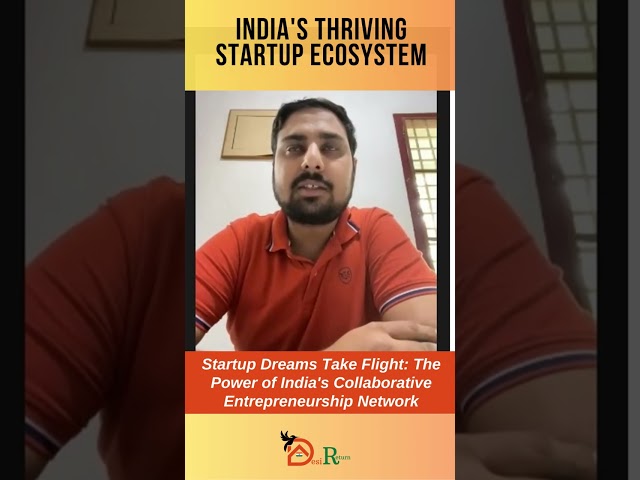
Watch: After 10 Years in Japan Comfort Abroad Wasn't Enough | Here's Why He Returned | NRI Podcast
A interview-based Japan-to-India return story covering life in Tokyo, belonging, marriage timing, startup building, Pune relocation, and why India felt easier to build in.
The full write-up, with the numbers and the links.
Chapters
- 0:00 Introduction
- 1:22 Background
- 3:32 Life in Japan
- 8:03 Why move to US and then to India
- 13:18 Why move in 2022?
- 14:50 Place to relocate in India
- 16:40 Planning the move
- 19:40 Startup journey
- 25:07 Life in India
Transcript
Auto-generated captions, lightly cleaned
0:00 I couldn't see myself retiring there or having my family in Japan. Although it's a pretty good place and people are you know, I didn't face any racism or description or discrimination there. But I just couldn't fit in like I you you can't be a Japanese. So when I came to India right away I felt the freedom that okay, I can do anything here. Don't There's no restrictions on the what I I legally I'm allowed and not allowed to do. But when we were when we went out, we also thought it as a challenge. We don't know what was coming ahead. And we know there were goods and there were bads. And we just had to you know, enjoy the goodness and deal with the badness like that. So that's how life is everywhere. But when you come back, think of it as you you get an think of it as an a building opportunity. So the energy is pretty high in India. And there's a lot of opportunities, there's a lot of problems to be solved. Your if you work on something, you can actually you know, get the feel that it's influencing people and it's doing some good for others.
1:22 >> Thanks a lot Nikhil for joining us. Let's start a bit about your background and what made you to go abroad. >> Hi Hi Avinash, nice to meet you in person finally. so bit about my background. I grew up in a small town in Konkan in Western Maharashtra. I was there till my 10th there. I did my diploma around there. And then I went to Mumbai for my engineering. And in the final year of my engineering, I got a job with a Japanese company. And they had asked me whether I want to go to Tokyo, or Singapore, or Shanghai. And that time I chose to go to Singapore. I stayed with them there for another year, and then they moved me to Tokyo.
2:08 In Tokyo I then lived for another 8 9 years. I switched couple of companies. briefly put it all together, then I went to California for a year. was doing some studies there, and then I came back to India to pursue my startup here, and further like it. >> Got it. >> That's the brief story. >> Cool. It's interesting. So, this Japanese company came to campus for and so that's how okay. Yeah, nice. >> That's the story in itself actually. They came to the campus, and that time I had some some some days of being vague or something, and I couldn't go for the interview there. By the time I had already gotten a job offer from Igate Patni in Pune. And I was just okay with that. And then after couple of months they again came to Delhi. And they sent me a mail that you have had shown your interest, would you like to do further rounds here?
3:08 And I went ahead and did the rounds, and I went to Delhi for interview. And then they took me. They didn't come to my college during my round, but yeah, I knew they'd come. So, the destiny made you to go there. >> Yeah, yeah, I just had to I just randomly jumped into it. I didn't plan. Yeah, just came into it randomly. >> So, how was the life in
Read the full transcript (33 more sections)
3:33 Singapore and Japan? I mean, you know, we don't have lot of guests who spent lot of time in Japan. I know it's very structured, very formal. I would love to hear about the life in Japan. How was your experience? You know, 8 years is a quite a good amount of time there. Yeah. >> Yeah, Japan is a totally like an alien world. You feel like you're out of whatever you know before. So, it's not just the language, everything written, the script is different, the food is different, the habits, culture, living style, everything is quite different. So, the way this So, when I was in Singapore, the company had sent us for a about a month to Japan for a business trip. That's the first introduction I got to Tokyo and Japan.
4:18 Initially, I was a bit concerned about the food and whether I about the work stress which I had heard of that they you have to work so many hours and all. But when I went there, I actually started liking it. It was Strangely enough, I found them to be much easier to talk to people. Once you get through the language barrier, they are very good listeners and they are very good, you know, deep conversationals. So, they will stop and listen all you you want to and what you have to say and then they will deeply think on it and then they will respond. They are in no hurry to, you know, break you in. So, I kind of liked all that and also their working style which is, you know, they they are very perfectionist kind of people. So, they Even though I found it in my training itself that even the small corners they they are very concerned about and they will check everything. So, that gradually grew in me as well and I started liking that work culture, the punctuality. And
5:20 Regarding the work work hours, I didn't actually feel much during my eight years. I think I was there in about three, four companies. None of the companies I felt excessive work culture, not more than nine hours anywhere. So, that all went pretty well. Like it was all not true that the work culture is that bad. And the life was also pretty comfortable and very, you know, comfortable and Japan is beautiful in itself, too, just live life, to roam around. I went to all those famous places two, three times over. >> Yeah. >> so, yeah, that in Singapore is again is also pretty good place to live. it's a it's like a beautiful garden island. Everywhere it's you know, fresh and tropical.
6:07 And I I I stayed there for a year. We used to go in shorts to office. And that's how our managers and everyone used to also visit go office. So, it felt very casual and very, you know, like you're doing a college project. That kind of vibes. People are coming on cycles and all that. So, it was it was pretty good. And once I went to Japan, and then the the company asked whether anyone wants to Have you want to move some some of you to Japan? And if you are interested, and I just took that on. And I I initially it was only for 2 years. The company promised that you will go there, you stay there. If you don't like, we'll get you back in 2 years. And I kind of liked it. And I just went on extending and extending till I don't know, almost a decade went past. >> Got it. And how does the immigration work there? Like you are on a work visa, and you have like a permanent like I mean, I'm not so familiar with it. If you can talk a little bit about that, and why the thought about moving back to India. I think maybe we can come to that. But I mean, if you can share a little bit on the immigration side.
7:04 >> The work visa for me even in Singapore and Japan was not that much of a you know, everyday concern or a problem. They give you usually like 3 years, 5 years long visas in Japan. And once you're there, you can easily switch jobs in your field, of course. And they You don't the the companies don't need to ex- no, do any sponsorship or something like that. So, it's pretty free-flowing once you get the visa there. And it usually renews easily unless you do some some strange things. But otherwise, like initially when I was in Singapore, they took me to Japan on a business visa, business trip visa, which was about for 2 years. And then once I decided to stay over, then it was I converted it to a work visa to the same company and that's how it went from there. So I got I guess 3 years first and then 5 years and then by the time I left I had another 4 or 5 years left on my visa.
8:04 Cool. And now why the thought of moving to California like occurred and and then eventually to India? >> So like about a year before I went to California, I had gone for a business trip again to US for a conference in Vegas. And I traveled around a bit and I thought that I need to explore this place a bit more. And I already had a idea of starting my own some startup while in Tokyo itself. A couple of us had tried there as well to come together and start something. And I thought that California and that would be a good exposure and you know learning experience to see how it is. So our company had a program to do masters or some other education and I took that and I took an admission in this one California University in LA.
8:55 And I just went there. I was already doing my work remotely anyway. So I was hopping on and to and fro here and there. Doing that for about a year. And I didn't finish the whole thing. I dropped out midway because you know, the idea was to go there see if how the startup culture is and maybe start from there itself and see how things go. But as as longer I stay and as the honeymoon period you know, made off in California, I just felt that I was thinking for long term that that time. I was already 29 30 then I was thinking for long term. And I felt that long term it makes sense to go back to India and you know, plan my further life there.
9:41 >> Okay. What was the thought process behind that? Like, you know, you have the thoughts like why after going there and spending some time after the honeymoon period, the reality kicks in, and then why the long-term it's better to move to India versus like doing there or in Japan or some other place? >> I've I've moved places voluntarily like three times, three, four times, so countries, cities. And every time was a different story. Like, when I was in Singapore, I I I got too much into, you know, the casinos and the party scenes there. And I I was like especially with casinos, I I wanted to get rid of it. And the thing in Singapore is if you're a citizen there, you have to pay a $100 fee every time you visit the casino. And if you're a foreigner there, you can just go in as many times as you want. And I just got hooked to that. And I wanted to get a exit from it. When this chance came up, I thought like 2 years break makes sense.
10:31 And that was I guess the emotional drive that time to move from And also to experience new world like I hadn't seen anything else. I wanted to experience Japan then. And from Japan, I think from like I I initially it was just I was thinking we all were thinking me and a few more of my colleagues moved from Singapore, and we all were thinking to stay for a couple of years and then go back, but you know, life just happens, and you get new friends there, new lifestyle there, you get used to it, and you you start liking the Japanese food, the sushi, and everything. So, we just stayed on there. And I think it was all I I didn't even think of moving back. I I need I thought I had to move at move back some point, but I didn't think of it seriously until I think I was 26 around, and the COVID also came around the same time. And then I started thinking about getting married and all that. And then I started, you know, already thinking that it makes sense to move back. Like I I couldn't see myself retiring
11:32 There or having my family in Japan. Although it's a pretty good place and people are you know, I didn't face any racism or description or discrimination But I just couldn't fit in. Like I you you can't be a Japanese. Or you can't be a Singaporean just by living there. And I felt that over a long period of time for, you know, just to live naturally, I need to be around people who who can who I can really communicate to express to. And that was that was the thinking around early COVID. And as work from home home dragged on and I I got a dog meanwhile during during COVID because I was not going to office. I was not going anywhere and just staying in I I thought that getting a dog would be a excuse to walk around morning and evening.
12:19 And then I just after few more years during COVID in Japan, I decided to, you know, come back to India. That that was the plan. And maybe take a hop over in Europe or US for a while because, you know, once I come back I don't want to go back and do this back and forth again. So whatever is I want to try I should try now and once I've seen everything I know what to do. So I went to US about in 2022 or something, early 2022. And while in US lifestyle was pretty comfortable and good everything was similar to Japan. But again the same thing. I don't see myself retiring there or living long-term. And I was at the stage where I want to plan 5 years, 10 years and you know, have some structure in my life so that I can build up accordingly.
13:17 And why the move at that point, right? I
13:20 Mean, is it just purely like for building the startup or is there other factors that came into the picture? >> The main reason was to I want to you know start looking to get married and start a life from there. And I was I tried a dating going on dates with few people in Japan while I was in Japan while I was in US. But I after few meetings I figured out that you know if I can't stay there for long so it doesn't make any sense to marry there. And also to if someone is an NRI there they have put in a lot of time and efforts to be there. And they have they see their vision there for long term and that doesn't suit me because I wanted to go back. So it occurred to me that I need to go back and I need to you know go through the conventional way so that the alignment of you know long term planning and all and also the the comfort is convenient like you know the the language and all. I had struggled with language communication for a long time in Japan so I don't want to
14:22 Be that standard for the rest of my life. I want you to express myself very in my native language and in in a very similar upbringing. So that's why I came back and I looked around for a while and that that was the main reason why then I I knew I'd I'd always wanted to come but why then is because I wanted to get married and I think after one and a half years I came back I found my wife we dated for a for a few months and then we decided to get married. >> Good. Congratulations.
14:50 So let's talk about I think which place did you move to India right? I know you have plans to do a startup and you are growing in your career. So you said you were grown up in Maharashtra so did you go back to there or did you go back to some of these startup hub? So how did you choose the place where you want to be? >> So when I came back my dad was still working. He he was like like where I grew up it it's a place in Konkan called Mahad. There is an industrial area there and my dad used to work as a manager there and he was about to come to retirement. And I grew up all my life there, so I wanted to spend some time before he retires, you know, in the place I knew all my life. So, I stayed there for about a year with my family there on and off. and that's that's where I, you know, decided to start up as well. So, I start started up from my house there itself. I registered the company. I hired few interns, and I started from there itself. And we we have been doing online it's since the beginning.
15:48 Everyone is remote, and everyone has been doing online. Eventually, I moved the office to Pune, which is that's the part of the story we'll come back to it. But, after a year in Mahabaleshwar, my dad retired, and we we were thinking where to go, and the best place was to our native town, which is about an hour from Pune. So, it it makes sense because I I could go to Pune and do startup-related stuff, the meetings, all those stuff on a drive, and I could could stay near our, you know, farm house and everything. So, we bought a piece of land there, and just after retirement, we we moved back to our hometown, and home village, you could say. And I've been here for about an year and a half now. And I've seen all the summers, winters here, and I'm kind of liking it here.
16:38 Cool. So, let's talk a little bit about the planning, right? I mean, especially
16:42 For someone who is moving from Japan, you know, where you lived for 8 years. if you can talk a little bit on the financial side in terms of, you know, maybe the retirement account, stock accounts, or anything. Like, how did you handle them? Like, did you leave them? Did you, you know, you know, close them? Whatever it is. From a financial planning, that would be very helpful. >> For Japanese pension system, the the process is quite complicated, and I think you need to live for a long time to claim it. So, when I when I left Japan, I knew that I I would not probably be not going back again. So, I kind of and even the amount, you don't get the full amount to get like 40% or 45% of it. The rest is tax or something. So mentally I just let it go when I when I left Japan. And regarding others so there is no other social security like there's no 401K or something like that in Japan. So there's only pension and the rest is your health insurance and all that's the rest I used to for financial planning I used to just
17:42 You know whatever I used to save I used to send back home every month. And my dad used to manage my portfolio and investments here in India. During the 10 years he was I quickly understood that I would be too panicky in stock market to do it myself and I couldn't focus on other things so I just delegated it and my my father has been really supportive all this while. So he had put the investments and when I was back I already had some surplus in India. >> Got it. So pretty much most of your investments are focused in India. Like I think pretty much. Any other thing from a planning side? I know from a career you mentioned about I think you changed few transitions like I think when you're moving back I think at the time you're still working for this Japanese company working remotely like doing this you know education or the masters program. And then so what was the plan for the job? Like do you have something in place or do you plan to move to India and then find a job? Like how did you plan that?
18:44 >> I think it would be case by case that was COVID time and everyone was like there was a lot of restrictions and you were in a place where you were. So it just happens that that time you could do that you know remotely work from your home and everything. But I don't think that's the reality now and for like what I would advise is if possible you could talk to your employer and if you could get a remote work from India that would be best thing for you to have a smooth transition. And you can work for there for another year or so and then gradually you figure out what to do in >> Oh, so if I'm understanding, so in your case you were able to have that flexibility like where you are working with the same employer remotely from >> For some time and then when they asked me to come back, I had already decided that I will be leaving them.
19:34 And I left the company then and I just focused on my startup. So let's talk about your startup, right?
19:41 I mean I think I know it's good to know people who are moving back and doing the startup. Is this something that you have been thinking about? I know you kind of mentioned about while in Japan like you're working with some of your friends and all that stuff. Like is this something the same thing or is it something new? And how was the experience doing a startup in India? >> so for I I had been planning this even before in Japan. I we found the regulations a bit too too difficult and too cumbersome to get through the starting our startup in Japan. So we gave up that eventually, but as soon as I came to India I and that was the case even in US. I was thinking to do that, but I figured out it's not that easy with the regulations and all that.
20:28 It was complicated most of the places. So when I came to India right away I felt the freedom that okay I can do anything. There's no restrictions on the what I legally I'm allowed and what I'm allowed to do. So I talked to Like basically I had few ideas and one of the ideas I was passionate about was about, you know, democratizing this physical marketing advertisement places. So the billboards, hoardings, bus advertisements, train advertisements, all rickshaw advertisement, all that. And currently even like for a long time it's been only the big companies who can put their ads there because the initial cost is too high and they don't know how to go through all these processes. So, we created an system where we were basically an aggregator for all these physical advertisement face places. And we were we were basically we are basically running an Airbnb kind of thing for booking and physical ad ad spaces, billboards.
21:24 It's called Posterboy. We launched it I think in mid 2024. we started it late 2023 and we launched it in mid 2024 and we have onboarded thousands of different hosts like boards in it. And yeah, that went on for 4 year and a half. And we The the thing with that the the billboard business was it's a very high ticket purchase. So, it takes a lot of back and forth and sales cycle to you know, convince the person to you know, put a 10 lakh booking for a year or something like that. So, that thing we have been doing. We have created a sales department which does all the calls. And meanwhile, we found the engineering department The engineering does the apps. The website was pretty much done and stable. So, we moved to another project since I think 6 months ago which is a Vocal India.
22:24 Here we are, you know, building a social media app for this one for verified communities. So, the the idea is, you know, empower people through the through trusted communities. like like in you know, groups or subreddits you could think of where everyone in there is verified. But they are still anonymous. They can be anonymous. So, think of you know, a community in Hyderabad where you know, everyone is is from Hyderabad from some verification from the other verification. But they don't have to put their name. So, all the discussion there is from the stakeholders. It's not some noise from elsewhere and you know, distractions who are not actual stakeholders of the community. So, this is the startup we have started since 6 months ago and it's been growing pretty fast. We have created a lot of communities, college communities especially are going pretty good.
23:16 So, people are much more free to you know, open up and talk about the problems and issues there. So, that's the thing we are working on now and we are planning to you know, scale it up city by city going forward. >> Got it. Understood. And then in terms of the overall experience like working with the government and you mentioned about the regulations, like finding the talent and you know, doing the startup here. >> I tried this couple of times before in different places and I haven't felt easier than here. I I don't think it could be any more easier. It's actually to start start start it up you just you know, have to look for a good CA and they they will walk you through the all the process. It's not that complicated. You can do most of the thing online. You have to fill some forms and he will do the most of the CA will do most of the paperwork and you will just have to sign go to the office and sign a couple of times check paperwork and that's it. I don't think it took more than two three weeks to get it done. Actually, we started a few months like I started the project as
24:17 Soon as I came by myself and as I was doing the work I found that I should have hired someone to help me with this. I looked for someone on online on LinkedIn and other places and I found a good engineer. And he started working with me and he said I think I need I need to put something on my LinkedIn. What's the company thing and all. So, that's when I registered it like I think about two months into it I registered the company and I we did it while doing the work. So, it was just it didn't take any buffer time or anything. It was quite smooth to register to do the taxes and all. My my wife is actually CA so, she does all the paperwork. When I started earlier I had hired a CA but eventually she got married to her and now she does all the paperwork, so she's been pretty helpful all this while.
25:04 I don't have to worry about that. >> Makes sense. So, how was the life in
25:07 India? It's been more than 3 years. How is it going? And like anything that you miss living abroad, especially like after living almost for a decade, right? Between Singapore, Japan and California. Anything that you miss also? living here for last 3 years has been a little numb. Like a power bomb on you. It feels like so much happens in so short time. I think there were times in during COVID when I was abroad and it was like last year it was same like this year. Last summer was similar to this year. Nothing's changing like that. And here in like 2 2 months so many things like it was also transition phase in my in my family. Likewise, my we my father was retiring from place where we have been living for most of us our life and we were moving to our hometown. And that was a transition my transition from overseas to India was a transition.
26:02 Getting married was a transition. My sister got married during this time as well. So, life has we got a piece of land and we have been doing some farming there, planning a farmhouse there. So, life has been just one after the other things. There's a startup in between, a job, and all those things. So, I didn't get much time to, you know, to you know, think about all this. It's just one thing after the other. I I do sometimes miss some moments or sometimes when I was in Japan some, you know, especially for regarding functionality. and you know, expectations of whatever you're talking with the other party. but that you get used to. Traffic you get you get used to. Yeah. Cool. Is there anything that we haven't covered that you want to bring up? I think from your journey, that could help others who are thinking about moving to India.
26:58 >> I think for especially for, those who are in their younger ages, 20s, 30s, when you're move thinking of going back, don't think of it as, you know, alternative to what lifestyle you're used to. Think of it as a challenge. but when we were when we went out, we also thought it as a challenge. We don't know what was coming ahead. And, we know there were goods and there were bads. And we just said to, you know, badness, like that. So, that's how back, think of it as you you get an think of it as an building opportunity. So, the energy is pretty high in India. And there's a lot of opportunities, there's a lot of problems to be solved. Your if you work on something, you can actually, you know, get the feel that it's influencing people and it's doing some good for others.
27:48 And you can get that satisfaction, of, you know, actually influence, you know, doing some good to someone. but most of the corporate job I was doing, I was just behind some four walls and I couldn't actually see what what work was going like, where is my work going? in India you you are very close to ground and you're very close to, you know, experiencing, life in itself. So, think when you're coming when you're coming back, think of it as a challenge to build. That's how I I I came back. I I wanted to build anyways, and, even rationally thinking, I figured out India is the best place to build where there is actual problems, there's huge scale problems, and you like there is actually a need to build. I like the way you kind of put it, right? It's take it as a challenge, like how you went abroad, like the same thing, like when you're coming back, I think it's not a lifestyle change, and it's also like the mindset that plays a big role in terms of that.
28:40 >> Yeah, yeah. Cool. So, thanks a lot, Nikhil, for taking the time, sharing your journey with us, and, you know good luck with your startup and I know a lot of things happening in your life on the marriage you know building the farmhouse and all that stuff good luck with everything and talk to you later thanks again for sharing your story with us. >> Thank you it was nice talking to you. >> Yes.