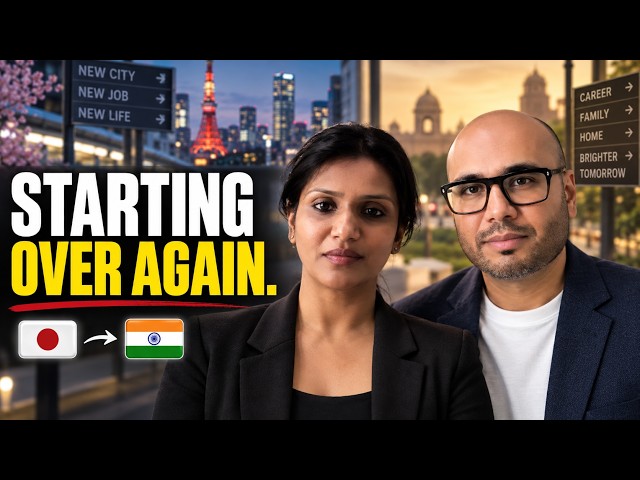
Watch: 10 Years in the U.S. and Returning to India for Family — A Story of Reconnecting with Roots
Semiconductor engineer shares how he returned to India after 10 years in the US for joint family life. Internal transfer tips, Bangalore to Nashik move, work culture insights & NRI lessons.
The full write-up, with the numbers and the links.
What this conversation covers
- Key Takeaways
- 1️⃣ The Beginning — From Nashik to San Jose
- 2️⃣ The Decision — No Trigger, Just Intention
- 3️⃣ The Motivation — Family Bonding Over Everything
- 4️⃣ The Logistics — Internal Transfer Made It Smooth
- 5️⃣ Life in Bangalore — The Transition Phase
- 6️⃣ Work Culture — Then vs Now
- 7️⃣ Returning to Nashik — Fulfilling the Dream
- 8️⃣ Small-Town Living — Joys & Trade-offs
- 9️⃣ Lessons for Returnees
- ❓ Frequently Asked Questions
- 🔟 Rapid Fire
Transcript
Auto-generated captions, lightly cleaned
0:07 Welcome to Desi Return Diaries, Embracing Home Again, the podcast that shares personal journeys and expert insights on returning to India. I'm your host, Avinash Bhati, here to guide and inspire you on your Desi Return journey. Hello everyone. Welcome to another episode of Desi Return. Today I'm really excited to have Suyash on our podcast. Suyash has completed his masters in US, after which he worked in a electronics company, which we'll get into a little bit more details. Spent for 10 years in US before moving back to India.
0:55 With that, welcome Suyash to the show. Thanks Avinash. Thanks a lot. Great. So let's get started with a little bit of a background. You know, what made you to move to US and some of the trigger points of the decision points on moving back to India. Sure. Sure. Maybe a quick summary for for me and my wife as well together. So I'm from I'm from Nasik. I did my schooling and college from Nasik. I did my bachelor's in electronics from VIT Pune. And then I worked for almost like 13 14 months in a actually automobile company called Hell Electronics. I I worked there for yeah, 13 months.
1:41 After certain point I thought maybe I mean I I I won't say like I don't I did not see any career growth there, but I think I had some inclination going outside of India to explore in terms of the like more opportunities of course career wise and just wanted to explore, you know, what it's outside of India. So then of course the immediate options are like you do you do masters or MBA or something like that. So I thought maybe you know, talk to my parents, talk to other senior members from from my college and like like from family friends. Then took a decision to go to the masters and I did my bachelor's in electronics. So kind of an obvious choice for me to do the masters in the electronics as well.
2:27 So I did my masters from San Jose State, California and I did it in the VLSI stream. During during the masters, I mean I was interning for like end of the course, I mean you get a chance to you know, intern with some of the companies. So I did intern with a small scale VLSI industry for almost an year and right after the right after the college I joined one of the big semiconductor company in Oregon state. So and and in I I worked there for almost I would say 7 and 1/2 to 8 years before we we moved back to India. Kind of very similar path for my wife as well. She did her she's from Pune. She did her bachelor's from Pune itself in electronics branch itself. She did her masters from Virginia Tech. She joined again in one of the semiconductor companies in the
Read the full transcript (64 more sections)
3:29 East Coast. Right after marriage we she she moved now with me in the Oregon state and joined the same I mean we we were lucky that she could join the same company in Oregon state. Yeah, and then we we stayed as I said like we stayed there for almost 7 and 1/2 8 years there. And overall including masters and the the job we roughly I would say we were there for 10 years and then in December 2018 we moved back to India. Why we decided to move or what was the trigger point? I would really frankly say there wasn't any a trigger point. I mean people might find it a little funny, but I mean ours is a a regular like arranged marriage and like through a matrimony site. So you know, you have to put your profile, your likes and dislikes and whatnot.
4:26 In that form or whatever the profile I I had I mean again people might find it funny, but I had like put it in the bold letters that I wish to come back to India. Oh, okay. Luckily looks like you know, the it was made in heaven. So luckily my wife had the very similar profile and maybe not in bold, but she had put that okay, that she wants I mean she wish to come back to India as well. Yeah. So yeah, I mean again like it it matched our inclinations matched that okay, we at someday we want to go back. Have we decided okay after 3 years, 5 years, 7 years? Not really. Were we not open to stay in in US? We were. I mean I'm not I'm not saying it was like hard and fast that we have to come back, but we were open to consider that option, but always back of the mind we had that inclination no, we want to go back. I want to go back. So that
5:26 Could be one of the reason that we never I won't say we didn't like it, but we never had the tipping point on the other side saying okay, this is it and now we have to stay here. It never happened that. So there is no trigger point as such that many people say okay, this is the trigger point or these are the factors kind of led us to you know, to take a decision that okay, now is the time to go back. I can say there was a trigger point or maybe a conscious decision that we took at that point is right after our kids like the second kids birth. So I have two kids by the way, sorry I missed I have two kids. One is one is five one is seven other is five both daughters.
6:12 And then yeah, so when our second kid was I would say about to born we said okay, now I think would be a good time to go back. So so that kids would adjust because once the kids get little older what I have heard that people from from people that you know, it gets little difficult to for kids to adjust. For you it doesn't maybe matter, but looks like it's the other way around kids can adjust anywhere anytime. So but yes, the second kid getting born I mean I think that was the kind of I would say the decision making point. We said okay, now let's talk about it. Let's you know, decide a timeline and and and go back basically. Okay. Yeah, thank you very much for sharing that you know, background and the thought process. Sounds like I think you know, there is no any specific timeline that you have in mind, but you know, the situation of having the second kid basically made like you know, this is the time to move move move
7:14 Decision. So with that said, if you can I think you know, once you made the decision to like end of 2018 when you actually moved, maybe you can talk a little bit about some logistics. For example, you know, how long is that like a physical move? Maybe what about what to do in India? Like you know, how did you plan about it and if you can share any specific details on the logistics also, that would be great. Absolutely. Absolutely. Before just going to the logistics, maybe if I can share the why portion of it then I I think it will it might help you know, to maybe explain me a little bit better. Definitely. Yes. So the why we wanted to move is purely and purely family bonding. I won't say family reasons. I would say family bonding.
8:03 Me and my wife both come from a very joint family. And when I say joint family, I mean literally joint family. Me like four of us me, my sister, Like I have my I have two uncles. So I have like we are we are like pack of six together as as like cousins. We literally grew up together. We literally grew up together living in a you can call it as a single house. It was like still like like three four two BHKs, but they were like connected through inside. Yeah. It was like a really I mean I cannot explain how it was, but you can you can think of it is like we grew up together living in a single house. So I had that tremendous family bonding with my parents as well as with my like cousins, aunts, everyone.
8:56 On top of that I will talk about the extended family as well. All my extended family like the second cousins, they are also staying in Nasik in the same city. Yeah. So we have like that family bonding as well with the second cousins as well that people sometimes you know, they don't get how I mean how can you be so close to your second cousin? I mean there are a lot of funny stories that I can talk about, but I don't think we will have that much time, but but that is that was one of the reason that I wanted to come back. Number one is okay, that is self thing like I I wanted to stay with them again. And then another reason is kids. I wanted kids to kind of have the same experience, same upbringing as what I had because personally I think I I grew up well.
9:48 I I I can say that maybe my parents won't, I don't know. But but I I think I think living with the joint family you have like different set of I would say family values that you get embark on. So, I think I wanted to have the similar environment as much as possible. Of course, now we are not living together, but we are still, you know, kind of meet very often. Like they have My kids are get kind of developing that bond which I had with my cousins as well. So, that is one thing. Another thing I would say, I had seen my parents and my uncle aunts taking care of their parents till, you know, they were like really old and, you know, I had I had seen them the worst that my parents had to go through while taking care of their parents. And And again, like I would say I given that we had we were staying together, I had seen it very closely.
10:42 Yeah. So, I had seen how happy my grandparents were when they saw their kids taking care, their grandkids taking care of them. So, I could see that, you know, fulfillment. I mean, I don't know the right word here to call here. But I had seen that. And I wanted to do the same with my parents. I wanted to see them happy till their last moment. Yeah. So, I had seen a lot of folks they kind of their reasons are I want to take care of my parents or I I I need I need to go back because my parents are lonely. And my reason is no, I want to rather than a need. It's my wish. It's my It's my wanting to be there with them. And not Again, like we decided I know like 10 years is a still long time, but I we decided at certain point my my both my parents, uncle aunts, everyone everyone is aged. I won't say they are they have like crossed 70, but they are all healthy, you know. And they are like all walking,
11:42 Go to trips and everything. I I wanted to do that with my parents. I mean, we lost like almost 10 years when we were there and they were here alone. So, now it's kind of, you know, not paying back. I I Again, that paying back is not a good word here. But then now we are spending a good quality time here with my parents and they are happy. I am happy. I think my kids are happy too. You know, they have they get their, you know, grandparents kind of learnings, blessings, whatever you call it. Like even pampering for that matter. Like if if I scold, they know they can go to grand grandmother and, you know, then she is protected. Yeah. So, you know, that pampering is also needed, right? I mean, this is definitely like a I I would say it's the value, right? I mean, this is the most important like the value like, you know, taking care, growing together as a family, the bonding. So, this is your strong why, you know, that's why like even like, you know, you put it in your profile even before
12:44 Like, you know, it's an important identity of yourself like, you know, how you wanted to live lead your life. So, yeah, thank you very much for sharing that. I think you know, it's it's it's important that you wanted to provide the same environment for the kids and also you wanted to do what you feel is the right, you know, for you and Now, as I said like the reason for our move was purely just the family reasons. Like we wanted to stay with our family. You know, and wanted kids to have the same environment as I grew up. So, the immediate choice or the immediate Yeah, immediate choice would be would have been like we moving to Nashik, right? But then in Nashik, as I said like it's still a small town compared to Pune, Mumbai and any other metro. There are no semiconductor industries currently in Nashik.
13:33 So, again, like the obvious choice for us would have been either Bangalore, Kolkata, Pune, like big metros here, right? But we wanted to come back to Nashik and stay with my parents, right? So, before coming in 2018, we kind of we we came in 2016 to kind of get a feel of things that we can do in Nashik rather than doing a job somewhere. We wanted to see if we can do anything in Nashik like something of our own, maybe some partnership. Like like we just wanted to kind of gauge what we can do in here. So, we came in 2016, talked to many of our friends who have their own industries who had, you know, worked in Nashik, started something, but failed and they had to go back to like their jobs in say Mumbai and Bangalore and Hyderabad.
14:26 We kind of had an informal chat with them. Again, like we did not took any like a big questionnaire and then asked them one by one. It wasn't like that. It was a very informal survey kind of we did. I I won't even call it as a survey. Just to get the feel of what lies in Nashik and is this something feasible an option to directly come from US with a good pay and then come to Nashik, still a small town city and start up something of your own. As I mean, I had heard from many of my MBA friends that Again, I'm not from MBA. I've heard from MBA friends that general guideline to start something of your own where you you don't have finances coming from outside like VC or something. If you can sustain for say 1,000 days with the current lifestyle that you have, it's still considered as a good option.
15:22 Like after 3 years, you your business is catching up, you start making money, it's still good kind of model. Again, we Again, we we were not relying on that fully, but we just took that as a guideline to see whether is it feasible. I would say it was feasible. I wouldn't say because we had good chunk of saving because both of us were working. So, you, you know, end up saving a lot of money there. And then again, dollar to rupee conversion plays a good factor. So, with all those kind of factors still taking into the consideration, we thought maybe it might be a risk. We were family of four. Of course, parents will be there. So, we will be family of six. So, the expense would be a little bit more compared to what we had in US. Some and Basically, we took that kind of calculation. Again, not on a paper. It was just the rough calculation what it
16:23 Would need to stay in Nashik for the finances purposes. And the other thing is like what if portion was there. What if we don't sustain in Nashik? What if something doesn't work out? Then mentally, I would say at least I wasn't prepared to go back to Bangalore or, you know, so we thought maybe why don't we do the other way now? Let's take a stepping stone. Let's go to India first. See if there are any risks or any, I would say surprises that we get when we move from US to say Bangalore or US to any city in India basically. So, we said, "Okay, let's see if we can land up in say Bangalore or Hyderabad where there are semiconductor companies. So, it might not be difficult to find jobs there.
17:12 And then then we can think of, you know, we can move to Nashik or Pune where my my my wife comes from." So, then we started thinking, "Okay, now given that we have decided to come back, okay, let's think about it what we can do in say Bangalore now." Okay, say Bangalore and Hyderabad. We kind of shorted down three cities. Mumbai again me and my both of us had no inclination going to Mumbai because I think it's a very fast fast running city. You have to always be on your toes and everything. I have heard about it. My sister stays in Thane close to close to Mumbai, I would say. But I had seen or at least I have heard Mumbai life is really fast. Both me and my wife are kind of little laid back. I mean, we don't want to go into that fast life. So, we said, "Okay, let's see, you know, Bangalore, Hyderabad or maybe Pune are any any good options there." So, we talked about it.
18:07 I talked to my manager as well. So, as I said like I was working in a semiconductor company in Oregon. So, we thought maybe rather than hunting for something from here for jobs in India. And then I have heard again like I have heard in India as well when you apply from US, sometimes they don't kind of encourage you or they don't kind of trust you to some extent that, "Okay, you are coming back." They might think you are just, you know, shopping around and, you know, just like, you know, just kind of checking whether it's really available or not and like that. Like some someone is like really local in India, I think that, you know, kind of helps a little bit. So, I thought maybe rather than going for that option, why not And I I knew for that matter I knew that the semiconductor company I was working for has a very big presence in Hyderabad and in Bangalore. So, I was like, "Okay, why not ask my manager and
19:10 See if it's internal transfer is possible or not." And to my to my luck and to our luck actually, even though the presence wasn't there, I mean, the the group I was working for in in Oregon, that group did not had presence in Bangalore or Hyderabad, but there were some sister kind of teams that that they had presence in here. So, I was like, "Okay, let me talk to them." And to my surprise, within I would say for me, I think within a month, everything kind of just worked out. I had a chat with my manager on like the future manager at that time. Like I had chat with here, some technical folks in here. Again, like the team that I'm currently working on has presence in Folsom. So, I flew there when I was in Oregon. I had a chat with them. Like I had some I would say basic interviews given that it was an internal transfer.
20:05 It wasn't like they were not really bashing. They were like just checking whether the his skill set kind of matches with the the skill set that we need for the job. So, I think it was kind of again an informal conversation even though it was technical. Yeah. And as I said like in a month it kind of you know worked out for me. Yeah. And then once it worked out for me, I mean we we said okay, let's let's do it in stages so that you know, we were not in a hurry. I mean as I said like we second kid was about to come, right? So, we said okay, now let's take a time. Let's take a call and decide on a date, but then that date has not I mean it's not it wasn't a deadline that okay, we have to be there before this or something. So, we said okay, now stage the jobs hunt as well. so, I started my job hunt first.
20:52 Everything kind of worked out. Then we started for my wife's job hunt. And again to our surprise, I mean it was again like it was maybe meant to happen actually. So, she works in a Again, I won't take the company name or anything, but she works in a post-silicon debugs. till that point there wasn't any team in India who was working in the same company that that I'm talking about in the post-silicon side. Mhm. And then to our luck, that team got formed right like maybe during that time or during that year. So, they were actually started looking for the skill set which my wife had. Okay. So, it was again everything fall in place. Her interview and everything same thing happened with her. Some of the team members from India, some of the team members from US they had and kind of a chat to see whether the skill set match. They did. And like before we even come there we had like offer letters and
21:54 Everything in our hand. Again, from the same company just the different location. Like it was Oregon, now it's in Bangalore. Yeah. So, given that it was an internal transfer, I think some of I mean you or some of the our audience might also know that there are the relocation packages that these companies offer. Mhm. So, again we were lucky to get a I would say good enough relocation package not as extended as I had heard from other big companies that they get. But it was still good good relocation package that we got. So, I would say roughly it included like the air fares. Yeah. like the moving they they give some moving expenses when you when we come to India like hotel stay or something for like a week or a more than like anything or so 15 days I think. Mhm. and then they one of the big thing that they helped us is shipping. Yeah. Though it wasn't
22:55 Like a full container or like a half container like kind of a thing, it was roughly around 750 pounds of weight. They said they will they will help us. We had some negotiations. They allowed end of the day they allowed 1,000 pounds. So, we did I mean 1,000 pounds is still compared to the household things that we collect over the 10 years. 1,000 pounds I would say it's it is still less. Mhm. But I would say it's still good enough to carry the basic things what we had we needed, right? Of course, we didn't take like the beds and the sofa and like the big furniture. Yeah. So, we had to so sell them out. But then basic stuff that come I mean our company offered like 1,000 pounds and they did the air shipping. Oh, okay. So, yeah. So, before even I went to Bangalore my shipment was actually arrived. Yeah. So, I and I had seen like I mean in our some of the videos of some of the other folks that talked about already or in some other forums that people are facing good
23:55 Chunk of problem in shipping things. Like if you do a like a half container or a full container, the schedule I think it says like three to six months during that time you will get your stuff back. So, we did not had to face any of that issue. Yeah. Again, the drawback the downside is basically we had to cut down on our things. So, it was like 1,000 pounds so we took like mainly we of one point we took all the toys for sure. That was the first thing that we had to pack. And then of course the other stuff. So, yeah. So, from the move perspective given that it was a transfer, the logistic portion I think given that it was internal transfer it was most of the things I would say were taken care by our company itself.
24:42 Okay. That's great. I mean thank you very much for such a detailed explanation especially on the planning part, right? Like you know from the why to how did you approach it like the different phases, the pragmatic way of going to move back to India, right? I think thank you very much for sharing those details. And then you know kind of with the logistics because of the internal transfer like how smooth and easy it was Absolutely. Yes. Yeah. So, maybe switching gears a little bit. I think I know just I know to make sure that we can cover these topics within our time frame. The one I want to touch base was you know you've been living in India for five years. you know close to five years or you know getting close there. So, it would definitely be good to get a perspective you know to your expectations versus reality.
25:28 That's one aspect. And then also I think you mentioned you are an internal transfer. So, if there's anything that you can comment on or even also on the work culture. I think those are two prong like you know because I think it's a good enough time for you to experience the work culture on both sides. The expectations versus the reality. I think that would be very helpful. Absolutely. Absolutely. one thing that when I when someone asked me we are thinking about moving to Bangalore. what should I expect? So, first thing I mean now it's it's a no-brainer for anyone that the biggest thing that people talk about in Bangalore is traffic. So, So, when I tell other folks okay, how is the traffic condition? I was like okay, imagine the worst.
26:16 Okay? And then multiply it maybe by 10 times. Yeah, it it is like that. So, I think that is something people had warned me that okay, Bangalore is congested. You have no space and everything. But again like I wasn't really expecting this when I when I moved, right? I was I mean I mean not that I we don't know traffic. I mean before even going to US I was I mean for that matter the the company that I mentioned like I worked post my bachelor's I worked for like say 13 months. Out of those 13 months three, four months I was in actually Bangalore. Oh, okay. So, like yeah. So, 2009 2008 and 9 I was in Bangalore. So, I knew the traffic. I mean I used to I I don't know I mean it's Indira Nagar to Whitefield.
27:02 It's a it's a big big stretch. Mhm. So, I knew the traffic, but then after 10 years I think things have things have changed drastically. So, yes the expectation I I mean the traffic is the big I would say the expectation versus reality was a big difference. on on the same note, I would say the roads are definitely much better now. I mean people might disagree with me in if someone from Bangalore people people will post their pictures with the potholes and everything. You can put those pictures for any place in India. But I think infrastructure-wise things have changed. I won't say it it would have been better of course, but I won't say it's that bad. It is it has it has changed.
27:50 So, I would say from the traffic perspective it was a big shocker for me. For that matter in when when we moved in and we were just like right after moving to Bangalore after two, three days we we were going out somewhere and my kid who at that time was almost three or something, she was like Papa yahan pe kitne log hai? that was that was really funny. But because she hasn't seen that before, Yeah. When we come to India, we come to Nashik still small city. It's a it's a big difference for her. On the other side when my so, I went to Bangalore little early just to do the house setup and everything. Till that time I my wife and kids were staying in Nashik. When my wife moved in, it was a surprise and a like a a shock and a happy surprise as well. So, a shock is of course like wow, it's a tech tech park and so many folks are there in such a small area. And then
28:52 The other portion is like you won't believe or like people I don't know if they are aware of it. 50% were female employees. I mean that you can see that difference between like someone working I like particularly the woman working in I would say tech companies. yeah. Tech industry in US versus in India. India I could say I mean again I don't have any data to prove my point, but you can say it's really 50/50 actually. So, you could see that that population like the female population there. So, it was really kind of a happy moment for both of us. I mean it's good to see such a you know drastic difference between the two countries here. Yeah. again like keeping the population and the traffic out of the picture, I would say finding the like the I I was staying in a rental property. Finding the rental property wasn't a problem at all. I mean, I contacted some of the agents, some of the friends who gave their numbers. They
29:53 Were like happy to help like and and given that I was there and I did not have any like a vehicle there. They were like you do you don't worry about it. You just come here. You we will go on our two-wheeler and roam around for like two, three days. I will make sure you have you have the place by end of the day. So, I think of course it's their business. I'm not saying that they are doing it happily, but the the the approach or the I would say you know, that helping nature is definitely way different versus in US it's professional. And here it might have a little bit of human touch, I would say. So, it So, finding a place wasn't a problem. Finding a very good place wasn't a problem at all. I mean, I was staying very close to the tech park. I mean, again I I'm okay taking name as well. I was staying in Adarsh Palm Retreat like that that building community. It's a very fancy community.
30:51 And I I mean, again we were playing little safe in terms of the security the exactly. We were playing safe in terms of the transition to see not to have a big change in our lifestyle, right? So, in in that sense I think that community had like multiple parks, swimming pools and that gym facility, clubhouse facility, big apartments and I think it played well. Of course, it had its cost associated with it, but then I think we said, "Okay, let's not worry about the cost portion at this point because we are in a transition. We want to make sure we are transitioning well as well as the kids are transitioning well as well." So, I think that helped us a little bit like booking or going for a like a fancy complex at that point.
31:42 Other things I would say the digitization happened in India. It's tremendous. I mean, in US I think I had like maybe Gmail, Facebook, maybe like hardly you can name apps that I had in on my phone. Here everything everything you do you have associated app with it. Starting from your daily newspaper and milkman all the way to groceries, gas, internet, whatever not. I mean, everything is on app. So, that was I would say it's a good surprise actually. I mean, it's a very convenient. I mean, we started using that right away. So, I think that transition or or you know, I would say the infrastructure now in India it's it's pretty good.
32:31 And then I think the biggest thing like people are talking about now and have been talking about few years is UPI. I had no idea that this UPI existed and when I came when I came and then we we we went out and everything with with my friends and they were literally joking how you don't know about UPI. I was like I I know. I mean, I maybe sorry I don't know that, it's the biggest thing that had happened in India from my perspective. It's ease. And again like not at the fancy restaurant. You go to like a corner sabzi wala. He is on he will accept pay phone pay or Paytm any UPI transaction. So, I think that was a big I would say happy surprise to us and it's very convenient actually. I hope I touch base. I think I maybe diverted. I don't know if I No, I think you're kind of like explaining the reality of surprises. So, which is So, if you can summarize maybe you know, a few of them and then you can touch base on the career like a work culture.
33:32 Correct. Correct. So, so I would say in summary they there will be points where you have to adjust either here or there. I mean, there there will be some points in US you have to adjust. I mean, in US you don't get maybe that say the food deliveries maybe it's not at least they were not that common at least four, five years back. Maybe post COVID I don't know if things have changed, but here with Zomato and Swiggy the food deliveries are also they have changed. So, there are few adjustment that you might have to do in here. If you are staying in metros like Bangalore or Hyderabad, so you just have to ignore I would say or we were doing it maybe unintentionally as well. We don't have to I mean, there is a traffic here there is going to be a traffic.
34:18 I mean, there is nothing you cannot do about it. Of course, you can do. I mean, you can use public transport. By the way, I mean, I had used public transport before in my engineering when I was in Pune. So, lot of people crib about public transport. I don't because I feel it was good. Same thing in Bangalore you have AC buses. I understand they are all packed, but still I mean, that's the best at that point. So, I think it's it's still good. So, in summary I would say there are adjustment you would have to do here, but if you have some if if your motive is there in back of your mind, I think it's easy to ignore those things. The challenges because I think there are better things that are anyway happening which you might not appreciate verbally. It's it's your back of the mind. You appreciate it, but you just crib about the problem. So, I think it's still a good thing. About the career particularly, I would say moving from a team in US to a team in India. Was I compromising
35:18 Anything in the in terms of my career growth? And when I say me, I'm talking about me and my wife both actually. Are we were we compromising anything? I would say at my level I would say no. If I would have been say vice president or a a little higher on the management side at that point if if you ask me like will I can I become a CEO of the semiconductor company that I'm working for? I would say maybe yes. That would have been a compromise if you are at a very high grade or the you know, at the on the upper side of the management because I think there are still because given that the company I was working for was a multinational company, it kind of becomes obvious that you know, the CEO or the higher position would come from you know, US.
36:11 On the technical side, I would say no. No difference because the the industry that I'm working on principal engineer or the senior principal engineers are treated as a like a higher post in terms of the technical growth. I I'm not compromising on that. There are good chunk of principal engineers, senior principal engineers in my current organization and I know the other sister companies like the other semiconductor companies, they do have a very similar technical structure there as well. So, do I am I hampering my growth by moving to this? Absolutely no. Great. If we talk about the work Yeah, I mean, I won't as I said like I might not become CEO of this company, but then by moving here I I might have a chance to become my own CEO of my own company that we will talk about maybe.
37:05 But then that that's one thing. Do I see any work culture differences? I would say a little bit yes. I'm not going to blankly say no because I had seen those differences. Is it a deal breaker? At least from my experience I wouldn't say. It's not a deal breaker to you not to move to India. In past I think again I don't want to take the companies, but some of the IT companies some perception or people had that perception or maybe it was the practice I don't know that if you stay long, if you work for 14 hours, you get promoted, you will be noticed and no, you have to work for 14 hours.
37:55 Otherwise, you won't be able to finish your work. It was maybe the perception. Might be the reality. I don't I don't know that, but things have changed. The same companies now people don't stay longer because they I think most of the companies are also becoming multinational companies though they are Indian origin companies. So, they have kind of going with that kind of a universal work culture. I'm not going to call it as a western culture or you know, western work culture. It's a universal work culture I would say. So, I think from the work culture point of view there were few things that were kind of I would say there were conflicts I would say. In here people directly don't say they don't kind of confront immediately.
38:46 Just to give you a some example like is this something you can do in say three days? From Indian someone who had worked here will always say yes. And then worry about okay, now how can I make it work in three days versus coming from coming from there. I mean, having worked in US they would on your face they will say no, I cannot commit to you. Let me look at it. Let me estimate it and then I will say okay, it's yes or no. So, I think saying no or confronting that okay, we are in a position to say no to such things is not in maybe in our culture. I mean, even if someone ask you for a help like not work we always say yes. Yeah, yeah. No, don't worry man. I I'll do it.
39:34 So, I think it's because of the culture we directly say to such things as yes and then we figure it out okay, how to do it. Whether it's right or wrong, again, I'm not in a position to make that call here, but I think I saw that work culture difference in terms of, you know, estimating things or committing to things or maybe sometimes confronting if something is not happening correctly. So, I think that work culture difference I definitely saw. Yeah. But again, when I saw it, I I'm definitely going to say the other way around as well. It has It It's been improving. It's not It hasn't stayed the same. Like people like me, people like you, and there are lot many people are kind of bringing that work culture in India as well. So, things are changing. Maybe not at the same pace as expected, but it's it's changing. It's definitely getting better. Yeah.
40:25 Now, thanks again for sharing such a specific details about the career opportunities as well as the work culture. now, taking a step back, so I believe you worked for few years in Bangalore and then got an opportunity to move back to Nashik. So, maybe if you're okay, you can share some of the details there in terms of the move, and also it would be definitely a very good insights for somebody who is considering, right? I mean, you know, Nashik, as you said, it's not a big metro. It's a still a small town or a city. Right. Living there versus in a big metro, what are the pros and cons from your perspective?
41:11 Absolutely. Absolutely. So, as I said, like our our aim was to come back to Nashik to stay with our parents. We took a stepping stone of Bangalore to kind of, you know, check the waters, like how how are we adjusting? Is it going to be a smooth move or not? I think it worked out. It was a very smooth move. After a year, we were happy. then one of the reasons to move to Bangalore was to I mean, I think everybody knows about it now, like there is a big startup culture particularly in like across the India, and Bangalore be become being one of the kind of the tech or the sis the city of San Jose, I think there are lot many tech companies are starting or the startups are there in Bangalore.
41:57 So, we thought maybe let's move to You know, hunt around to see if there are any opportunities to, you know, kind of either join them or, you know, see if something we can make something allied to those industry and in in Nashik. Yeah. again, like we I would say nothing happened during that year. We couldn't Our kids were small, so we really did not get a chance really to look out inside like the the the tech forums or the exhibitions that happen, you know, we were not able to do that. But again, like back of the mind, we wanted to move back to Nashik, right? so, on the side, we were talking with one of our cousin who has who has started business like recently in 2016 and 17 in terms of the analytical instruments development for the pharmaceutical companies. So, he comes from the marketing background. He had some idea, he worked on that idea and got it developed from outside, and he he was he was kind of working on that. We
42:59 Were for that matter we were talking with him when we were in US as well to see if anything we can do as a partnership or, you know, something like that. When we moved to Bangalore, I think things got a little serious that, okay, now we are here, I think it makes more sense now we can, you know, easily meet, have, you know, interact on the ideas and everything. So, we said, okay, and after like year, we said, okay, now looks like a good chance or good opportunity that there is something that we can collaborate together. So, at that time we said, okay, rather than both of us jumping directly into some new venture why not ask to see if one of us can still maintain the job and one of us will be, you know, leaving the job and start that partnership. based on the kind of the opportunities of remote to work as well as the opportunities that you know, traveling that, you know, at that time there wasn't any hybrid model as such now which we have, but I
44:00 Was still hopeful that, okay, there might be some company maybe okay with some remote work like a month here, month there, or something like that. Again, not doing any research, we thought, okay, let's see what happens. So, first, of course, I went to my manager. She I mean, again, to my surprise, she was okay. She was like, okay, for 6 to 8 months, I won't have any problems. You can remote work, but later I won't be able to, you know, you know, make that call because it might go against the policy and we might have to include HR and everything. I was like, okay, no issues. So, at that time we decided, okay, given the background I was in even if I quit for say year or two it would have been very easy for me to kind of jump back again. I I I I there is no issue me revealing that. I'm I'm I'm from the digital design background. So, I I'm an RTL designer or or a micro-architect for the digital design. So, at that point, I was like, okay, if I leave job for next 2 3 years, and
45:00 If I come back again, I mean, if something doesn't work out I should I I think for me it might be a little easy to come back. So, I was like, okay, we have that kind of a safe net at our end. So, we can make we can take that call. So, in December, no, I think it's February 2019 we took a call. Hello? Yeah, I can hear you. Yeah, yeah. No, no. Yeah, I can hear you. Please continue. Okay, sorry. So, so after after spending maybe 1 and 1/2 years, I think in it was right before COVID, actually. COVID. I think it was Feb Feb February, yeah, February 2019. 2020. 2020, correct.
45:46 So, at that time we had no idea that COVID is going to happen and everything, but we decided, okay, looks like this is the time. And as I said, like my my my wife my cousin brother was working on that idea, so I was like, okay, he can be the marketing face. My wife, given that comes from the engineering background, though not directly related, but we thought there is a chance. Yeah. I mean, she had her course work in that embedded system like when she was in bachelor's, but it wasn't going to be difficult. So, I said, okay, let's make that call. So, we moved we decided to move. So, she put her papers down in February or February or March, and then all these COVID thing happened. Yeah. So, at that point again, like the my company was I mean, was very helpful, and she was okay that I mean, if you want to rework your resignation, no issues. We will support and everything, but at that point anyway had decided, okay COVID not COVID, we wanted to anyway come back. So, I was like, okay
46:47 Make any changes in our plans, and we will go back. Yeah. So, right after first lockdown got over, when when the the the the the flights kind of started, we took that call. I was And and we were not sure like how long this COVID is going to last, right? So, I was like, okay, the flights are open, let's make the call now, and we we just boarded to Nashik. And at that time again, like every anyway everyone was for everyone was working from home, so kind of worked out. So, my manager was okay. Again, of course, I had to let my manager know saying I'm moving to Nashik. Yeah. If you whenever you want me to, I I will be there. So, that kind of again, my manager supported me there as well. So, and then we moved here. Yeah. After moving again, again, it was a little bit of learning curve for my wife to kind of go through the first, of course, the theoretical portion which we had kind of learned like 10 years back on the embedded system, to look around then, you know,
47:48 Talking to other industry folks to see, okay, what is the current practice in terms of you know, designing these all electronic circuitry boards all all that stuff and everything, the vendors. so, finding out that was little tricky in terms of the contacts, right? Again, like for my family, we had few contacts given that my family entirely was in Nashik, extended family is in Nashik, but then not many were from the business background, not not from the industrial background. So, it was little tricky for her to, you know, kind of develop that ecosystem of vendors, the suppliers, and everything. So, it took a good chunk of time, I would say, more than a year or I would say close to 1 and 1/2 to 2 years, actually. Okay.
48:40 Even right now, she she is the only person working with her. I mean, she she founded her company. It's a private limited, so so she's working on it. Two products are already out. Yeah, I mean, I'm happy to tell you that two products are already out, and we are making sales. I mean, it's still I won't say it's like it's not like big numbers at this point. Yeah, making making some Yeah, making some some progress there. I mean, now it's not just burning money. There is some money coming in, I would say. but that that but that is happening, I would say, really now. Yeah. It took It took her almost close to 2 and 1/2 years to get that first product out. And also it's said during the COVID time, right? I mean, you know, And it was during the COVID time, and Correct. And it's not a like a mass production product. It's It's not like a thermometer or something. It's like a very dedicated application need it's need it's needed in the like the pharmaceutical companies at this point.
49:41 So, it's like purely based on the order. So, yeah. so, yeah, but in order from Bangalore to Nashik, that was like the move that we did. In terms of the the culture or the social life social life and everything that has changed drastically. Because in Bangalore, even though we were in Bangalore like rest of the rest of my family was in Nashik. Other family friends relatives are in close to Nashik like even though we were in Bangalore. After coming here, I think my social life has changed like definitely I'm meeting my my like relatives like more often. I could attend all the like the biggest program of big wedding to a like a simple get-together. Yeah, let's meet and let's play cards or let's play board games and everything. So, I'm I'm happy that I could do that now, which I which I was actually missing. I mean, I I forgot that point. I was missing those things in US.
50:42 That my cousins are meeting like every weekend or maybe say in 15 days, they're having fun and I'm missing that. So, I think that kind of now I'm started enjoying that that life as well. Yeah. So, yeah. And and as and she as I said like she started working. Luckily, I I'm still working with the same company now. Company policies have changed post COVID like it's a hybrid, sometime it's full remote. So, I'm still working with the same company but from my hometown Nashik. Okay. That's great. so, I know I think you kind of touched a little bit on the social life, you know, from from your perspective about living in Bangalore versus Nashik. maybe it's more of a lifestyle, right? I think you know, in terms of the opportunities, not like an opportunities, but like kind of like intellectual discussions that you have.
51:29 The little bit of a fast pace, a slow pace, kind of food availability, kind you know, some of these things that changes a little bit from a big metro to a small city. if there are anything that you can talk about like I think in terms of like having this kind of a intellectual conversations or the food or the other aspects that you see a difference between living in a metro versus a small city. That could also bring in some perspective. I mean, from your from your side if there are any insights or anything that you can share. No, no, absolutely. I think I think the the question is I mean, perfectly kind of you I think it it is a good good question. I think from from the intellectual I would say the interaction or the transaction or the conversation, whatever you want to say it, I think I would say I miss that.
52:22 Where miss that? It's the face-to-face conversation is something I miss. We are always I will I mean, everybody is always available in you know, on over a like a online meeting or online video call, but then that face-to-face conversation like even if you are in a company, someone is your colleague and that colleague is with some some other friend. And you just go and say "Chalo ya, let's have a coffee." And you go there and you might end up with some idea sharing and then you know, some that person sharing his his or her experience. We are sharing that experience. I think that definitely changes. Not just technically, I would say. it changes the overall perspective as well. Like if we are talking about say restaurants, if we are talking about say politics or say books that that person read about, I think that is definitely I would say not happening currently with me at least in Nashik. Otherwise, that would have happened or was happening when I was in Bangalore for that year
53:23 And a half. So, I would say that is a big impact moving from a big city to a small city. Though again, I would still say is Nashik like a very small town? It's really not. I mean, Nashik has a MIDC. It's a big big industrial city. It has thousands of I would say the resorts and the hotel industries pretty good. I mean, you can Google it. It's it's Nashik is a wine capital of India for that matter. So, Okay. So, it In that sense, yes, I don't think I'm missing anything. Yeah, if I the the type of restaurants which Bangalore would offer me, of course Nashik is not ready for that because the I would say the spending capacity is still less compared to what Bangalore had. Like they were all techs. So, you get like good good like four five figure salary there.
54:18 Here, that's not the case. So, I mean, once you have money, you end up spending it on on like clothes or food, like roaming around, trips and everything. So, that cultural difference I would say yes, I'm seeing that. Is that a problem for me? Maybe not because now the world is really small, right? You everything you have it online. Yeah, interaction of course you will miss. Interactions are going to be missed, but once you start scrolling on Instagram, you will know this person went to this or this person read a book. Now, there are book reading apps as well. Like you can share your views. There are blogs and everything. So, in that sense, yes, I mean, you can still get the information online, not face-to-face, but but yeah, that that difference is going to be there between some small town city versus a big big city like Bangalore or Hyderabad. Okay. Yeah, thanks for that information there. So, is there any topic or anything that we haven't covered or anything that you wanted to share with
55:19 The future aspirants when they're thinking about returning to India? I would say I mean, again, people might disagree here and I had seen in for one of the one of the other videos as well that people had done the checklist and reading the Okay, this is plus here, this is minus here, this is plus here, this is minus here. I believe it's okay to do that just to kind of get the feel of it, but I believe in back of your mind, you have always you know, decided something that this is something I want in life. When I say in life like not not immediately like you know, this is this is this is where I see growing up. This is where I see my kids kids growing up. This is where I see I'm retiring.
56:06 Not not a place, maybe the idea of retirement like you know, the comforts and then all of those things like So, I think there is always going to be a driving factor to that. At least at least we had and I believe everyone should have because comparing one thing to another, there will be pluses here and minuses. There will be pluses here and the minuses here. It's going to be very difficult to compare one thing versus another. Yeah. It's not going to It's I don't think it's going to be an apples-to-apples comparison at all. It's always going to be oranges versus apples because it's not it's not the same thing. I mean, just taking an example, is food expensive in India versus US? You cannot compare that personally. It's like which restaurant you are going in.
56:54 If you are going to Taj Palace, yes, of course it will be expensive. If you go to like a tailor to eat vada pav, yeah, it will be cheaper. I mean, again, like I'm taking the extreme examples here, but personally, I feel maybe that comparison might not take you anywhere. End of the day, I think is the mindset. What you want is going to be more helpful to make that decision. Yeah. Sure. So, thank you very much Suyash. I think maybe there are a couple of fun questions just to you know, wrap it up. What's your favorite dish from India? Indian dish? I I just cannot answer one. I think that on a funny note actually, that might be another reason I wanted to move back.
57:39 You have few reasons. I think you're just being modest in saying that maybe Yeah, the food is like I'm a foodie. So, I would say I am a I'm a I mean, I I eat non-veg. So, I would say I like tandoori chicken and the butter chicken is something I I used to miss in US because I think the Indian restaurant preparation there was more catered towards the American taste as well. Yeah, yeah. Here, it's like it's it's for your taste. So, I think yeah. I think I would say tandoori chicken. Okay. And then what about favorite travel travel destination in India? Oh, there are lot many. I mean, I I won't call it as a one destination. I'm I think so, I I come from a little bit of like a background, you know, kind of we kind of go to our like origin like our kul daivat. I don't know what's the English word for it.
58:33 Family deity? I don't know. Yeah, but Family deity, yeah, maybe exactly. So, we have that tradition, you know, we go very often to that place. It's it's Harihareshwar. Like it's in Raigad district. It's it's it's a sea place. So, I think I would say if someone asked me, "Where do you want to go now?" I would say, "Okay, let's let's go there." But other than that, for that is another thing. Like in India like like in US, I mean, there is no difference here. In India, you have so many places that you can visit. So, I think it's Yeah, I mean, no no one place that I can I can really point out. I have a big list pending list I would say that I want to cover in next few years to visit in India. Cool. I know I think thank you very much for sharing all the information and your journey. I know we don't have lot more time because I would love to understand about how the families are adjusting, you know, the time that you're spending in Nashik, but you know, just in the in the context of the time that we have, I just wanted to thank you very much for sharing your story and the specific
59:36 Details, especially like how you went with a pragmatic approach, you know, the career transition, as well as, you know, the work culture and the career opportunities and so on. So, thanks again, and good luck with everything. No, no, thanks a lot. Thanks a lot for having me here, and I hope whatever the efforts that you are doing here to help others, I'm I'm pretty sure that people are going to, you know, look at it, and they will definitely get some insights based on our experiences here, and of course, I mean, it's a good good effort that you are doing here. Thanks. Thanks for that, and thanks for inviting me here. Thank you. Thank you very much, Suresh. Thank you all for joining us on this insightful journey of Desi Return. If you enjoyed this episode and want to explore more stories and expert advice, make sure to subscribe and hit the notification bell.
1:00:27 Don't forget to leave a comment below with your thoughts and experiences. By the way, check out the links in the description below for our Facebook group and social media for updates and engaging discussions, as well as connecting with fellow Desi Returners. Thank you once again, and until next time, may your Desi Return journey be filled with joy, growth, and endless possibilities.