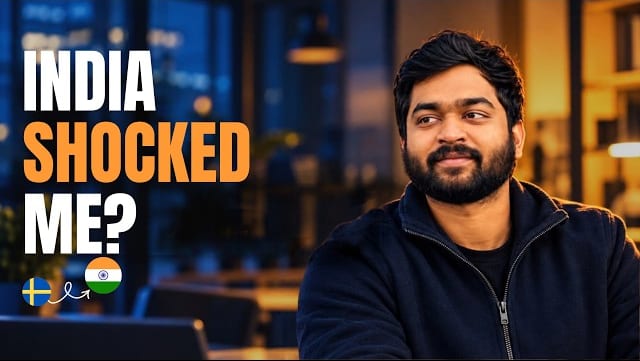
Why This Canadian Entrepreneur Moved to India After 15 Years - Lux's Journey
Lux moved to Canada at age 13, spent 15 years building a successful real estate career, and returned to India in 2024 for family. Learn his insights on finances, Indian real estate opportunities, and why he's bullish on India's next 25-30 years.

In this story
- Key Highlights from Lux's Journey
- ✈️ Moving to Canada at 13: A Unique Beginning
- 🏫 School Transition: Challenges and Lessons
- 🎓 University of Waterloo: The Transformative Years
- 💼 Career Path: From Internships to Federal Government
- 🏠 Real Estate Journey: Building Wealth in Canada
- 🇮🇳 The Decision to Return: Family First
- 🏡 Life in India: Adjustments and Observations
- 💰 Financial Planning: How Much Do You Need?
- 🏗️ Indian Real Estate: Opportunities for NRIs
- ⚠️ Concerns About Raising Children in Canada
- 💡 Advice for NRIs Considering the Move
- ❓ Frequently Asked Questions
Lux moved to Canada alone at age 13, built a successful real estate career, became part of the top 1% in Canada, and returned to India in 2024 with his young family. Discover his insights on finances, Indian real estate opportunities, and why he's bullish on India's next 25-30 years.
Key Highlights from Lux's Journey
- Moved to Canada alone at age 13, stayed with his aunt while family remained in India
- Achieved 99.8% average in Grade 12, completed double degree at University of Waterloo
- Built real estate portfolio becoming part of top 1% in Canada
- Returned to India in July 2024 after welcoming his baby boy
- Had met parents only 15 times in 15 years - family was the primary reason for return
- Very bullish on Indian real estate - expects market to reach $1 trillion in coming years
- Advises: 1-1.5 lakh/month for single person in tier-2 cities, 2-2.5 lakhs in metros
- Key insight: Don't overanalyze - analysis paralysis prevents many from ever making the move
Breaking the Analysis Paralysis: "I've seen so many people, even in my own family in Canada, who always say 'we want to go to India' but they're too caught in analyzing how their life would look like in India. They never end up experiencing it." Lux's story is about taking calculated risks and trusting the process.
✈️ Moving to Canada at 13: A Unique Beginning
Lux's story has a unique beginning. His family first went to Canada in 2008 when his father was the primary applicant for Permanent Residency. However, they stayed only a month.
The family returned to India, and life continued normally. Then in 2010, something changed.
The Unexpected Request
Lux had just finished 8th grade in India when he went to his father one evening and said: "I want to go to Canada."
He doesn't remember exactly what triggered this - possibly something at his tuition center or school. But the next day, his father simply said: "Okay, you're going."
The reality hit: "Once I heard that I'm going, there was a fear in me. I had never traveled alone. I hadn't done anything alone. And I was 13 years old."
Lux's first flight was alone, on a connecting flight. He vividly remembers being scared, not knowing what to do or where to go, just following other passengers connecting to Canada.
In Canada, his only family was his aunt (father's sister). His parents, brothers, sisters - about 12 people in total - all remained in India. This would set the stage for a 15-year journey that would eventually bring him back.
🏫 School Transition: Challenges and Lessons
Joining the Canadian school system in Grade 10 presented unique challenges. Friend groups were already formed - either from middle school transitions or from Grade 9 when students had classes together.
The Outsider Challenge
"I was an outsider in the true sense - coming from a different country, in Grade 10 when people already had groups of friends. Getting into those circles was challenging."
The challenges were multi-layered:
- Language barrier: He could speak English, but not at the level where locals considered him "one of them"
- Fear of rejection: Shyness prevented him from approaching existing groups
- Cultural differences: Different social norms and expectations
Lux's Advice for Students
"If you're anywhere in the world, you shouldn't shy away from going and talking to people. Those people were genuinely very nice and inviting. I think it was the shyness in me, the fear of being rejected, that I didn't even approach those groups."
The turning point: Once he started approaching people, they were welcoming. They studied together, solved problems together, and became friends.
Finding His Safe Haven: ESL Classes
Lux found his community in ESL (English as Second Language) classes. There, he met students from Iran, Iraq, Afghanistan, Pakistan, India, and the Middle East - all navigating similar challenges.
A Lifelong Connection
"One of my best friends, even till date - he's like a guide, a mentor - I actually met him through ESL. He was a senior to me."
This friendship, formed in those challenging early days, has lasted over a decade and continues to be a source of guidance and support.
🎓 University of Waterloo: The Transformative Years
By Grade 12, Lux had achieved remarkable academic success - a 99.8% top six average. However, he made a decision he now regrets: only applying to 2-3 schools.
He chose University of Waterloo for two reasons:
- The co-op (internship) options
- His mentor from high school was in the same program
The Double Degree Challenge
Lux enrolled in a double degree program: BBA (Bachelor of Business Administration) and BMath (Bachelor of Mathematics) with a Computer Science minor.
His mentor warned him: "Don't come here. You're going to hate your life."
Lux's response: "If you can do it, I can do it too. Don't challenge me."
The Difficult First Two Years
The first two years were brutal. Coming from being the top 1% in high school, Lux found himself surrounded by other top 1% students from across Canada.
The Struggle
- Scoring 50% on assignments when used to 99-100%
- Stopped going to classes
- Started deferring exams
- Sought therapy and mental counseling
- Partied and did "everything humanly possible" except academics
But this period, which Lux calls "the development part," shaped him profoundly:
What Waterloo Taught Him
- Mental toughness: Waterloo's slogan is "Tough times don't last, but Warriors do"
- Resilience and consistency: Learning to push through difficult times
- Social skills: He became so social that anyone at Waterloo could point to his dorm room
- Best friendship: Met his best friend during this period - they've been together 12-13 years
- Personal development: Physical, mental, spiritual growth all happened here
After two years, a sense of responsibility kicked in. He realized he was spending his family's money and trust without doing justice to it. He started balancing social life with academics, physical health, and spiritual growth.
💼 Career Path: From Internships to Federal Government
Waterloo's co-op program gave Lux extensive professional experience. His program originally had 5 internship blocks (each 4 months, counted as full-time experience), but he did 7 total - 4 required plus 3 additional.
Internship Experience
| Company/Sector | Role/Area |
|---|---|
| RBC (Royal Bank of Canada) | Banking |
| Pension Plan | Financial Services |
| Buy-side Private Equity | Investment |
| Real Estate Private Equity | Investment |
| CGI | Technology Consulting |
| Capital Markets | Global Banking Systems |
Post-University Career
After graduation, Lux worked for about 3 years in full-time roles:
Professional Journey
- Tech Startup in Montreal: First job after university, stayed about 6 months
- Export Development Canada (Federal Government): Business development for financial solutions
- Financed exporters out of Canada
- Trade-related financing: mergers & acquisitions, insurance for trade products
- Revolving lines of credit and other financial solutions
- Bridge between business side and back office
🏠 Real Estate Journey: Building Wealth in Canada
Lux's first business wasn't real estate - it was fashion. During university, he started a clothing brand called "Urban Desi Toronto."
Urban Desi Toronto
The concept: Taking his family's ethnic Indian menswear business and creating streetwear with a modern twist - long t-shirts made from Khadi fabrics with unisex appeal.
They attended streetwear conferences and trade shows within and outside the university. Eventually, Lux sold the business to an Indian retailer (name undisclosed).
The Real Estate Spark
The real estate journey began with a suggestion from his father: buy a student rental property in Waterloo.
This financial freedom was transformative. While many international students worked 2-3 part-time jobs alongside university, Lux could focus on what actually mattered - his education, personal development, and building relationships.
Real Estate as a Vehicle for Freedom
"Buildings always interested me. Tenant solving problems always interested me. I love taking on complex problems which I can't even solve sometimes. Real estate is my vehicle for financial independence and financial freedom."
Result: Lux became one of the top 1% in Canada through real estate investments.
🇮🇳 The Decision to Return: Family First
Despite success in Canada - financial freedom, real estate portfolio, good career - something was missing. The trigger came with the birth of his son.
The Stark Reality
Lux did the math on his relationship with his parents:
15 Years, 15 Meetings
"In the last 15 years, I've only met my parents 15 times. And that's only for like 15 to 20 days, maybe 30 days max."
This realization was an emotional trigger. The clean roads, clear skies, and less traffic in Canada suddenly seemed less important than family bonds.
The Decision Process
- Family support: His wife was on board after understanding his reasoning
- Trust in India: He trusted India's economy for the next 25-30 years
- Infrastructure growth: Saw massive development in India
- Quick execution: Sold his sports car, made the decision with his wife
- Open mindset: Not fixated on one country - flexible about future moves
The timeline was remarkably fast:
- January 2024: Started thinking about the move
- Mid-May 2024: Made the final decision
- July 31, 2024: Landed in India
🏡 Life in India: Adjustments and Observations
Lux is 29, his wife is the same age, and they have a young son. They're based in Delhi NCR area, working in real estate.
What He Misses About Canada
- Clean roads and less traffic
- Driving on the highway at 120-140 km/hour
- Clear skies
What Makes It Worth It
- Seeing his son play with 12 different family members in the household
- Family love and affection
- Not having to arrange play dates and night stays for socialization
Navigating India's Challenges
Lux has a practical approach to India's challenges:
The Hack Approach
"If you know some hacks to bypass the problematic areas, your life in India can be absolutely amazing."
Traffic example: Traffic hours are 7-9 AM and 6-9 PM. If you can schedule around these, the infrastructure is excellent. The Dwarka Expressway is a 16-lane highway connecting Delhi to Gurgaon - "I've never seen anything like that. No 401, no 410, no 407 can compare to these new expressways."
His philosophy: "If you want to find reasons to hate your life in India, you will hate your life in India. But if you actively look for ways to make your life better, you can make it amazing."
Services and Convenience
Lux is impressed by India's service ecosystem:
- Medicine delivery: Blinkit or Zepto delivers at 2 AM in 3 minutes
- House help: Affordable domestic help (vs $50/hour in Canada)
- Delivery services: Everything comes to your doorstep
- Time savings: No need to physically go to stores for basic needs
💰 Financial Planning: How Much Do You Need?
Lux provides practical financial guidance based on his experience:
Monthly Income Guidelines
| Situation | Monthly Amount | Notes |
|---|---|---|
| Single person, Tier-2 city | ₹1-1.5 lakh | Can go really far |
| Single person, Delhi/Mumbai | ₹2-2.5 lakh | For NRI-level luxuries |
| Comfortable with travel | ₹50K-1 lakh | Some people are happy with this |
| Lux's target (young family) | ₹3-4 lakh | To enjoy life, travel, pay for family |
Important Reality Check
"When people say India is cheap, it's not."
Good restaurants and 5-star hotels in India can be MORE expensive than North America. But the services and grandeur are unmatched. The JW Marriott or Hilton in India has a huge lobby and true 5-star feel, while Canadian hotels near airports are "very corporate, very businesslike, very monotonous."
Two Big Expenses
Lux identifies two major expense categories:
- Housing: Rent or EMI
- Kids' Education: Can vary significantly based on curriculum and school
Once these are handled, there's significant flexibility in other expenses. For detailed guidance on managing finances during your return, check out our comprehensive NRI financial planning guide.
Stretching Your Dollar
- Experience boutique things in Tier-2 cities
- Stay at boutique Airbnbs instead of luxury hotels
- Plan trips in advance for better deals
- A normal family can have a great time with planning
🏗️ Indian Real Estate: Opportunities for NRIs
As a real estate professional, Lux has deep insights into the Indian market. He's very bullish on Indian real estate for the next 15 years.
Market Comparison: India vs Canada
| Metric | Toronto Downtown | Delhi NCR (New Launch) |
|---|---|---|
| Price | ~$500,000 CAD (₹3.5 crore) | ₹3.5-3.75 crore |
| Size | 500-650 sq ft (1 bedroom) | 2900-3300 sq ft |
| Type | Condo | Gated community, reputed builder |
NRI Investment in Indian Real Estate
The numbers are significant:
- 27% of one particular builder's business comes from NRIs
- Bangalore, Hyderabad, Pune also seeing big NRI investment
- 85,000 cranes currently working in Gurgaon market alone
- Market expected to reach $1 trillion in coming years
Reputed Builders to Consider
- Godrej Properties
- DLF
- M3M
- Signature Global
- Sobha International
All listed players known for delivering quality.
New Launch vs Resale: Critical Advice
Lux's Strong Recommendation
New Launches: Easy for NRIs - DocuSign, digital KYC, no physical presence needed. Just soft copies of government IDs required.
Resale: "I strongly advise NRI clients against buying resale property. The compliance issues and paper trail involved - it's very challenging. If you don't have the right advisor, you can really get lost in the sea of complexities."
Selling ancestral property is sometimes inevitable, but buying resale is "basically shooting yourself in the foot." For NRIs looking to invest in Indian real estate, understanding RBI's FEMA guidelines on property purchase is essential.
⚠️ Concerns About Raising Children in Canada
Lux shared a story that deeply influenced his decision to return to India.
The Story from "Indians in Toronto" Group
A 6-7 year old Indian boy came home from school and told his banker parents: "Dad, I feel like I am a girl in a boy's body."
The child said he felt he should be wearing a frock, not jeans or trousers.
When the shocked parents approached the school, they were told: "If you cannot accept our culture, move back to your country."
This, combined with other factors, reinforced his decision:
- Schooling system concerns
- Education costs
- Rent and real estate prices
- Economy "going to shambles" in the last 2-3 years
Lux's perspective: "The drive to move back from Canada is a lot more in the last 2-3 years because of the schooling system, education system, rent prices, real estate prices - the economy is going to shambles."
💡 Advice for NRIs Considering the Move
Lux's advice comes from his unique perspective - young, successful, with a young family, and willing to take calculated risks.
Key Advice Points
- Don't just jump in: Some planning is definitely needed
- But don't overanalyze: "If you just keep overanalyzing, you would never be able to take that decision"
- Have resources: Family backup, financial resources help
- Trust the process: "Tweaking things along the way can go really far"
- Evaluate with the right lens: Do your research, talk to people
The Analysis Paralysis Problem
"I've seen so many people, even in my own family in Canada, who always say 'we want to go to India.' The conversation around the table every time we met was about going to India. But those guys are never able to take the decision because they're too caught in analyzing how their life would look like in India. They never end up experiencing it."
Lux's personal approach:
- Talked to his dad (his most trusted advisor)
- Did research on what was happening in India
- Checked facts about economy, infrastructure, services, lifestyle
- Made the decision and executed quickly
For more stories of NRIs who overcame analysis paralysis, read about how other families made their return decision.
Planning Your Return from Canada?
Lux's story shows that with the right planning and mindset, returning to India can be a smooth transition. Get personalized guidance for your situation.
❓ Frequently Asked Questions
Why did Lux move to Canada at such a young age?
Lux's family first went to Canada in 2008 when his father was the primary applicant for PR. They stayed only a month as his father didn't see much potential there at the time due to the economy and their family business back home. In 2010, when Lux had just finished 8th grade in India, he asked his father if he could go back to Canada. The next day, his father agreed. Lux doesn't remember exactly what triggered the request - possibly something at his tuition center or school. He traveled alone at age 13 on a connecting flight (which was scary for him) and stayed with his aunt (father's sister) who was the only family in Canada. His parents and 12 family members remained in India.
How was Lux's transition to the Canadian school system?
The transition was challenging. Lux joined in Grade 10 when friend groups were already formed (either from middle school or Grade 9). He was an outsider coming from a different country. The main challenges were: 1) Getting into existing friend groups - people already had their circles, 2) Language barrier - he could speak English but not at the level where locals considered him "one of them", 3) Shyness and fear of rejection prevented him from approaching groups initially. His advice: don't shy away from talking to people - they were genuinely nice and inviting once he approached them. He found his "safe haven" in ESL (English as Second Language) classes where he met students from Iran, Iraq, Afghanistan, Pakistan, India, and the Middle East.
What was Lux's educational and career path in Canada?
Lux had a 99.8% top six average in Grade 12 but only applied to 2-3 schools (he regrets not applying to more). He chose University of Waterloo for its co-op/internship options and because his mentor from high school was in the same program. He did a double degree in Math and Business (BBA and BMath with Computer Science minor) - a very challenging program. The first two years were difficult - he struggled academically, deferred exams, and sought therapy. But this period developed him personally. He completed 7 internship terms at RBC, pension plans, private equity, CGI (tech consulting), and capital markets. After university, he worked at a tech startup in Montreal, then at Export Development Canada (federal government) doing business development for financial solutions.
What made Lux decide to return to India after 15 years?
The major reason was family. After welcoming his baby boy, Lux realized he had only met his parents 15 times in 15 years, for just 15-20 days (max 30 days) each visit. This emotional trigger made him realize that no amount of money matters if there's no one to enjoy it with. He missed the family love and affection that only family can provide. His wife was on board after understanding his reasoning. Additionally, he trusted India's economy for the next 25-30 years for his growth, business growth, and family's growth. He saw the infrastructure development, services improvement, and quality of life changes in India. The decision was quick - from January 2024 thinking about it to July 31, 2024 landing in India.
What financial advice does Lux give for people considering moving to India?
Lux's rule of thumb: For a single person, 1-1.5 lakh rupees per month can go really far in tier-2 cities. In Delhi or Mumbai, increase to 2-2.5 lakhs for the luxuries NRIs are used to. His personal number is 3-4 lakhs per month (he's working toward this). Key insights: 1) India is NOT cheap if you go to good restaurants or hotels - they can be more expensive than North America, but the service and grandeur are unmatched, 2) To stretch your dollar, experience boutique things in tier-2 cities and Airbnbs, 3) Two big expenses are housing and kids' education - once those are handled, there's flexibility, 4) Plan but don't overanalyze - analysis paralysis prevents many from ever making the move.
What are Lux's views on Indian real estate for NRIs?
Lux is very bullish on Indian real estate for the next 15 years (market expected to reach $1 trillion). Key insights: 1) New developments in Delhi NCR offer 2900-3300 sq ft apartments for 3.5-3.75 crores - same price as a 500-650 sq ft one-bedroom in Toronto downtown, 2) 27% of one particular builder's business comes from NRIs, 3) Reputed builders like Godrej Properties, DLF, M3M, Signature Global, Sobha International are delivering quality, 4) For NRIs, new launches are easier (DocuSign, digital KYC, no physical presence needed), 5) He strongly advises against buying resale properties due to compliance issues and paper trail complexities, 6) Currently 85,000 cranes are working in Gurgaon market alone - massive infrastructure development.
What concerns does Lux have about raising children in Canada?
Lux shared a concerning story from the "Indians in Toronto" Facebook group: A 6-7 year old Indian boy came home from school and told his banker parents "I feel like I am a girl in a boy's body" and wanted to wear frocks instead of jeans. When the parents approached the school, they were told "If you cannot accept our culture, move back to your country." Lux sees this as brainwashing children with gender ideology, creating a "generation of confused people." Having just welcomed his son, this was an eye-opener. He didn't want his child raised in that environment. Combined with the schooling system issues, education costs, rent prices, and the economy "going to shambles" in Canada over the last 2-3 years, this reinforced his decision to return to India.
Ready to Make Your Move to India?
Lux's story shows that with the right planning, family support, and mindset, returning to India can open new opportunities. Whether you're considering real estate investment or a complete relocation, we're here to help.
Connect with 1000+ NRIs who have returned or are planning to return to India. Share experiences, get advice, and find your community.
Chapters
- 0:00 <Untitled Chapter 1>
- 2:31 Background
- 3:59 Why Canada?
- 5:34 Education in Canada
- 8:17 College life in Canada
- 10:38 How development happened at college
- 15:21 Work life after education
- 18:12 Business life in Canada
- 19:48 Why move back to India
- 21:13 Planning the move
- 23:04 Professional life in India
- 24:47 Life in India
- 26:55 Opportunities in India
- 31:38 Cost of Living in India
- 36:02 Real estate in India vs Canada
- 40:48 Any advice for future aspirants
Transcript
Auto-generated captions, lightly cleaned
0:05 One one and a half laks a month can go really really far in tier 2 City in a city like Delhi or B in Mumbai maybe you know you can increase that to two two and a half lakhs for the luxury that we're used to having 27% of one particular Builder's business comes from NIS and that's just one Builder I've seen so many people at least even in my own family in Canada that they always say the conversation around on the table always every time we met know we want to go to can but those guys are never able to take the decision because they're too caught in analyzing or too stuck up in analyzing how their life would look like in India when once they go but they never end up a lot more in the last 2 three years because of the schooling system and the
1:06 Education system and the rent prices real estate prices that the economy is going to shambles hello everyone welcome back to another episode of Da return today I'm excited to have Mr Lux on our show LX went to Canada when he was 13 and he was there close to 15 years before moving back to India he moved to India early this year and this one is special because he went to Canada when he was very young I'm really looking forward to the discussion especially how his education
2:06 Was what made him to move back to India and and much more so with that welcome LX to the show thank you AI thanks everybody hope everybody's doing well looking forward to our chat AI great so L let's start a bit about your background and what made you to move to Canada sure bit of a unique story
2:33 Here but I moved to Canada well we went to Canada first time in 2008 my dad was the primary applicant for PR and when we went we were only there for a month we have a family business back home and yeah I don't think my dad really saw some any sort of potential at that time maybe it did in real estate but business- wise the economy was not doing it much I guess much better than India anyway so we decided to come back and 2010 when I was in I just finished grade eight in India I don't know what happened I asked my dad I want to go back to Canada in 2010 I went back to Canada my parents my family my brothers sisters everybody so we're about 12 people in our family they're back home in India and I was there alone with my aunt so my dad's sister
Read the full transcript (52 more sections)
3:34 She's the only family I had in Canada and yeah and from there on it was just my High School there grade 10 11 12 and then I went to University in in Canada as well got it so what interested you to go to Canada you just want to explore you want to be in a different place than you know with the family just curious yeah yeah
4:00 I honestly I don't remember that far back but what I can recall or recollect is I just one fine evening I went to my dad I want to go to Canada I I think there would have something happened at my tuition Center or or in in the school and I just said I want to go back to Canada and you know the next day my dad's like okay you're going so I mean I don't I don't know what happened how the decisions were taken the back but and what I can remember is me me telling my dad I want to go and the next day he was like okay you're going so once I heard that I'm once I heard that I'm going you know it was a very there was a fear in me I mean I've never I never traveled alone I I didn't I hadn't done anything alone and I was 13 years old so that was my first flight alone and it was a connecting flight I vividly remember it was I was very scared I I didn't know
5:01 What to do I didn't know where to go and I was just following the the people in the in the flight who were connecting to Canada and yeah it was it was an experience for sure a good one and you can call it a fearful one as well yeah I'm sure so I'm curious about the transition from a school perspective right so you were studying till 9th grade and joining in a different country different place at 10th grade how was the transition any insightful you know thoughts insights anything that you can share to us
5:36 Definitely so my experience particularly was a challenging one I had a hard time making groups of friends getting into the groups of friends as I mentioned friend groups are made either in the middle schools and they transition together in grade nine to high school or grade nine is the founding block of friend groups where you know you go to classes together you have certain periods together and all that stuff so I was an outsider in the true sense where I was coming from a different country and I was in great 10 people already had groups of friends so getting into those circles getting into those groups was a challenging part definitely and I what I can share from my experience is if you go if you're anywhere in the world you shouldn't shy away from going and talking to people because those people were genuinely very nice and they were very inviting I think it was the the shyness in me or the fear in me to fear of being rejected that I didn't even approach those groups right so
6:38 Anywhere for kids who are watching your show or parents who are watching your show I think all we got to teach our kids is just going out and asking for what you want and you'll you'll eventually get it right once I started doing this when once I started approaching people groups of people they were very inviting they were you know they started making friends with me they were studying with me they were solving problems with Me So eventually that all that I I overcame all that but in the beginning the beginning phase was really challenging in the sense that you have a language barrier you can't talk properly you know you can speak English but you're not onto their level where they think that you know you're one of them right once I joined ESL I I made friends with different people from all over the world so Iran Iraq Iraq Afghanistan Pakistan India and Middle East so all these people were coming together in one particular period one
7:39 Particular class ESL so that was like my safe haven safe Zone where I could be myself and generally started making a lot of friends actually one of my bestest friends even till date he's like a guide a mentor he's he was a senior to me but I actually met him through so it was a blessing in this guys for sure right nice so after the schooling like how did you choose about the college and maybe the career after that so any other insights that you can share your journey in Canada yeah yeah of course so grade 12 we were
8:19 We were supposed to pick our universities we had to apply to universities and all that so the I'm going to share the drawbacks or the ch Alles first not even challenges the bad thing that I did which people can learn from me is I only applied to like two or three schools you know top maybe one or two schools and I got in that's a different part but I feel like having options in life can really change the course of your course of your trajectory in life right my average in grade 12 was really really high I I mean I had a 99.8 top six average so I couldn't would have gotten into any business school u in Canada or the US what actually happened was I didn't even apply to these schools I just applied to three schools and I got into all of them and the the school I chose University of watero I chose that because of Co-op options internship
9:19 Options and majorly because one of my friends who's also my mentor from high school he was doing the same program that I wanted to go into so I like you know this is it I'm just going to go do this it was a very challenging program I mean I did a double degree in math and business so I have a BBA and B maath with a computer science minor very challenging program in the sense that my friend who was my mentor he said don't come here you're gonna you're gonna hate your life don't don't do this and at that point I was like well if you can do it I can do it too so don't challenge me so I just went for it so I had a I had a tough time in University but I had a great time in University as well all my social life all my personality development all my personal development everything happened through waterl like I mean everything that I have even in the financial sense physical sense mental spiritual all that happened because of my University and the city that I was
10:21 In very interesting yeah anything that you can share because that's a big statement like you know everything is it the the friends is it the like the curriculum or it just just curious like is there anything that you can pinpoint and just because it's a big statement that you made there so just yeah
10:38 Definitely so I think whatever Happ my mom always says and I started to believe her as well that whatever happens happens for a good reason and I think the reason for me to go to water was my self-development and personal development and getting in front of people who are the cream across Canada I mean I was is the top 1% in my high school and when we went to waloo everybody was a top 1% from their high schools right so that is a mental challenge as well like I mean if you score let's say 50% in one of your assignments or one of your midterms you feel discouraged because you were you used to scoring 100% 99% and what waterl taught me was mental toughness and waterl as a slogan of of the the teams are called waterloop Warriors yeah and their slogan is tough times don't last but Warriors do right and that
11:38 Taught me how to be resilient how to be consistent although I was not consistent the first part of the the journey in in University I was farting a lot and I was doing you know everything that is humanly possible but all to say I the first two years developed me as a person because once I got bad grades I stopped going to classes I just you know I I started deferring exams it was a very challenging time for me I started seeing a mental counselor as well I started seeking therapy and so that particular phase of my life I call it the development part that's the part where I met my best friend in life and it it's been what 12 13 years that we've been together we act as trusted advisers we you know we soundboard each other we hear each other out and you
12:40 Know that two years those two years gave me all that yeah and after the two years I was going to the gym and everything you know no classes whatsoever deferring exams nothing like no education at all just social like I was very social you could go to watero and ask anybody who Lux is they would point you to my dorm room right I was I was that social and after the two years I started realizing that I maybe you know putting my eggs all in one basket and not necessarily doing Justice to my family's money and resources and their trust so my dad my mom my my dad's elder brother my uncle and my brothers they all trusted me with something that I've I am doing outside India but they don't know what I'm doing so I you know that that was a sense of responsibility that came into me by itself and that's when I started focusing on balancing my life in a way of social physical mental
13:43 Spiritual and education as well that was a big component so when I say that statement the big statement I think waterl as a city and Canada as whole has given me a lot even even from the financial perspective we bought our First Property in watero as a student rental and my whole well not not mine my dad's whole idea was you know you live in one of the rooms and rent out the whole thing yeah and I was a I was shocked by how much money I was making at that time like I I thought I could just get peanuts and that would be my U snack money or my liquor money or beard money but it was actually it was actually consistent to a point where it could I could pay to fee from it I could you know I could pay my meal plans from it I could buy alcohol from it I could do anything from it that money really allowed me to be free in University and actually focus on what actually mattered not not not
14:44 The money part not the stress from the money because I've seen a lot of people a lot of my own friends from coming from third world countries and really slog their slog their time with part-time jobs two or three part-time jobs long with University and I was fortunate enough not to be not to be doing that so I thank I thank watero as a whole for my development great so how did it go after the education like after schooling like you work there and how was the life of the professional Journey yeah yeah interesting that you asked my my
15:22 Program had originally had five internship U blocks so each internship block is four months and that's actually counted as full-time experience when you actually go out in the in the job world right so my experience was four which was the given ones and then I did three more right from my own side side so I had seven U internship or Co-op terms with big Banks like RBC I had a pension plan I was on the buide private Equity I did a real estate private Equity internship as well technology Consulting I worked with CGI as a tech consultant Capital markets and global banking systems so that was a great experience for me I think in the sense that if you go out in the real world and you apply for jobs people look at you differently and that's sort of the norm in US and Canada as well people tend to look at you
16:22 Differently and they treat you differently because you have a sort of set of skills and experience that you are bringing to the table table that allowed me to open doors in places that would have never been open for me either in business side my personal business or the job front when I went for a full-time job yeah definitely so have you worked there or like you just went into business or what made you to move back to India just I think maybe what's the thought process and yeah so I did work there for about three years as a full-time job my first job was at a technology startup in Montreal so I was in Montreal after schooling after University and that was the time I got my first job at a tech startup in Montreal stayed there for about six months and I secured a gig then with the federal government federal government I was doing business development for Financial
17:23 Solutions the the arm that which I was working with it's called export development Canada and we used to finance exporters out of Canada so anything trade related we used to finance be it be merges and Acquisitions be it be your insurance for trade for your product if you're an exporter and you want insurance for your product we used to do that those Solutions as well and finance evolving rcfs revolving lines of credits and all that so I was the I was on the front end and the back back and bridge between the business side and the back office yeah yeah well you asked the question about business my first business actually was while I was
18:12 In university I started a fashion clothing brand called Urban Dei Toronto and the whole point of that brand was you know taking my family business which is ethnic Indian Men's Wear into a street wear modern style for or unisex clothing it wasn't just men it was long t-shirts made out of CA Fabrics with a with a street wear twist so we attended a lot of Street Wear conferences we had a lot of trade shows within the university and outside and I actually ended up selling that business to one of the Indian retailers which the name I can't disclose okay no yeah that was my that was my that was my first business and eventually I just got into real estate my my passion my background I mean buildings always interested me tenant solving problems always interested in me I I love taking on complex problems which
19:13 I can't even solve sometimes so it becomes a nightmare so then I have to ask for external help but real estate sort of is my vehicle for financial Independence Financial Freedom and it has allowed me to be one of the top 1% in Canada got it cool so everything is great in Canada right I mean you have the financial flexibility and you have you know great group of friends everything is going great so why the plan to move back to India yeah major reason was family
19:53 We recently welcomed our baby boy into the world and I started longing that affection I started longing that that love which you know you could get only from family nobody else and you know yes you do have your assets back in in Canada and all that but even if you're making a ton of money who are who's there to enjoy it with you right to give you a perspective in the last 15 years I've only met my parents 15 times and that's only for like 15 to 20 days maybe 30 days max and you know that really was an emotional trigger for me once my my son was here in my hands I was triggered to a point where nothing else mattered to me I mean no yes you do have clean roads and clean environment in Canada less traffic and all that everything is beautiful but I think for me family love affection and that bond is more
20:54 Beautiful than just roads and and you know clear skies yeah so was there any planning that you have done you know once the decision was made like you know after your son was born like when did you decide to actually move and what was the planning that went behind it so II my plan was to
21:14 Not be fixated in one country right like I'm I'm still me and my wife were still open to different countries my dad's very open-minded my family is very open-minded for business you know you could relocate anywhere in the world but in in terms of the planning there was no planning done I I just heard the facts I checked the facts I found out what was happening in India I found out what was going on in India in terms of the economy in terms of the infrastructure in terms of the services and the lifestyle that that nris can afford and after that it was just you know sold my car off I had a sports car I loved it it was a decision that that came after discussing with my wife as well because her opinion is very important to me as well but she was on board she she didn't deny once she knew what I was talking about she trusted in me and I think that's
22:16 Being the biggest proponent for me to come back because my family trusted in me my wife trusted in me and i' and most of all I trusted India's economy for for my growth and my business growth and my family's growth over the North American side I mean all that side is great I'm not really putting it down but I think the next 25 30 years is India's time to shine and we can come out on top if we could get good talent educated Talent in these industries which are lacking people lacking the workforce of educated people great so I'm assuming that you kind of transitioned into business and not anymore the career in India and that's what you're trying to expand is that right right so not
23:04 Entirely it's a I I took a bit of a unique Journey as well so for the last before coming here for the last month month and a half two months I was I was reaching out to people I was interviewing not interviewing but just understanding how the real estate market works here because that all that's what I've done I know how to do that the best and I reached out to a lot of brokerage owners like who are who have their companies of 200 people 100 people that side of that side of spectrum and understood what the real estate looked like in India and how I could be a part of this whole big bubble of not even bubble just the ecosystem yeah the whole ecosystem of real estate in India and fortunate enough my one of my old friends from school has been in this game for the last 20 years and he guided me he got me a gig with u two guys who run their
24:04 Own company and it went really well for for the last two and a half months I was working with them as a business partner on a revenue sharing basis so not not entirely a job but it kind of gets you into the flow of things gets you into a routine of going to the office and going out meeting developers meeting investors meeting clients and you know getting to the whole business sort of gig got it yeah cool so how is the life in India now that I think you've been leaving here so been away for more than 15 years especially like most of your adulthood was an abroad so how does it feel and how is it going you know you definitely miss the
24:48 Luxuries of Canada definitely I I you know I missed the clean roads and the less traffic and driving on on the highway for about 120 an hour or 140 an hour but all that Fades away when you sort of look into your daily home life your your family life when I see my son playing with 12 different people within the household I think that all that stress of making this decision Fades away in in Canada if we were in Canada at this point it would have been me and my wife just doing everything possible to get him to socialize with other people taking him out to to know play dates and night stays and whatnot yeah know you could do all that in India as well there's there's no stopping people are now aware of the culture outside abroad so they're doing slumber parties they're
25:49 Doing the night stays they're doing the play dates and all but this part of having family around which is my e those would would have been absent in Canada got it right so maybe one perspective that I would be curious especially for someone who did a professional education on a business maths and the comment that you made in terms of you know the India has its opportunity to shine in the next 20 to 25 years right I mean you spent your adulthood you saw I think you know how North America Works you have heard some facts or have seen something in India so any anything that kind of you know solidify your thought about yes India has its opportunity like you know what are the differences that you see now that you're spending time here in India anything that you can share just to help people hey you know things have changed or for a better or for good or you know things still have to evolve just curious on
26:51 That yeah definitely so I think
26:55 When I made that comment about India's time to shine for the next 30 Years predominantly I was referring to where things are going infra wise and services wise and the whole environment of you know when when you talk about quality of life you talk about Healthcare you talk about restaurants you talk about infrastructure you talk about traffic you know you talk about your daily operational life and I feel like if you are if you know some hacks to bypass the problematic areas your life in India can be absolutely amazing by what I what what I mean by that is let's take a small example of traffic I go to G every day for my business and the traffic hours are usually from 7 to 9: in the morning and 6 to 9 in the evening so if you can somehow figure out a time to bypass those traffic hours the infrastructure devel that they have developed like dwara Expressway it's a
27:58 16 Lane Highway which connects Delhi to guro from a different angle Al together fantastic like I what when I say fantastic I've never seen anything like that no not 401 no 410 no 47 407 can compare to these new expressways that they're making in terms of your life in India I would say you just have to figure out ways to make your life life easier if you want to if you want to find out reasons how you you know you hate your life in India you will hate your life in India that's for sure but if you actually actively look for ways to make your life better in India let's say for example getting house help or getting chores done or getting Services delivered to your doorstep or anything let's say for example if I'm if I'm looking at getting medicines delivered at like 2 a.m. I blink it or Zep to it and it just
28:58 Comes in like 3 minutes right whereas in Canada I would have to go out go to Shoppers Drug Mark or Walmart or something and actually have to physically be present there to take my medicine come back home so that that cycle of steps the time frame is reduced in India and I feel that's a very big thing if you are a business owner if you are actually looking to make your life easier let's talk talk about you know grass Mowing and snow cleanup although people nowadays are getting much more aware about their time and the hours that these things take they do hire external help in Canada as well but at what price you just have to look at the price tag as well like I used to pay my cleaning lady $50 an hour and she used to come you know two times a week and that would I mean that that was was a hefty price tag but here in India I
30:01 Think I could afford all that luxury at a minimal cost make my life easier and also focus on things that actually mattered like spending time with family going out to do business or you know traveling I think India from India there's a lot of different avenues that you can explore but at a very minimal price tag which is a big thing for me and my wife as well yeah for sure so I think thanks a lot for all the information is there any topic that we haven't covered that you would like to bring up I think we could talk about the financial side of things you know because that that's a big reason why or or the lack of clarity that that's a big reason which you know people are not sure about they they they want to take this step but they're not able to because there's a lot of fog around what will happen when I go there and how far will my money go and all
31:02 That so I think we could talk about that and real estate in general you know we could talk about yeah let's talk about that I think that would be very helpful so maybe on a like a financial side anything that you can share from a planning you know like you know you have mentioned that you have a lot of assets that's one aspect like you know in managing that and also the cost of living like how far the dollar can go any insights like you know is there anything that you can share from a you know not like a corpus fund like you know just some kind of like a safety net that they need you know before making a decision any any any anything that you wanted to share I think that would be fantastic sure as a rule of thumb I
31:40 Would say if you were a single person if you are saving one to one and a half lakhs a month in India I think you not saving you're you're making or you're having from a steady flow of off stream of income one one and a half lakhs a month can go really really far in tier 2 City in a city like Delhi or B in Mumbai maybe you know you can increase that to two two and a half lakhs for the luxuries that we're used to having in North America that's for a single person I would say but this is for just my opinion I think people a lot of people can be okay with just 50 to 75,000 I've heard stories a couple one lakh rupees a month they were really happy they're renting a place they're really happy traveling India and all that great good for them for me I'm a young guy I want to enjoy my life I want to go out I want to take my wife show my
32:42 Wife places show my son places I actually want my family to come out with me as well and I I want to be able to pay for them so for me that number look a little bit on the higher side so yeah I think that's if you want to talk about my number my number was three to four lakhs a month I'm I'm not I haven't hit that number yet but I'm in the in the process of hitting that number and achieving that goal eventually that would happen and I think that's my that's my number of being a little comfortable taking it taking one step back and just you know spelling the Roses along the way yeah I mean if I may add I think there are a couple of big buckets that you know which cost more in India you know the first one is the house and especially if you have kids the kids education depending on the curriculum depending on the school that could be another big expense so I think once you have those two major things kind of
33:42 Taken care there is a little bit more flexibility you have like a wide range of services available the option the cost of living can vary from a person to person but if I might have to put I think those are the two big buckets you know where these monthly expenses would go in yeah definitely definitely and AI I would like to mention that when people say that India is cheap it's not like I mean if you go to a good restaurant or a good hotel it's not cheap at all it's actually more expensive than North America but the services that you get and the grandor that you experience it's a sight to have right like the five star hotels in India that we have Hospitality wise I used to go to JW Marriot or or you know Hilton or Radison in Canada it's not the same and if you go to the hotels near the airport in Delhi you enter Marriott and you just you're welcomed by this huge structure huge Lobby you just feel that you're in a festar hotel but in
34:44 Canada or in the US it's very corporate like very businesslike very monotonous so when people say that India is cheap it's not really cheap it depends on where you're going and where your money is going so if you want to stretch your dollar I would say try to experience Boutique things you know in Tier Two Cities travel and stay at Boutique airbnbs you know those are very affordable mid-ranged and a normal family can really have a good time if they if they plan I'm not much of a planner I just like to think things and do it and then figure things out along the way but people who have planning in place they can really really stretch their dollar in the sense that you know you they can experience all the luxury and still save and live a good life in India yeah definitely makes sense so I know let's talk about on the real estate side right I mean I think you've been on the real estate side in North America you are exploring options or
35:44 Opportunities here in India so anything that you can compare and contrast I know inflation has changed quite a lot since covid everywhere around the world you know the prices are completely different so anything that you can share on the real estate aspect between the two countries sure sure so when you
36:04 Compared let's talk about the new development side first and then we'll talk about the resale Market but when you talk about the new development side especially in Delhi NCR I've seen an epitome of luxury being delivered I'm not used to seeing at least in condos sizes of 4300 Square fet 4,500 ft 3,900 Square ft those are really really big spaces for two or three bedroom house or apartment in Canada and downtown the max I've seen is like maybe 15,600 Max to one bedroom in Toronto downtown could range anywhere from I would say 500 to 650 right which is which is like what three crores in India I would say three three and a half crores yeah three let's say 500,000 so 3.5 crores in India and now if you
37:04 Talk about the new launches in India that are happening in 3.75 3.6 crores you're getting massive layout sizes of 2900 3200 3300 square feet which are in a gated community developed Builder reputed credible Builders who are known for delivering Excellence like go R properties dlf m3m signature Global all the listed sha International all the listed players they're delivered quality and you'll be surprised to hear a lot of nris are fueling this economy I mean at least in Delhi NCR Bangalore Hyderabad Pune from my research at least 27% of one n and that's just one Builder right I haven't even scratched the surface on the whole good go and NOA Market so there's definitely a lot of potential for appreciation in terms of where the
38:07 Infra is going I haven't seen so many cranes go up I think I was reading a stat just yesterday in goodg market right now currently as we speak there's about 85,000 cranes just doing their job in toron it's it's a small it's a small piece of cities Toronto is like it's great it's amazing City I love Toronto that's my home but it's a small City and you can't expect that level of infra from them where which you can expect in India and even in Bangalore like I was leading up on Electric City there's a I think there's a new development happening and Bangalore is a big boom of NIS fueling the real estate economy and Pune as well so I am very bullish on Indian real estate for the next 15 years because they're expecting the price to the market size to touch one trillion in the next couple of years which is which
39:08 Is huge yeah and then I think you mentioned about some resale right like anything that you want to comment on that resale transactions so in the new launch side the transactions are very easy easy in the sense that if you have a good adviser if somebody's guiding you through the process your transaction as an NRI is very seamless you don't have even have to be physically present everything's through DocuSign or E do or whatever they want to use and they just want your kyc So Soft copies or digital copies of your government IDs and that's it done right but the problem arises in the in the resale side where either an NRI who doesn't live in India they want to sell their property ancestral property or want to buy a resale property which I strongly advise them against I I don't advise my clients NRI clients to buy or buy a resale property I mean selling a
40:10 Resale property is inevitable if they want to just sell it we can't really stop them but buying a resell property is just basically shooting yourself in the foot because the compliance issues and paper trail that are that are involved it's it's very challenging and if you don't have a right advisor you can really get lost in the sea of complexities yeah okay no thanks a lot for that insights and information so lastly I mean any advice that you would give for families or people who are considering to move back to
40:48 India that's a tough one because see I'm a I have a young family I'm a young guy my wife is you know I'm 29 my wife is the same age as me and we're young people we're willing to take risks and willing to see how it turns out and that's what we did this was a very calculated risk because we're coming back to family coming back home we had the resources already here we had the family backup already here but most people don't and for those people I would like to say that don't just jump into it some planning is definitely needed but jumping into it and taking action is inevitable if you don't do that if you just keep overanalyzing it you would never be able to take that decision I've seen so many people at least even in my own family in Canada that they always say the conversation around the table always every time we met you know we want to go to
41:55 India but those guys are never never able to take the decision because they're too caught in analyzing or too stuck up in analyzing how their life would look like in India when once they go but they never end up experiencing it so analysis paralysis is a big big challenge that nris face and rightly so because if you're if you're spent you know basically all your adulthood and childhood in one particular spot moving is really hard I mean when I moved cities that was hard when I moved countries that was hard so this is the this is the fourth time I've moved countries and cities combined first when I was 13 then I was 18 when I got my first job and then I'm 29 I've moved again and Lord knows where I'll be in the next 10 years I'm we are flexible wew the opportunity go so main thing is you have to evaluate the opportunity with the right lens I was
42:56 Talking to a lot of people I was doing my research it wasn't it wasn't that I just jumped into it and just came back to India I was talking to my dad my dad is the most trusted adviser I I have in my life and I blindly trust him with with the decisions that he tells me to make and I think this decision was the right was the right move so don't overanalyze it just go with the flow and figure things out as they come because tweaking things along the way can go really far no I think it's very true I mean you know there's a lot of discussions about moving back to India but taking an action takes a bold step I mean you know analysis paralysis is one the other one is people are not comfortable coming out of their comfort zone you know just making a decision and act on it right so as you said rightly you know you have to take a calculated risk but analyze it and make an action if not either stay or move I mean nothing is right or wrong it's just like what works for you in your situation but make decision
43:58 Exactly and I feel like I was sorry to cut you off but I feel like the the drive to move back from Canada not So Much from the US but from Canada is a lot more in the last two three years going to shambles I can if I want to share an example with you if you don't mind with your audience and see if that resonates with them or not when I when I I was in Canada I was a part of this group called Indians in Toronto and I saw a post one day that a small kid a boy of maybe six or seven came comes back home his dad is a banker from India commercial Banker mom is a commercial Banker as well goes to pick this the dad goes to pick up the son from school and while on their way back the son says Dad I feel like I am a
45:00 Girl in the boy's body and and the the the dad is just shocked like they don't know what what's going on and why why the son is saying these things and the son says again I feel like I should be wearing a frock not jeans or trousers and these statements when as a as a parent when you hear that you were actually you know left with no option but go to the advisers in the school and talk about it yeah so the dad goes and talks about it in the in the high school system and the high school says we BS back if you cannot accept our culture move back to your country and that was a that was eye opener for me because I just had welcomed my son in the world and there's a big movement around the lgbtq issues we are very acceptive of the fact of this community we respect it you know we do all that's humanly possible to make them feel as a whole as a society
46:03 But when it comes to an adolescent like a young boy and saying these things and you're brainwashing I I I call it brainwashing when you're brainwashing children into thinking that you know your gender is not male or female there's like five different options in front of them they're actually confused we're raising a generation of confused people and I didn't want that from for my yeah no thanks for sharing that again you know certain things are very important and you know just make what's important and then make the right decision as you rightly said in the last two years the push factors are much more higher you know with the healthare inflation with so many other things that are going on it's not the same as what it was before yeah true so talking about Healthcare sorry sorry just one more thing talking about Healthcare we just recently went through pregnancy and during the pregnancy my wife had some sort of allergy on her skin so we
47:05 Wanted to find out what it is so it doesn't increase and when we went to the doctor we called in they said you have to take an appointment with the dermatologist and so we called the dermatologist first you have to get a referral from your family doctor to the dermatologist and then the dermatologist office calls you back so we got a call back this is I'm talking about June 2023 June 2023 we give them a call about the allergy they call us back and they said the first available appointment is June 2024 wow that's that's one instance second instance my uncle at some point used to own own a restaurant and he his head chef while chopping veggies or chicken whatever cut his finger like to a point that he held his
48:05 Finger in his hand so would you call this an emergency or not emergency for sure sure okay so they they go to the they go to the hospital in the emerge section and they waited about three hours before the guy could be led in with a finger in his hand the finger I mean I don't know what happened with the finger I mean I don't even think it it can be held that long so I don't know what they did with it maybe they iced it nitrogen it I don't know but it's goes to show to a point where the Public Health Care system is so overhyped that we give it so much value that we lose sight of the drawbacks that it has the time the the timelines and genuine cases of emergency I've seen people come back my own family members my aunt come back back to India get operated and then go back to Canada because it's just generally so bad yeah so we had a guest on one of the episode who said that I
49:06 Think the same thing like Indians in Toronto like the IIT group or something you know whenever people say like hey we have this issue people all comment back go to India fix it and then come back you know because just the waiting times are huge or whatnot so it's just crazy yeah so yeah thank you very much LX for you sharing your journey on our show a lot of insights about your education you know professional background in Canada and what made you to move to India comparing about you know on the financial aspect the real estate and giving some insights about the healthare you know education system and so on so really appreciate you taking the time and sharing your journey with us today thank you so much ABI for having me I hope your audience find some value in my journey because this is this is not scripted this is just my own experience which I'm sharing the first time on on a podcast so I hope people enjoy this yeah really do thank thanks a lot all right Abi