Read the full transcript (59 more sections)
4:41 Know Aaj gave a good background about ourself so we are a 25 year old firm and we have been focusing on NRI taxation for more than 8 years now so my own s sister is a British Citizen and you know when he moved out to UK there was a lot of problem for us to figure out good Tax Consultants who could look after Indian tax as well as UK tax so once we figured out everything for her by herself so then we then her friends asked started asking questions to us and that is how we carved out this specific you know kind of specific area in our firm regarding to nris and we have helped more than 10,000 nris and you know the the services ranges from when a person starts to moving out of India returning back to India sale of property in India Taxation and advisory around all these things and filing of taxes in India US Canada and us that's the core area that
5:41 We're serving on to these days so I'll just hand over the PM to PR actually the she is my partner in life as well and she's a proud srcc graduate if you guys know about it and a chared accountant so you know they everyone says that behind a successful man is a woman but in my case she is right besides me so that I keep you know I am on track always so handing over it to Bri now thank you thank you AR and thank you V for the warm welcome and the kind introduction so yes we will take it forward from here so just to you know give you some idea after today's session each of you is going to go back with some valuable insights and you will be able to navigate to the complexities of Taxation and reportings in a more confident manner so I would like to
6:35 Start today's discussion by talking about determination of your residential status so in my language I call it the elephant in the house because for any tax planning any discussion anything your residential status becomes very critical one might wonder like why is it critical we understand like wherever we are living wherever we have our citizenship we are the residents but it is not that simple like in India your residential status totally depends on the number of days you spend here irrespective of your citizenship so this is a major confusion when it when I am interacting with multiple nris and then why is it important number one obviously the taxation depends on it secondly your reportings and your compliances depend on it so I've like understood in my interaction with numerous nris like once I resolve the residential status give them the road map around it half of the problem is solved right away once you know what is your residential status how is it going to change when is it going
7:36 To change and what impact it is going to bring to your taxes and your reportings half of the picture looks clearer to you so that is how much of importance this residential status is so so I'm sure most of you would have made an attempt to determine your residential status be it at the time of leaving India be it at the time of planning your return or maybe while investing in India but then if I talk about your experience it is confusing you get different answers from different blogs you get different answers from different calculators and you end up going to a consultant to help you so honestly the original section is very straight forward it is the provisors which make it complex so that is where the problem kicks in so for the simplification purposes we have created a flowchart for you where you can follow the steps like a yes or a no thing and you will reach to your residential status so are you can you just move to the
8:36 Flowchart right so this is the flowchart so if I look at the current situation I'm assuming most of you are living outside of India right now and are either frequent visitors of India or are planning a return to India so for you the second column becomes relevant that you are living outside of India and are visiting India so if you meet certain terms and conditions then for you it is a 182 2 Day Day rule which is relevant so if you are spending more than 182 day rule then you have to do another test if you're not spending 182 days in India you are simply non-resident so for people who are returning to India so for the first year you can do this test of 182 days from the coming year you will have to use the test which is given on the right side of the flowchart which talks about whether you are a resident an ordinary resident or you are a resident but not ordin resident so I'm sure in conversations on your WhatsApp groups on your Google you would have heard about R status and you would want
9:38 To know more about it like how to calculate it am I eligible for that and what are the benefits of being an RN so all these things we'll try to resolve for you so obviously calculation of residential stateus is very specific to your situation because it depends on the number of days you spend here and it is very critical around it because there are three to four conditions which needs to be checked so on a general rule if I tell you if you have spent 10 or more years outside of India and you are returning to India and if you're returning before October so you will get two years of RN which start right from the year of your return and if you are returning after second of October then you get three years of NR plus RN so second of October happens to be your cut off if you want to extend your you know golden tax planning period by one year you should plan your returns after second of October otherwise so most of the scenes are like people plan their
10:39 Return to India based on the schooling of their kids so I've seen most of the people returning in May to July that is the most preferred Zone but in that case I've seen people planning in the way that the mother and the kids leave in May to June or July and the father leaves after second of October it has two benefits firstly as for the General scenario most of the assets lie under the name of the father so you get more time for planning for the person who has most of the assets and most of the income to their name so that is one way you can plan if you are planning your return to India so now let us see if one has determined the residential status now let us get into the details how important it is how relevant it
11:23 Is so this table talks about the taxability so one of the major things is the tax ation when a person is planning to return so if you look at the first row any income that you earn in India or you receive in India is taxable in India irrespective of your residential status this is not so this is not where we do the planning and if you look at the last column if you become Ro then all sources of income are taxable for you like Global income is taxable so it is also pretty straightforward so where is the most of the planning it is in the third row which says income earned received and controlled outside of India so till the time your RN it's not taxable in India so this is the golden period till the time you're RN o you're living in India but income tax department gives you this window to manage your assets outside of India so that you can decide if you want to retain them or do you want to liquidate that's a call that you make in those two to three years because
12:25 They are not taxing you on that and they are not even requiring you to report them to the income tax department so if we look at the boxes that I have made at the bottom so as for the first block which is very very relevant because you would have seen a lot of Articles coming up in newspaper lately like income tax department is literally going behind the people who file as residents and do not disclose their foreign assets recently there were they made headlines saying that they will do a penalty of 10 lakhs if you are not doing that so they highlighted that part by putting out that article out loud so that is how important this reporting becomes so you once you become Ro you have to report all of your foreign assets you have to include all of your foreign income in India so if you want to avoid doing that then you have to plan your assets during your r r fair so given the calendar year following in us and the financial year in India is different so you will have always have to keep in mind that March happens to be the cut off because from
13:26 April the new Financial year starts so your all of your planning have to run from April to march from Indian perspective and then the fourth point is something that is very very important and this is something which is like a concern for most of the people who are returning to India so a lot of interactions with me go by the name of that that I have made so much of money in the US it is lying in my bank account and do I have to mandator move it to India while being in the US or during RN or will I be taed if I move it to India after becoming Ro so they think that if they become Ro and they're moving any fund to India it will become taxable but that is not the case that money lying in your bank account is your past foreign income which you earned when you were a non-resident in India so that is something which India is not going to tax but it doesn't mean that it is like completely free of Taxation anything that you make on those funds once you
14:27 Become Ro for example example dividends for example interest or if you're selling any of your Capital assets and you making capital gains then obviously these things India will tax because these earnings are happening when you become Ro so what is important is the instance when you earned that thing so that becomes the premise of evaluating if it is taxable in India or not so from this table what we can perceive is there are majorly two sources of income you earn income in India or you earn income outside of India and when we look at the banking system in India it is on the same lines a next
15:10 Slide so whatever you earn in India it goes to your nro account which is called non-resident ordinary account and the income that you earn outside of India goes into your NRE account which is called an external account so both of these accounts are maintained in INR and for for those who want to retain their dollars there's another account which goes by the name of fcnr foreign currency non-resident account which is alternative to NRE if you want to retain your dollars so if I want to highlight one of the bullets on the right is the first one as an NRI you're not allowed to continue holding a resident bank account this is something which most of the people are making as a non-compliance because people move out and they really do not know if there is any change that needs to be done to their bank accounts because that's a FMA compliance which is very very important so this is something that I would recommend to all of our listeners today that if you are an NRI
16:13 So and you have your resident bank accounts in India so this should be in your to-do in your next visit to India that you should convert that into an nro or just close it if you do not need it so now one must be wondering if I have have my funds in nro and NRE is there any option to repatriate this money outside of India I would say a yes to it but then there are certain terms and conditions for any income that you
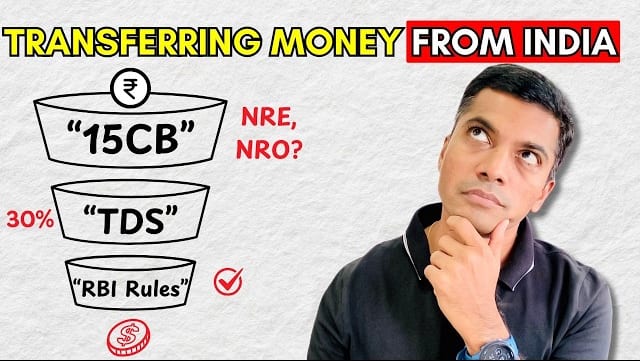
16:41 Earning in India if it has been earned through sources which are not prohibited by femma and you have duly paid the taxes on it in that case you can remit that money outside of India so in simpler language if you are meeting the femma compliances and you're meeting the income tax laws then you can repatriate this this money outside of India so this flowchart shows you where all you can transfer your balance from the nro so all these options are there so I would want to focus on the first one to the your NRE because there it has its own tax benefits and if somebody has a doubt around it like what are the tax benefits then it's your clue to look for a new financial advisor it's a you know most common tax benefit that anybody should know right but transferring your funds from n to outside of India is not that simple it comes with its own set of restrictions own set of documentation firstly there's a limit you can remit only $1 million which is
17:42 Obviously not an only thing it's a significant amount that you can transfer in one year you can transfer up to $1 million this is one thing secondly there's a documentation required so there's a form called 15ca which is like a self attestation kind of a form which the CI can do on their own and a 15 CB which becomes relevant in some cases it has to be filed by a CA so these are the two forms which goes when you are repatriating your money so it is somewhere dependent on the banks also like there are some banks which do not need a 15 CCB for transferring your funds from nro to NRE versus most of the most of the banks require it so that is something that you will have to have a word with your Banker as well so now we have another table which show the same thing for the NRE but it has some plus points here since NRE as the name suggest non resent external account it is basically the earnings that you have made outside of India so reparing this money outside of
18:43 India is much simpler there is no restriction on the amount that you can remit secondly there is no documentation required so you can call it a freely repatriable account so that is the biggest advantage of doing an NRE transfer now some of you must be wondering that we have talked about nro NRE 1 million of limit and then we have talked about the 15 CS CB but till now we have not
19:09 Touched upon the TCS the 20% of deduction that most people are scared about so I'll tell you the reason why because TS is something which is relevant only for the resident so all the audience who are non-residents this is something which is not even applicable for you but still should you be concerned about it or Not So my answer is a yes and a no both firstly a no because obviously this is not applicable for you but then a yes because you have relatives here you have family here you have assets here so there are times when you have to get a transaction done from a resident to yourself so this is something which is ultimately going to impact you though indirectly so if you look at the transfer of funds so it has a limit it has a limit of $250k per resident it is the annual limit and then it has its own rates depending upon the type of the remittance so this these are the rates which are applicable right now but with the budget which was announced few days
20:10 Back there were amendments made which are applicable from the next financial year they have increased this 7 lakh exemption limit to 10 and then there are some more relaxation when you are remitting money for education so that is something that will come out and get updated for the next financial year so
20:31 This is something that we had on remittances and all but there are more things to it firstly there's we expect a new you know tax bill which has got passed yesterday itself so that is aimed to bring about more streamlining of sections and more simplification of things now that is something we can expect but then obviously we will have to wait and watch till this goes out in document form and then once that comes out we will evaluate that and keep you posted on what's relevant for nris in that so I think that's it from the content point of view from our side so I would request ainash to take it forward from here thanks a lot prio for that presentation and walking through the different steps and some key takeaway messages right I think in terms of making sure the right account and also some of the constraints in that as well as the tax planning that's crucial in the RN phase so please chime in your questions in the chat window and then we
21:31 Will go through those questions one by one so that these can be answered can I see the questions okay so if you go to that YouTube live link so all these questions are coming in the comment sections there that's where you'll be able to see these questions but I can moderate it for you yeah right yeah so there is this question from delete so talk about the introduction of the direct tax code and if there are any plan to remove RNR status on that so I would is too soon to comment on that but rest assured even if they do such an amendment they will give a phase of transition they cannot make such things applicable immediately so there will be some breather out there but then obviously we will have to wait and watch for what we can expect yeah yes to to add on there are news articles roaming around here so the bill has
22:34 Already been passed in this Parliament session and they have specifically told there has been no changes in the budget or in the income tax act so to say there are you know the idea is to simplify taxes shorten the taxes and remove litigation that is the whole idea as of now there has been no specific discussion per se in regards to removal or you know removal of r status or NR status so no such thing is required and as PR said even if that happened that would not happen you know overnight or something because till even after getting the new tax regime by the Indian government the old tax regime is still available can choose out of both actually as of it has been years that we have got we are not expecting removal of our status like immediately and in case it is removed also there would be something for returning nris to India for sure window there some relaxation there definitely got it so the next question is the long-term capital gains
23:35 Of foreign stock is 20% or 12.5% after DTC implementation maybe it's a question about you know is it going to change like I I think we've already answered that so with the DTC coming in there is no changes expected in the rates also and as of now as we speak it's all 12.5% plus s plus S charge there is no 20% taxation on long-term capital gains short-term capital gains are different in long-term capital gains there are no I'll tell you why this confusion is happening so when the last budget came in and they reduced this amount from 20 to 12.5 the same is not getting reflected on the income tax portal so that is the whole reason of misguidance people see on the portal and it is still showing the previous rate although there is a finance act which shows the new rate but then obviously takes time to get the entire portal and everything updated so that is the whole reason for the lag got it and the next question is
24:36 From Raj can we keep our US stocks and rsus back in USA brokerage account or do we need to sell before returning to India if we can keep what are the tax implications it was few years back that pemma has had restricted returning nris to have foreign asset but that is no more a restriction you can hold it for as long as you want to but there are two things to remember there it is very important to disclose it like there is a proper schedule for schedule for foreign asset disclosure so once you become Ro you should definitely make it part of your schedule fa and then what whenever you sell it off and you make capital gains out of it or if you are getting any dividend from it you should add it to your Indian income so if you are acting in a compliant and a way where you are meeting the reporting requir M then there is no problem in holding on to the those stocks in rsus the next question is from harsh
25:37 If someone has to sell Capital assets the stock options they will be taxed at short or long-term capital gains in us as per current rates but what happens when the amount has to be transferred to India I believe it also depends on the status so but you can expand on it yeah yeah so definitely that is something that you have to look upon the status also if you're selling it while being Ro it is going to be taxed in India as well but if you sell it before becoming Ro and you are remitting that money after becoming Ro then that money is not taxable in India it's your passed fore an income but after becoming Ro if you have earned any interest on that bank balance then you will have to add that interest to your Indian income but nothing more than that you can freely repatriate that money from your US bank account to your Indian bank account it is similar to putting your money from one pocket to another I would say yeah another question from sidar sidara if I sell my US Stocks after
26:38 Returning to India during RN I understand the capital gains are not taxable in India can I route These funds directly to my Indian bank account without triggering tax yeah you can do that but you cannot directly receive that you know if you are liquidating your stocks and you directly receive that money in your Indian bank account then you will fall into the category of income received in India so it will become taxable so you have to make sure that you receive it in a bank account in us and then you remit that money to India and just to addon do not do it immediately like you sold stocks got money in your US bank account and immediately transfer it to your Indian bank account then definitely it would be mapped in the sense that obviously the stocks were sold during your RN phase and then immediately you transfer that money from us to India you know that can be backtracked to take some time or you know take the advantage of different Financial years in India and us like in us the financial year works from
27:38 December to January and India it works from April to March so might as well you know if you sell stocks maybe in February and you know and then then you know transfer that money in April so that there's no backtracking also and there's a change of financial as well in India recomend we recommend to have some gap between the two transactions so that they can be viewed separately yeah so the next question is what does it mean after spending significant number of es outside India is there any specific number after which R is allowed no is allowed even if you are living for nine years outside of India then you get one year of RN if you have lived for 10 or more you get two years of RN yes next question is from shankara I have an nro account already if I move to India can I reain the account or I need to open a normal resident account so when it comes to bank accounts and your investment account it is governed by femma it is not governed by income tax act so femma
28:40 Has two rules it is it does not recognize RN it has simply either you are a non-resident or you are a resident and then they have two rules to it one is on your intention the way the day you return to India with the intention of living here for permanent like for good then you become resident from that very day so if you want to open a resident account you can open it in your day one itself and there's a second rule which says that you become resident after spending 182 days so even if you want to retain your nro account for 6 months that's okay but beyond six month that is something which is we count as a non-compliance because as per Pema also after 6 months you become nonr you become a resident and you are not allowed to have an nro account so we would recommend Within six months you should convert them into a resident bank account got it it's a question from harsh can you talk about on the 401K funds if someone wants to leave in the US till maturity age 59.5 and then
29:43 Transfer to India so they they are residing in us till 59.5 and then they plan to let me take this so there is no plain black and white answer for this 401K taxability really depends on how things are actually first and for if it's traditional or rth depending on how much the contribution has it it has then in what Financial year as per India and as per us you're withdrawing it so there's no plain black and white answer to it yes it is recomended that correct that that takes a lot of discussion and one to one understanding of the whole situation yeah but it is recommended that you convert your 401k to traditional before you move back to India and yeah and correct and then once you move back then you can decide on to withdrawal but any which way there will be taxation in India there is no way you can avoid taxation in India on your 401k withdrawal if you're returning in yeah so two three things that you should consider there one obviously take
30:44 Advantage of tranches if you are withdrawing it and once you return to India obviously your income levels in us will not be that significant it will be passive income like your interest dividend rent all that sort of things so you will be having a lower income level there so maybe doing it in tranches helps you be in the lower tax bracket this is one way of dealing with it but once you decide to retain it till 59 and half then estate tax is something that you should keep in mind if you are not a green card or a US citizen holder so that is something that you should evaluate if you are taking that decision of retaining it to 59 and a half correct yeah so next question is from Surya I'm living in USA and sending money to my wife resident account and investing in mutual funds my wife also NRI now worried about how the tax works and 10% TDS when remittance so it is a little concern if
31:45 Your wife is also an NRI is she also living in the US because if she is then obviously she is triggering pic reporting which goes in the form of 8621 which is kind of a punitive reporting a form needs to be f for each and every mutual fund that you own so that is little complex and in terms of Taxation also it is little unfair because they tax you even on the unrealized gains like whether you sell it off or you do not they tax you on the unrealized gain not caring about the fact that you have not received anything from that fund as of now but they will tax you so this is something to be taken care of secondly if you are sending a significant amount of money to your wife then you should you know keep keep a track of the amount that was sending because there are some gift tax rules also that you need to abide by there are some reportings that need to be done in a specific form if you are meeting certain threshold we talking about us in this case not in India in India there is no taxation with regards to gift but in us
32:45 There are in us the it is on the donor to do the reporting and since you are sending that money so you become the Doner in India whenever there's a gift the responsibility is on the doni that they are eligible for the tax impact the donors are free so it is different way in us and India so the next question is from shankara so if I am an oci holder and if I plan to work in India what is the EPF contribution percentage is it same as an Indian citizen or are there any restrictions so there is some unfair thing that happens for foreign citizen firstly the percentage is same but then EPF EPF has certain relaxations for Indian citizen so it has put up some threshold that you have you can have a conversation with your employer and make him deduct your EPF at the lowest rate but in case of foreign citizens that flexibility is not there that is one
33:47 Thing secondly for a resident like me like a Indian citizen I can withdraw my EPF after two months of leaving my job but that is not the case with the foreign citizens they have to wait till the age of retirement to withdraw that amount so this is the these are the two disadvantages of being a foreign citizen while being in employment in India and but there have been a lot of litigations around it there have been you know case laws around it like people are trying to get it at par with Indian citizens but right now this is still under discussion and no concrete decision has been taken on that but definitely it's unfair for the foreign citizens got it the next question is I'm hoping to move from UK this year once I sell my property and move funds will it attract any capital gain tax so if we talking about the property then definitely we're looking at taxes there is no way anyone can avoid taxes in India if the property situated in India I don't know about if the property
34:50 Like we're not clear if we're talking about Indian property or the UK property but I guess that's Indian property only since he's moving out but there is no way you can avoid taxation in India available in section 54 F and E that is something that can be looked upon I believe sorry I believe he might be talking about the property in UK because he is moving from UK to India and he's selling the property in UK and moving that funds to India that's what so any which way that depends on the residential status if it is done in R status then we're not looking at taxes it would be just another asset that you'll be selling when your Global income is not taxable but if you do it in your ARA status that is definitely taxable and you will be you'll end up paying taxes twice in UK and India board and then gradually you can take benefit of you know tax credit of either of the one jurisdictions okay the next one is I'm in us right now it's question about us income tax I did not report my
35:52 Indian mutual funds to IRS basically I filed F Bar but did not do pfic correctly how do I fix it without penality so you can try amending your previous returns at times they go smoothly otherwise like it's a risk that you will have to take because that is something that you have done which is a non-compliance so there is no completely a white solution to it so one way is to amend your previous returns but this might attract some eyes the other way is to start reporting it from this year so this is the at least you can do at least from this year the April 15 filing that is due at least report it in this year okay so the next question is from Deepak how to remit our 401k and 457b plan us us investment rollover into fcnr accounts through a US Bank chenai to invest in gift City Gandhi nagar India
36:53 So I think they're planning to roll over their funds from us to the gift City so that is a very operational kind of a thing which you will have you know have the word with the gift City service providers like how do they do it but it's a normal transfer of fund like a wire transfer from your US bank account to the relevant bank account that you will be associating with your gift City investment go so the next question is if husband and wife move to India across two separate Indian tax years like you suggested pre and post October can they both claim separate RNR years for their respective assets absolutely there is no marri filing jointly you have to look at each of you as an individual your wife can have a different residential status you will have a different residential status so all the income computation all the reporting have to be decided individually so there are rumors that India might also come up with the marit
37:53 Filing jointly thing but as of now it is not there it's at individual level only yeah next question if a US citizen moves to India would they be under Ro or RN I think the question is would an US citizen qualify for an R status I just want to clarify this thing that like to every NRI in India your citizenships like citizenship is a different tax different law and income tax a different tax law so even if you are a US citizen or anyone the residential status depends totally on the number of days spent in India so as per income tax the tax paying capacity or so to say like if you're a taxpayer in India or not depends on the number of days you spent in India irrespective of whichever or whatever passport you are holding so India does not mix a passport with taxability unlike us us once you're a green card holder or us Cen there always a tax but that's not the case in
38:54 India so you can definitely be Ro and RN o this is going to work for you similar to a H1B Visa guy returning it is going to be absolutely similar yeah so the next question is are RN fixed deposits taxable during RNR phase yes so your NRE and your fcnr deposits are taxfree only till the time you are non-resident once you become R the interest is taxable so that is why I recommend people once they enter into RN they should convert their bank accounts either into RFC or into regular resident accounts because n or fcnr lose their attractiveness once you enter into RN RFC is bank is a bank account where you can enjoy your interest taxfree during R phase as well okay the next question is a US citizen wants to roll over 401K in gift City Gandhi nagar I think we kind of
39:54 Covered that I think this is a clarification yes gift tax is not there between spouses yes if it's between spouses then there is no gift tax that's right no but there is some threshold above which you will have to do a reporting there's a form which goes obviously there is no tax liability but there's a reporting that needs to be done if you meet certain threshold yeah so the next question is from Sonu what are the reporting rules for UK Isa Lisa SI or no notional or realiz gains in these accounts taxable in India so this looks like like like understand the nature of these assets we will have to see if it is falling under a capital asset or is it a kind of a retirement account or is it kind of a pension we will have to understand the nature and the taxability depend on the nature itself okay so the next question is from
40:56 Yashu how will I be taxed in India if I take full distribution from my 401K Roth and traditional pay taxes in us and bring that money how do you transfer a large sum of money say example 500k to Indian account do you want to take this yeah yeah so I've already told you like 401K taxability is a different discussion Al together that is all situation based that is one needs to be discussed in depending on the you know on the amount we're looking at and multiple other factors also PR mentioned previously also you can do it in tranches as well but coming to your question how to transfer large sum of money in 500k see there is no black you know white or black ruling on this it's a gray area so basically what happens is whenever there is any movement on funds from US bank account to Indian bank account during your RN no one is going to ask you although if you know the transaction value is super high there is
41:57 No one stopping the income tax department from ringing a bell for you that we need answers to this question so let's be very honest the Indian tax laws are not that easy as well and over and above that you know the tax department always has eye on any money moving from India to us or from us to India because you know there are lot of other acts that follow on or you know are we with income tax that is entry money laundering act and you know and then FMA is obviously closely related so all these things do trigger eyes so depending so there are certain situations that needs to be figured out by yourself so obviously if you want to move 500k you do not do it in one shot you don't want you know eyes of income tax department on your bank accounts do it in tranes why to attract eyes although in terms of taxability there is no tax during your RN this is very sure but you know why why take all those risk only why to come into eyes that is the whole point we're trying to make here like we have seen people receiving a normal notice of inquiry and they lose
42:57 Their peace of mind because they're not used things and for them anything coming from income tax department is a matter of worry even though that's a normal inquiry which can be answered in a very simple way because that 500k obviously you have the evidence you know what the source is and if somebody asks you to justify it you can simply do that you have your salary Source you have your capital gains you have your stocks RF you which were you know allocated to you in a very compliant manner so you can definitely do the story behind it and justify the source and nobody can question that you have your bank statements you have your returns that you have filed you have your pay slips so all that helps but then we have seen just receiving a notice of inquiry makes people panic so that is the whole idea if you can avoid those things well and good otherwise even if you receive a notice and you know you have done everything in a compliant with there's nothing to worry about you have good Professionals in India to take care of such situation
43:58 Like we're not trying to scare you but yeah do not come into eyes when obviously you can if there's an immediate need of money might as well do it but in case you just want to move your fronts from us to India do it in tranches do it in lesser amounts why to attract I that is the whole point we're trying to make here okay the next question is can I transfer money to my parents account or and also is there any limit for those transfers so where are you living are you in the US let's assume that yes then OB there is that gift tax thing for this year it's 19,000 per doni that if you are sending that money within that limit then there is no reporting to be done amount you're sending above that there's a form that needs to be filed obviously no tax liability but just a reporting but then it also depends from Indian perspective it also depends for what purpose are you giving that money if you are giving that money for something which you are not you know allowed to do maybe somebody sending that money to buy an agree agriculture land which in NRI is not
44:59 Allowed to as per femma so if you are doing that to do something which is restricted then it might cause a problem otherwise if it is a regular maintenance kind of money that you are emitting then there is absolutely no problem got it so the next question is from Surya selling a land property in India and receiving the money in cash what is the legal protocol for remitting that money back to abroad I cannot answer this please I would not answer neither anyone not answer this yeah this is not the right platform to ask the question and there's no legal way to do that yeah correct can we still keep the funds in dollars after becoming tax resident yes I think it was already answered and you need to report that when you become an R right oci holder from USA having rental income from us if relocated to India how the rental income will be taxed in India so in India the rental income is taxed in a very standard standard way so whatever the rental income is they give you a standard
46:00 Deduction of 30% irrespective of what amount of Maintenance or expenses you are incurring on that property you might be incurring like 5 to 6% of expense or might be incurring a 40 to 50% it respective of that they do a standard reduction of 30% and the net of it like the remaining 70% is taxed as for the slabs and you can't put any expenses against that income that remaining income so if there is a mortgage interest or maintenance you can't so that's about it yeah because that interest is being paid to a foreign institution the interest payment on a home loan is allowed only if it is getting paid to an Indian institution got it so the next question is for an US citizen rning to India can you elaborate on separate tax reporting requirement to each country so I think we have covered that in the in the slide so please refer to that if you have joined and if you have other questions you can reach out to you know arjo or
47:02 Prio the next question is from Mahesh is it possible to transfer mutual funds Holdings to your family members example mother to avoid unrealized tax gains in Us and other possibility to avoid taxes yeah a way around it that is something that you will have to work around with your dmat account provider but there is a way around it yes but then it is not a 100% compliant way because the intention here is very obvious that you want to escape the tax in us so there might be some inquiry around here because that is not a 100% like a you know bulletproof kind of a transaction that is happening but yes definitely there is a way to do that got it so I think this is to the previous question I think it was maybe a you know just a clarification on that so I think ad so this person meant to have these dollars in an Indian bank account like an fcnr yeah and so after
48:05 Becoming Ro you can hold those dollars in RFC account or you can have some investments in the gift city as well they also allow foreign currency Investments yeah the next question is from shankara if I move to India and continue Holding Group retirement savings account where I hold in index funds can I continue holding and do I need to disclose the gains or losses even if I continue to hold yes you can continue holding but then depending on the nature of this account if it is a retirement account then there is a special form which has been introduced two to three years back which goes by the name of 10 once you become Ro you can file that form and then the taxation in India will get aligned to taxation in us so like in us the taxation arises at the time of withdrawal so same cas will be in India you will have to pay taxes at the time of withdrawal only not every year on the gains provided you file that form got
49:06 It it's question from hsh is there an ideal scenario list of when to sell what type of assets to reduce tax burden in India us to India especially so the return to India can be planned in advance so basically this is one of the yeah this is one of the offerings that we do because you know we do when we plan a return to India for any client of us then we do a asset crunching number crunching everything so at the end of the day correct at the end of the day it's the decision of the asset holder what they want to do but we tell that what these are the stocks you can liquidate these are the mutual funds you should keep these are the Investments you can have so generally I'll give you a very high level thinking that since you already have a exposure of US Stocks by by way of 401k so might as well keep 401K for a longer time and then start liquidating all the other assets explore Irish ETFs to avoid estate tax and then move a major chunk of money to India take exposure of Indian markets
50:07 Indian markets are booming like like I'm I cannot say right now but definitely Indian markets have moved from a very good position from last year this year obviously I understand that there has been a very you know there has been a you know so to say like I don't want to I don't have the correct words to say right now but def itely there are beautiful options of gift City PMs aif and many other there many other instruments so definitely India is one of the markets that one should explore like India is on track to become the third largest economy in the world so might as well just consider that but this is obviously part of a package that we do and this takes a lot of thinking and mutual discussions between the client and ourselves and this also has multiple angles like we have to consider your financial goals also some people need funds immediately after returning to India some people are not dependent on the funds that they have in the US so one thing is that flexibility and then some people want to have that currency exposure they want to have the geography
51:08 Exposure so depending upon what your intentions is we help you plan accordingly got it so one question from sjit while we are in RNR which is usually which is usually about 2 years and if I hold you know the pound in fcr account is that money protected or is it still only five lakhs so they're talking about the bank you know Insurance the kind of a thing in India so yeah very good question I I I'll take this so I'll tell you obviously there's a risk with all the banks in India but I would suggest if you have any such doubts do not you know keep money with small Finance Banks as of now because these Finance banks have moved from being an NBF to a small Finance Bank always trust a public sector Bank for such large amount even the public sector banks have the same threshold but we do not see any public sector Bank going down anytime soon in case there is such a scenario and I don't think that would happen ever in my lifetime for
52:09 Sure and I don't hope that happens but you know in case there is any bank which is going down so the government would jump in and bail out the whole Bank itself SBI for a matter of fact is you know the biggest bank in India so if you have fears like this might as well keep accounts with Bank of Broda SBI these public sector Banks so that is your best bet but obviously we get your point but there is no other way out but public sector banks are the way for you definitely then obviously there comes in a picture of not keeping all of your eggs in one basket so maybe you can have different banks different models and different type of Investments okay the next question is no kicks in after 182 days does this mean to invest in equity as a resident one has to wait otherwise if one needs to invest as an NRI without those 182 days kyc would be a challenge so for femma once you return to India you are a resident from that day onwards and for opening a dmat account as a resident I'm hoping that
53:11 You would be having a pan you would be having an Adar you would be having Indian bank account you would be having an address in India so it should not be a task to fulfill the kyc requirement yeah I think the key difference is a tax law and then the fame right I think the resident status is based on that which drives the bank accounts the investment accounts and all that stuff exactly I think the next question is how many months or years before moving to India will it be appropriate to take advice on residency taxation Etc yeah so we generally advise like at one year to six months is the right time because once you come closer to your date of returning there are so many other things which become very important and there are so many things that keep you occupied and there are so many things that you need to do while being in the US so maybe you want to do a trust that is something that you would want to do while you are in the US because it's simpler so we always advise
54:12 People to start planning at least one year or if it's it looks too bizarre then at least 6 months so that you have sufficient time to plan and by the time you reach near the date you are in the PE in the state of peace that your things are sorted you know what to do before moving you know know what to do after moving and what are your timelines how does your road map looks like it gives you little peace and secured kind of a position just to add on I have a client that I'm working with he has planning to move in 2028 and is planning his return with us right now as we speak yeah so that is and I think better than us it would be Avinash who would answer this like of question you can tell him from his personal experience correct how what time did he take to plan his return to India so ainash is the better person to answer this question no I definitely would add on I think the sooner the better I know I think you kind of touch base more on the taxation as well as residency regulation right but from an investment perspective what do you want to do with your rental property like there are some
55:13 Rules I think which we have touched about the 401K like you know the investments in the US Equity versus Indian Equity that might take a little bit of a longer View and then you know that's something that you need to plan a bit ahead but everyone's you know view is different but in terms of from a taxation from a resident planning on that side I think it's definitely encouraged to do within one year but in terms of the investment I think it tookes a little bit long Horizon you know like buying a property in abroad India you know and several factors there yeah so this guy we are working he's planning to return in 2028 so we are engaged with him helping him in buying his Villa in Pune getting him an insurance in India Because by the time he will be back in India he's insurance will have a larger coverage otherwise in India you have a gestation period of almost two years till the first two years you have a very limited coverage on insurances it is from the third year that you get a significant coverage so he's already started doing all of it so that once he's back to India he's all set all ready everything sorted yeah all
56:17 Right last five minutes so as an NRI do I have the liability to report the income generated through selling the mutual funds or through S SW in India yeah yeah so if the sale is happening in India you definitely have to report capital gains because there is no exemption limit on capital gains even if you are making 5,000 of capital gains 5,000 INR that is also taxable yeah but just to add on there is an exemption limit of 1.25 lakhs yeah and also it is more you know advantages for you only because as an NRI your service provider will be doing a TDS which is generally at a higher rate than what your actual tax liability is so by filing the it you can claim that refund so it is only at your advantage that you can do it yeah and in India there is no way you can escape you know kind of selling of these mutual funds the pan is always there there's always a TDS so there is no way you would be escaping this you would definitely come back to income tax deart
57:17 That I you owe me some money give me that money back yeah so I think last couple of questions before we wrap it up so can oci card Holder have a dmat account or a trade and a stock as a regular citizen so that's a question yeah so we have two types of accounts for pis and non pis we have done a good blog also in terms of this specific you know dmat accounts just go through the blog ones because there are multiple things that needs to be considered before doing an P your pis or nonp account so that's very specific so you can easily get answers to this question like there are multiple situation that needs to be considered that is the reason I am referring to you know asking the person to refer to the blog yeah and also if you are a US citizen then there are certain restrictions on the mutual funds that you can own so you should check that list before investing in any mutual fund because if you are an oci and you are a US citizen you are always a tax resident of us so there is a restriction on us
58:18 Residents on a lot of mutual fund houses there's a list of seven to eight which permit us tax residents to invest so you should have a look at it before going ahead with the mutual fund got it and then I think the last question before we wrap it up so for the rental income after we become Ro would I still be taxed with only 30% deduction because I I thought double tax will avoid India tax on it assuming the tax will be due on that only if we cross r2i so once you become Ro definitely DT is there you can take the credit for what you have paid in the US but by the virtue of math which I have done at multiple points the tax liability in US tends to be lower than that in India so you can take the credit for what you have paid in the US But ultimately you end up paying something additional in India for example if you are paying ,000 in Us in India it might come out to be an $1800 so an additional $800 you will
59:20 Have to pay in India yeah so just I think one last clarification and we can wrap up the Q&A so this is regarding the question that was earlier about the you know reporting the income generated from selling the mutual funds and S swp I think they're talking more from a US tax perspective you know do we have to report that in a US tax when filing the taxes there is the question so if you are a tax resident of us then obviously you will have to report your Global income but if you are not a tax resident of us then you do not have to worry about it but as a tax tax resident these mutual funds go into Pig reporting so yes that is very important to do got it so yeah thank you all for joining us today and thank you very much arjo and PR for taking your Saturday night especially from 9: to 10: and being with us and sharing your insights experience and answering all our questions you know from the audience so really appreciate it and team thanks a lot for your engaged you know engagement throughout the
1:00:22 Webinar I think we have about 40 people throughout the webinar which is awesome and I have shared few links you know the WhatsApp group for DH arj's teams I know where they have an Engaged where they answer some of the questions I have shared the WhatsApp link for da return return where we have returnes who have you know being part of it we have about thousand people there so please join and network with other people who are planning to return and then one last link where you can book a call with da team about the services about your specific situation on how they can help out so those three links are shared if you have any questions you know let us know and we are planning to have this presentation on the YouTube so that you can refer to it afterwards once again thank you very much for all your active participation and I really appreciate it and we look forward to doing some of this in the future depending on how it goes but I hope you all liked it let us know if you want us to do it again in the future like at least once a quarter once every six months do let us know in your
1:01:23 Comments so thanks again for all you know being with us and you know learning and getting your questions answered yeah thank you patient audience and really interactive like we got some really good questions so quite happy to answer them yeah really appreciate you taking the time and patiently answering all the questions I know some of them are very specific but really appreciate it you know that definitely yeah great thank you guys thank you so much thank you thank you have a good day thank you