Desi Return
ServicesToolsResource HubBlogAboutContact Us
Plan Your Return
Blog / Real Stories / Podcast
Podcast

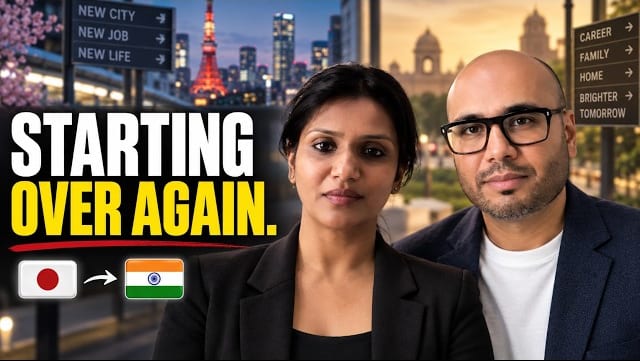
Moving From Japan to India at Ten: Khush's Side of the Story

His parents were returning to India. Khush was leaving the life he knew. From a dinner-table announcement to a Mumbai classroom, his account makes room for both what he gained and what he still misses.

Avinash, article author
Avinash
16 Oct 20269 min read
In this story
  1. 01Who is Khush, and what did moving to India mean to him?
  2. 02How did he hear the news, and why were the goodbyes so hard?
  3. 03Why did he keep asking his father about moving back?
  4. 04What happened on his first day in a Mumbai classroom?
  5. 05How did he adjust to exams, Marathi and Hindi?
  6. 06What does he miss about Japan, and what has India given him?
  7. 07Why did a phone left in a changing room make family feel closer?
  8. 08Does he want to stay in India, and what would he tell another child?
Free tool · no signup

Should I move back?

Eight questions on money, family, work, and timing — scored, with the gaps named.

Open the tool
In this story
  1. 01Who is Khush, and what did moving to India mean to him?
  2. 02How did he hear the news, and why were the goodbyes so hard?
  3. 03Why did he keep asking his father about moving back?
  4. 04What happened on his first day in a Mumbai classroom?
  5. 05How did he adjust to exams, Marathi and Hindi?
  6. 06What does he miss about Japan, and what has India given him?
  7. 07Why did a phone left in a changing room make family feel closer?
  8. 08Does he want to stay in India, and what would he tell another child?
Real Stories | Japan → India
Moving From Japan to India at Ten: Khush's Side of the Story

His parents were returning to India. Khush was leaving the life he knew. From a dinner-table announcement to a Mumbai classroom, his account makes room for both what he gained and what he still misses.

By AvinashOctober 16, 2026
  • Who is Khush, and what did moving to India mean to him?
  • How did he hear the news, and why were the goodbyes so hard?
  • Why did he keep asking his father about moving back?
  • What happened on his first day in a Mumbai classroom?
  • How did he adjust to exams, Marathi and Hindi?
  • What does he miss about Japan, and what has India given him?
  • Why did a phone left in a changing room make family feel closer?
  • Does he want to stay in India, and what would he tell another child?

Who is Khush, and what did moving to India mean to him?

Khush was born in Mumbai in 2013 and moved to Japan when he was a month or two old. He lived there until he was around ten. Mumbai was his birthplace, but Japan held the childhood he remembered: his friends, his school and the routines that made an ordinary day feel familiar.

His parents could describe the move as coming home; for him, it meant leaving relationships he already had. Later in the conversation, he says children may want to argue when relatives tell them they are going home. The same destination can carry very different meanings within a family.

His parents have shared their side of moving back after living in Japan. Khush's story stays close to a child's concerns: who will sit beside him, whether people will understand him, and what happens to the activities he loves.

Read his parents’ account of moving back to India after twenty years in Japan for the family’s other perspective.

How did he hear the news, and why were the goodbyes so hard?

The announcement began at dinner. His parents said they had something to tell him, and Khush wanted to know immediately. He describes becoming excited because he dislikes waiting for surprises. After dinner, they sat on the sofa and told him about the move. It was news he had not expected.

For the first ten minutes, he says, he was in shock. Then he cried a little. What upset him was the realisation that the friends and relationships he had in Japan would change.

His parents told him about four months before departure. Those months were difficult in their own way: whenever he spoke to someone, he knew a goodbye was approaching. Having time before the flight did not make that waiting period comfortable. In his memory, the loss was already present while he was still living in Japan.

Done with you

The whole move, one plan

Most people assemble a move from six providers who never speak to each other. This is one plan and one quote covering the parts that actually depend on each other, built for your family.

Question 1 of 3

No spam. Unsubscribe whenever you like.

Why did he keep asking his father about moving back?

Arriving in India did not end his resistance. Khush describes remaining in denial for months, thinking that the family had to go back. He kept questioning the differences around him and repeatedly asked his father about the chance of returning. The move was physically complete while, in his mind, it was still open to reversal.

Acceptance came gradually. He eventually understood that they were staying and that he could not change that fact. Looking back, he wishes he had accepted it earlier. He does not describe an instant switch from unhappy to happy, or say that accepting India meant he stopped preferring aspects of Japan.

His later advice grows out of that experience: if he has to live somewhere, he would rather use the opportunities available than remain in sadness. That is his own reflection on the months he spent resisting. It leaves room for the feelings he still has about where he would like to live in future.

What happened on his first day in a Mumbai classroom?

The noise was an immediate surprise. Khush remembers a class of about twenty pupils in Japan and a generally quiet atmosphere. In Mumbai, his first impression was pandemonium. He wondered whether he had walked into the right class. This is his comparison of the classrooms he attended, rather than a description of every school in either country.

He was shy and sat alone. Then a classmate asked to sit beside him and became his first friend there. It was a small, practical opening into the new class: someone sharing his table.

Making other connections took effort. At first, Khush expected people to come and speak to him. The other children already had their groups, so he realised he would have to approach them. He says he felt left out in those early stages. One friendly encounter did not mean every part of settling socially was immediately easy.

Even being understood was an adjustment. He says his accent was strong when he arrived and people often struggled to understand what he meant.

Free tool · no signupShould I move back?Eight questions on money, family, work, and timing — scored, with the gaps named.Open the tool

How did he adjust to exams, Marathi and Hindi?

Schoolwork changed too. Khush had attended an IB school in Japan, where he says he had neither textbooks nor exams. On joining sixth grade in India, he encountered textbooks and repeated exams. The contrast was noticeable to him, but his account of the workload is more measured than the warnings he had heard.

He had expected something like five pages of homework every day. That did not happen. He still found the academic demands greater than in his previous school, but less severe than he had imagined. His sixth-grade teacher helped him a great deal with the transition, and he describes the teachers as approachable and available to contact.

Marathi was compulsory at his school. A few months before the move, his mother arranged online tuition in the language. Starting early did not make it enjoyable for him: he says he disliked it, struggled to understand it and still questions why he has to study it. His experience does not support a promise that advance lessons remove every difficulty.

Hindi developed differently. Khush says he picked up basic understanding and speech from the people around him, while acknowledging that his Hindi is still limited. The useful distinction for another family is between the language their actual school requires and the language their child hears socially. His experience offers questions to ask, not a universal school rule.

For the practical side, see the school admission timeline for returning NRI families.

What does he miss about Japan, and what has India given him?

Khush misses the peace of mind he associated with Japan and its steady, sometimes slow pace. Life in India feels much faster to him. Yet quiet had another effect when he was younger: he says it frightened him at night in Japan and he did not want to sleep alone. In India, the surrounding noise reassures him that other people are nearby, and his sleep has improved.

He also values school opportunities, festivals and having family around. Socially, he finds people warm and chatty, including rickshaw drivers who begin conversations. That is a contrast with his experience of strangers in Japan, where he says contact tended to stay within friends and family. The warmth is something he appreciates, even while he misses the silence.

Food brings both affection and relief. He loves onigiri and misses Japanese snacks, but being vegetarian made checking food stressful. Reading Japanese was difficult, and he could not confidently shop alone for groceries when he could not tell whether something contained egg or meat. In India, he enjoys the variety, mithai and his mother's paneer and chole; low spice tolerance limits his street-food choices.

Karate was another loss. In Japan, he attended every day except Sunday and loved the happy feeling afterwards. He tried a class in India, disliked it and left. His mother noticed that he missed friends and felt left out, and took him to cafes and bookstores. He loves reading and appreciates inexpensive second-hand books. He says his parents understood his need for that distraction.

Why did a phone left in a changing room make family feel closer?

One moment made the value of nearby family unusually clear. Khush was shopping with his mother and left his small Nokia phone in a changing room. They noticed the loss later, when he was at a karate class he was trying in India. Getting the phone back meant someone had to return to the shop.

He compares that with how he imagined handling it in Japan: he would expect the phone to be kept safely, but going back could involve a long trip and there might be nobody else to call. In Mumbai, his uncle went to the shop and recovered it. Khush remembers the relief of having family there to help.

His grandparents have stories to tell, and he says he can contact family when he feels low. Relatives live at most about fifteen minutes away, in his account. That closeness had become something tangible: help with a forgotten phone and people within reach.

Does he want to stay in India, and what would he tell another child?

Khush's answer about the future is candid: he wants to leave India as soon as possible. He misses silence and dislikes pollution. Japan would tempt him back, but he also recognises its language barrier and other negatives. He wonders about a peaceful English-speaking country, mentioning Canada or the UK. These are his preferences, not recommendations about where another family should settle.

Alongside that wish, he says life is going well since he accepted that he is living here and should make the most of it. Student council keeps him occupied; he listens to music and reads. He still has friends' numbers from Japan, with birthday wishes and occasional chats. Wanting another future has not prevented him from participating in the present.

His advice to another child is to recognise that there are good and bad points everywhere and use the opportunities available, rather than live in sadness. For parents, his account gives practical things to listen for: the friends being left, the first classroom, language support and activities a child actually enjoys. His teacher's help, his mother's bookstore trips and his uncle's errand are the support he remembers.

Related reading: why children can struggle when moving countries and the difficulties families can face after returning to India.

Watch the full conversation to hear Khush describe the move in his own words.

Make space for your child in the return plan

Use the return-to-India planner to organise your family’s move. For help coordinating the transition, explore Cross-Border Transition Packages.

Chapters

  1. 0:00 Meet Khush: born in Mumbai, raised in Japan
  2. 1:21 The News: "We're moving to India"
  3. 2:26 Denial: "What are the chances we move back?"
  4. 3:39 First days in an Indian school
  5. 5:22 School, exams and languages
  6. 7:16 Japan vs India: what he noticed
  7. 10:47 The veg food struggle
  8. 12:46 Finding home in India
  9. 16:01 Rapid fire
  10. 17:09 Looking back: how he feels today

Transcript

Auto-generated captions, lightly cleaned

0:00 When I went the entire class was in like pandemonium and I was like, is this the right class you blink? And it's already Friday you blink and it's already Saturday. I mean for the first 10 minutes. I was just like in shock This I started crying a bit will say, you know, I'm reaching in five minutes Whereas they haven't even left home. So my uncle he went all the way there. He got the phone for me and Yeah, I felt like such a big relief that My family's here to be honest. I don't want to be rude, but I really want to get out of India as soon as possible So today I'm super excited to have Khush on our show and

0:42 really looking forward to Understand how he went through this journey. How has his experience from his own words So really excited and glad to have you Khush with us today Thank you. So let's Learn a little bit about yourself. Like where were you born? How old were you before you moved to India? You know, tell us a little bit about yourself. Okay. Well, I was born in 2013 over here in Mumbai. Yeah, and After about a month or two, I shifted to Japan. Yeah Then for until I was the age of around 10 and lived there So what was your first reaction when your parents have mentioned that hey

1:28 We are thinking about it or planning to move to India and how did you react? I was like for the first 10 minutes. I was in shock. I Did not expect that So maybe you can explain the situation like was it at a dinnertime was it like after the school like, you know Yeah, like how did it? On the dining table and my parents told me like we want to tell you something Yeah, I got like very excited because you know, I hate surprises. I want to know it at the moment and As the what is it? What is it? And then after dinner, then we sat down in the sofa and they told me I Mean for the first 10 minutes, I was just like in shock. I started crying a bit

2:13 What was the reason? Behind that like, you know the crying what was that like you know, I just realized that everything that you know I had over there my friends my relations everything that had to change

Read the full transcript (24 more sections)

2:26 So how did you cope up or how did you you know? Think through this or go through this To be honest for like the first few months. I didn't I you know, I kept on having that denial in my mind I'm like, no, we have to go back. We are gonna go back But after a few months, you know, I finally accepted that, you know, you can't change like it's we're gonna stay here I think a day my parents told me that we're gonna shift around four months before yeah, those four months are like really difficult, you know Like whoever you're talking to, you know that after one point you have to say bye to them But even after shifting here for like a few months. I was in denial. So let's talk about like

3:13 How was that first two months for you like, you know when that reality hate like when you moved to India And this is not like what you plan like how did it go? Yeah I think my parents said this before also like I kept on questioning everything, you know, why is this like this? Why is this like this and I kept on asking my dad like I kept on pestering him What's the percentage when I moved back? What's the percentage when I moved back? So let's talk about how was your first day at school in India in Japan?

3:46 Usually we have 20 students in my class and Again, they're quite silent. They're quite noble. I mean on the first day, you know, there's like slight chatter When I went the entire class was in like pandemonium and I was like, is this a right class? I didn't accept. I'm like, oh no Yeah, and you know, I was like really shy so I sat alone on a table and then after some time A classmate he asked if I could sit next to me and he ended up becoming my first friend with her the other one I wanted to check with you was Was there any movement that you felt like you were left out like in India when talking to friends or other people?

4:34 I felt left out well Obviously in the early stages, you know, I kept on expecting that somebody's gonna come and talk to me They already had their groups. It was me that had to talk to them So yeah, sometimes I mean in the earlier stages, I did feel left out, but that's normal, you know, it's gonna happen. I remember like in Japan, you know, it came naturally but when I came here, I realized that I had like a very strong accent like Now when I go back to Japan, um, and I you know hear my friends. I'm like whoa, I had an accent like this So when I care, you know, a lot of people didn't understand what I was trying to say because of my accent

5:22 How do you feel the academic rigor here in India compared to how it was in Japan? Well in Japan as you might know I was an IV board so I didn't have exams No textbooks, right and suddenly there was like so much and I'm like, huh so many exams over and over again so Yes, I mean there was a difference in that there was a difference in the textbooks, but What I feel like my first teachers in sixth grade when I joined Teacher wise it's like amazing, you know, you can contact them any time. They were really helpful for me like for me my sixth-grade teacher

6:06 she was like Helped me a lot, you know with the transition process the teachers are like really good But for the academic rigor, I mean, I I'm lucky like I feel how much people were telling me It's not that much but you know, I was expecting to get like five pages of homework every day, but I didn't get that I'm happy for that. It's not that rigorous. But yeah, it's much more than what it was in Japan Yeah, like I think a few months before I shifted like over here I have Marathi as a compulsory subject So my mom did like made me do online tuitions

6:49 For Marathi, I did not like it at all Like I couldn't understand it at all Marathi. I mean Still it's like why do I have to do this? You know that mentality in my head. I really don't or Hindi It does kind of like a natural Thing, you know still my hand is not that good, but I can understand basic I can speak basic because of the people around me You know, you just get that So I think yeah, let's talk about the differences between Japan and India, right?

7:23 Because you spend time there. So what was what did you like most about living in Japan? Most we're actually quite a lot of stuff But the mental piece you get there that was amazing like whatever you see whatever you hear It's like really nice, you know and It felt like the life was going at a steady pace over there a bit slow even yeah here It feels like you know you blink and it's already Friday you blink and it's already Saturday It's like very fast very fast based. What do you enjoy most about living in India now that you have been living here for some time What do I enjoy? One is actually my sleep in Japan. It seems it's like very quiet

8:07 I used to get very scared after like maybe 8 38. I would not sleep alone Right, like my parents couldn't even leave the house Now since it's like really loud and you know, you keep on getting the reminder that you're not alone in this country It's okay. I can you know, like stay alone and That's one good thing. My sleep has improved much more And I've got so many opportunities over here like in my school Also, you know a lot of lot of festivals continuously they're happening and the family the family is always here What about the social life? I think in terms of the friends in the community Other folks like how easy was it to mingle like over here?

8:51 I mean everyone is so chattery lively. I mean even all the rickshaw drivers, you know, they start chatting with you So the social life is really nice over here, you know people make you feel like really nice and warm There I mean, it's like it's only with your friends or you know, your family members like close friends Otherwise if if it's a stranger, they probably won't come to you and say hi Has moving to India changed like how you see the world? I mean now you have experience Different Yeah, like I never X, you know thought that for example a rickshaw meter Like the fair I never ever imagined that they could you know rig it they could you know speed it up

9:39 like You get that road sense you you know You see you see the other side of people to the good side and the bad side. Okay So what surprised you the most in India that you didn't expect there is a positive surprise or a negative surprise the Other side of people I mean, you know in Japan it expected that this person will always be on time This person will always be punctual and if this person listens to the rules this person will also listen Here, you know, I knew that there would be a bit of a difference, but I did not expect such drastic change I mean people come around one and a half or two hours late to something and it's completely normal

10:23 Yeah, people say, you know, I'm reaching in five minutes. Whereas they haven't even left home So yeah, I was like how you know, how do you live with that? Yeah, the amount of language is here like I knew that India's a lot of languages But then when you hear it from other people you're like, wow, you know so much like ancient heritage

10:52 Think my parents also said this but like in the early years I had this nursery kind of thing called hui quen and There since I learned Japanese It was like very easy for me after some time when I went to an international school We only spoke English right Japanese was just a second language. So I started slowly started to forget but You know, there was like a slight barrier sometimes sometimes not for reading it is very difficult Like I didn't have like a proper phone, right? so I couldn't really go shopping by myself for food items, you know to help with the groceries because I Don't know if it has egg or not. A lot of stuff. There is non wedge. So what Japanese food? Do you miss the most?

11:39 well, a lot of people ask me if I really like sushi, but the thing is Normal sushi is non wedge. So I never actually had like sushi sushi sushi over there Instead I had it here. There's like alternative of sushi called onigiri. I mean I die for that Like in Japan, I mean since it is from childhood. I'm still gonna miss the food over there like the snacks and everything but There there was like a lot of stuff that was non wedge, you know, there's like always that risk in mind What if this is non-wedge, what should I call my dad? You know, you have that relief in your mind. So there's so much variety of food here. It's nice and What Indian food do you enjoy now? I enjoy every day mithai possible. It's like so many

12:28 Alternatives, I'm like wow I really love the mithai over here. I am very bad spice tolerance So I can't really have all that street food people talk about But I really enjoy my mom's cooking, you know, like all this paneer chole italy stuff like that and

12:48 Let's talk. I think I know you went through karate like you had the black belt. You are very disciplined You're very organized and you mentioned about this chaotic world that you enter into how did you? Try to adjust or what is that you change in your mind or you know, how did you adapt? well after I left karate, I mean When it when I was in Japan and every day I had karate right except for Sunday and Every time after I left I do not explain it, but I got like this really nice feeling Right, like maybe dopamine or I don't know but every day after that Session of karate I still feel really happy and when I came to India more than karate

13:32 I was missing that happy feeling after going to karate and How did I cope up with it? Well, I actually did try karate over here. I didn't really like it and I left but Yeah, well, I again I just accepted that you know it some things have to change What do you think your parents understood well about your experience of moving to India for like the first initial months? My mom and I were usually at home a Lot of the time right and she noticed that I felt really left out, you know, I was missing my friends and I really have like a love for books and here one good thing is like There's like the second hand stores and you know books come for really cheap prices so you can go crazy over here

14:20 So I know she was taking me to cafes and you know bookstores a lot because I love it there So they you know, they understood that I needed that Distraction that diversion and my mom and my dad really helped me with that Was there any movement you felt like I really like living in India? Well, they're like a lot of you know tiny tiny moments, but there was this one time. I remember Me and my mom we went to this shopping store And at the time I had that I had like this small Nokia phone like 2g1 and I've like, you know going to the changing room. I forgot my phone over there Hmm and right after that I had my you know, karate class, which I was trying out over here

15:02 And when I went we both realized that I forgot my phone over there Now if I was in Japan You know, there's like this thing that you know, they're gonna keep it safely They're not gonna take it but usually it's very hard to go back there cuz usually it's very far or you know You don't really have other people to contact but over here. I Have like a lot of family like gigantic family So my uncle he went all the way there. He got the phone for me. And yeah, I felt like such a big relief that My family's here. So how was it spending time with the grandparents cousins? Grandparents like they always have great stories to tell

15:47 And you know whenever you're feeling low, you can always contact your family So it's like really nice and you know, all of them live Max like 15 minutes away. So It's very nice. It was amazing. I mean it was like very peaceful very silent

16:11 Not exactly, I mean I have the numbers, you know, they're still like happy birthday once in a while and sometimes we chat but not really in my free time well Now I have a lot of school stuff, you know, like I'm in student council also, so there's a lot of that it keeps me engaged But in my free time, I like to listen to music a lot I like to read a lot To be honest, I don't want to be rude, but I really want to get out of India as soon as possible But I'm thinking like it doesn't have to be Japan because there's that language barrier And there's like a lot of negative points that people don't really talk about

16:55 So maybe like an English-speaking country, which is peaceful, you know, like maybe Canada or UK Silence and pollution like even a chance obviously I would move back to Japan anytime but

17:18 You know after I learned to accept that I have to live here. I have to make the best of my opportunities It's going great. What would I have done differently? I think I should have realized that you know I should have accepted the fact that I'm living here a bit earlier To be honest, it took me a bit more than a few months, right? Maybe it should have taken me like around four months five months the earlier you realize the better Well, what would I tell them? I can tell them that each family member is gonna tell you that you're gonna come home and You're gonna like feel like arguing against them but

18:00 After a few months, you know, you'll understand like even if you don't like the country Even if you don't like your surroundings after one point you have to understand that you have to live here So it's best it's better to make the best of your opportunities Other than just living in you know sadness and there's like good points and bad points in everything So once you shift there, you'll understand Thanks a lot Khush for taking the time sharing your So I really appreciate it and kudos to you and good luck with everything do Well in studies games and everything so really appreciate you taking it. Thank you so much you too. Yeah, this opportunity is like

Share this article
WhatsAppLinkedInXFacebookEmail

Done with you

The whole move, one plan

Tax, money, logistics and paperwork — quoted together for your family.

Question 1 of 3

No spam. Unsubscribe whenever you like.

The episode
Format
Video conversation
Recorded
16 Oct 2026
Watch the conversation
Free tool · no signup

Should I move back?

Eight questions on money, family, work, and timing — scored, with the gaps named.

Open the tool
Keep reading

Related guidance

YouTube thumbnail for the Desi Return interview with Neha and Janin about returning to India after 20 years in Japan
Podcast · Real Stories

After 20 Years in Japan, They Moved Back to India With Their Son

The Real Reason Kids Struggle When You Move Countries — And How to Help Them Thrive guide image for Desi Return readers
Podcast · Relocation Planning

The Real Reason Kids Struggle When You Move Countries — And How to Help Them Thrive

Rohan speaking with Avinash about moving from Sweden to Hyderabad and his first year back in India
Podcast · Real Stories

He Left Sweden for India. One Year Later, Was It Worth It?

Talk it through with someone who has done it

A 30-minute call on the one decision you're stuck on.

See how it works
Desi Return

We help NRIs and the Indian diaspora who are considering moving back or retiring in India make their transition smooth and successful with expert guidance, community support, and tailored resources.

Useful Links
AboutServicesContact UsFind Us Online
Explore
Resource HubToolsPlannerBlogPodcastFAQ
© 2026 Desi Return. All rights reserved.
Privacy PolicyTerms and Conditions
Partner services are fulfilled directly by the independent companies named above; Desi Return may earn a referral fee at no extra cost to you. Nothing on this page is tax, legal, or financial advice — always confirm specifics with the partner or your own advisor.
Your bag

Your bag is empty. Add a service to get started.