
Skip to content
Desi Return
Financial Transition
ConsultationTransition Packages
Our Services
Transition PackagesInner CircleFinancial Blueprint CourseAll Services
Free Tools and Guides
RNOR ToolFinancial Checklist15-Week SeriesAll Guides
Stories and Community
Returnee StoriesInner Circle
Plan Your Return
Blog / Real Stories / Podcast
Podcast

He Had an H-1B Job at a Fortune 100 Company. He Left to Build His Own in Mysore.

Rahul had three years left on his H-1B, a pharma analytics job at a Fortune 100 company and a father waiting to show him the family business. He explains why he chose to close the US door himself, on his own timeline.

Avinash, article author
Avinash
Published 20 Nov 202610 min read31 min watchUpdated 20 Nov 2026
In this story
  1. 01From a data job in Mysore to a classroom in Austin
  2. 02A thousand applications, one offer
  3. 03CAR-T cell therapy and a father's footsteps
  4. 04When the question changed from where to whether
  5. 05The pull to build something of his own
  6. 06He checked the other doors before he left
  7. 07An earlier flight, for a good reason
  8. 08Fidelity, the 401(k) and what stayed in dollars
  9. 09Tennis, his father's office and fresh food
  10. 10Would he do it again?
  11. 11Did it ever feel like failure?
  12. 12His advice, to both kinds of families
  13. 13The short version
Free tool · no signup

Should I move back?

Eight questions on money, family, work, and timing - scored, with the gaps named.

Open the tool
In this story
  1. 01From a data job in Mysore to a classroom in Austin
  2. 02A thousand applications, one offer
  3. 03CAR-T cell therapy and a father's footsteps
  4. 04When the question changed from where to whether
  5. 05The pull to build something of his own
  6. 06He checked the other doors before he left
  7. 07An earlier flight, for a good reason
  8. 08Fidelity, the 401(k) and what stayed in dollars
  9. 09Tennis, his father's office and fresh food
  10. 10Would he do it again?
  11. 11Did it ever feel like failure?
  12. 12His advice, to both kinds of families
  13. 13The short version
Return Stories | United States to India
He Had an H-1B Job at a Fortune 100 Company. He Left to Build His Own in Mysore.

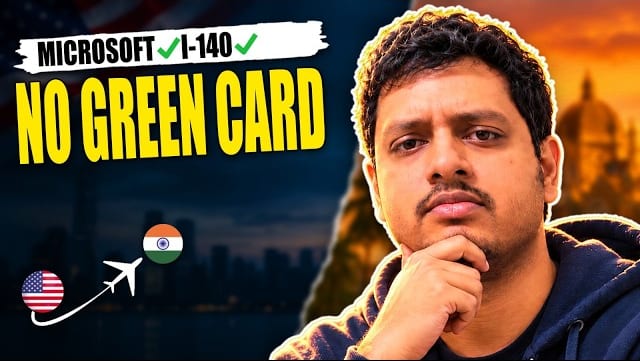
Three more years on the visa, a Fortune 100 employer and a father who liked seeing him settled in the US. Rahul explains why he came home anyway, and what he did with the accounts he left behind.

Check your move date and India travel history with the RNOR status calculator.
By AvinashNovember 20, 2026
  • From a data job in Mysore to a classroom in Austin
  • A thousand applications, one offer
  • CAR-T cell therapy and a father's footsteps
  • When the question changed from where to whether
  • The pull to build something of his own
  • He checked the other doors before he left
  • An earlier flight, for a good reason
  • Fidelity, the 401(k) and what stayed in dollars
  • Tennis, his father's office and fresh food
  • Would he do it again?
  • Did it ever feel like failure?
  • His advice, to both kinds of families
  • The short version

From a data job in Mysore to a classroom in Austin

Rahul studied electronics and communication engineering in Mysore and worked three and a half years at Mu Sigma, a Bangalore data analytics company, through the pandemic. Working from home gave him time to read, and the reading led to a question: what would it take to upskill and work somewhere outside his comfort zone?

The United States had been in the back of his mind for years. In March 2022 he resigned from Mu Sigma, got into UT Austin and moved that June, straight into an Austin summer at 40 degrees Celsius. His program compressed two years of material into nine months, with classmates ranging from fresh graduates to people with four or five years already in corporate life.

A thousand applications, one offer

He had heard 2022 was a good year to graduate into: friends were switching jobs easily, offers were lucrative, and he assumed he would land a six-figure role in his own field, data analytics. By the time he graduated, the post-pandemic hiring boom had turned into layoffs, and the market he had heard about was not the one he found.

He applied to more than a thousand roles, morning, afternoon and evening, widening his search beyond his own niche. He reached the final round at six different companies and converted one: Bristol Myers Squibb, a Fortune 100 pharmaceutical company, based in New Jersey. He moved from Texas in October 2023, picked up an H-1B in the first lottery round the following year, and later travelled to India for his visa stamping. His H-1B was valid to 2027, extendable to 2030.

CAR-T cell therapy and a father's footsteps

At Bristol Myers Squibb, Rahul worked as an analytics engineer on CAR-T cell therapy, a treatment for patients who had already been through second, third or fourth lines of chemotherapy without success. His data work fed directly into planning how many orders to expect, what the demand looked like and whether the business was hitting its targets, the kind of work he calls gratifying because it touched patients directly.

There was a family thread in it too. His father ran a pharmaceutical business from Mysore, supplying active pharmaceutical ingredients to vendors and contract manufacturers across the US and Europe. Three years into a pharma analytics job in New Jersey, Rahul realised he had followed his father into the same industry without planning to.

When the question changed from where to whether

Switching companies on an H-1B is harder than switching as a US citizen or resident: employers tend to prefer a candidate who is already authorised to work without sponsorship. Around March 2026, Rahul reached a point where the technical side of his role felt like a plateau, and he found himself more drawn to the financial and macroeconomic side of the business than to the coding and dashboards.

The same months carried a specific scare: a proposed $100,000 fee on H-1B filings, later challenged in court, alongside other policy uncertainty he describes as outside his control. By around June 2026 he had a working conclusion: the America he had moved to in 2022 was not the America of 2026. He gave himself a few months to be sure, then decided not to wait any further.

Free tool · no signupCheck how long your RNOR window lasts before you withdrawYour move date decides how many years your foreign income stays outside Indian tax. It takes two minutes.Check my RNOR window

Done with you

The whole move, one plan

Most people assemble a move from six providers who never speak to each other. This is one plan and one quote covering the parts that actually depend on each other, built for your family.

Question 1 of 3

No spam. Unsubscribe whenever you like.

The pull to build something of his own

Underneath the visa questions was a steadier one. Rahul describes a deep, ongoing pull toward starting his own company, something his H-1B made difficult to act on: he did not have the capital to buy a green card, and the visa itself limited what he could build on the side. In February 2026 he began openly questioning his team's AI strategy in meetings and annual reviews, telling his manager and leadership the same thing he had been telling himself, that he wanted to build something of his own. He calls that his default mode as the son of an entrepreneur: question the strategy before executing it, to understand it first.

He checked the other doors before he left

Before deciding, Rahul tested the alternative of staying and switching jobs. He describes a flood of applications where it was hard to tell a real opening from a listing that existed on paper only. He also looked at startups, and ran into a different problem there: sponsoring an H-1B means a startup has to show no qualified US citizen was available for the role, an extra legal step that some early-stage companies would rather avoid.

He puts the door back to the US at about 95 percent closed, with his focus now on the business he is building from Mysore. If the picture changes, he keeps the other 5 percent open. For now, colleagues in India have told him Bangalore alone has plenty of well-paying startups and established companies, which left him asking why a US-dollar salary should outweigh a US cost of living.

An earlier flight, for a good reason

Rahul decided to move back around July or August 2026. His first booked flight was for 20 October. Then his sister had a baby, he became an uncle, and he moved the date up. He ended his lease early, donated clothes, utensils and groceries, and turned what was meant to be a three-month wind-down into two.

Fidelity, the 401(k) and what stayed in dollars

Rahul's brokerage, 401(k) and HSA all sat with Fidelity. His adviser told him SEC rules stop him from trading once he is no longer a US resident: he could liquidate holdings but not actively reallocate his 401(k). He sold part of his brokerage account and kept the rest of his holdings in US dollars, treating that balance as a retirement and emergency fund. His advice to anyone planning the same move: talk to someone who has done this before, or who understands how NRI and resident-Indian tax treatment differ, well before the move date. For the tax side specifically, see our guide to the 182-day rule and RNOR status.

Tennis, his father's office and fresh food

The first week back was hard: broken sleep, more traffic than the Mysore he remembered, and a routine to rebuild from nothing. After that a pattern settled in. Mornings are for tennis with a coach he did not have in the US. Days go to his father's office, the same pharmaceutical business, with lunch at home in between. Evenings are for reading before an early night.

He weighs the trade plainly. In the US he mostly ate out or reheated days-old food, living alone. In Mysore he eats fresh meals and has a sense of community he did not have before. Traffic is worse than the small town he left, though he calls his tier-two city more organised than Bangalore, where he still found the traffic rough on a recent visit. Winters in New Jersey, he adds, were not something he misses.

Would he do it again?

Yes, and for reasons beyond the job itself. He names work ethic as a lesson that travels: how you show up and how much effort you put in shape what you get back, wherever you are. He also points to the dignity of labour, living alone in the US meant cooking, cleaning and handling errands himself, against a more sheltered upbringing in India. He calls that a privilege worth acknowledging.

Did it ever feel like failure?

Yes, early on. Before he left India the first time, he used to say openly that going back would mean failure. He laughs now at what he calls the universe proving him wrong: life in India was never the problem he had built it up to be. As recently as March or April 2026, his father visited him in the US, liked what he saw, and Rahul was weighing whether to buy a house there. A few months later he had decided to leave.

Among his own undergraduate friends still in the US, he sees a mixed picture. Those who moved before 2014 are further along toward a green card and feel more settled. His own cohort faces low odds of getting one, and some are quietly timing their own return, aware that a layoff can come with 60 days to leave the country, a hard deadline for anyone with a family to plan around.

His advice, to both kinds of families

Rahul splits his advice by direction of travel. To families already in the US and weighing a return: India has changed since you left, with more digital services, more NRI-friendly government benefits and international schools where returning kids can find other kids who have made the same move. To families sending a child from India to the US: the learning is real and worth having, but a US degree carries no guarantee of a US job, so the decision needs a financial plan that does not depend on one.

The short version

  • Rahul's H-1B at Bristol Myers Squibb ran until 2030. He chose to leave in 2026, three to four years early.
  • The reasons stacked up together: a tough 2025 job search after layoffs, a proposed $100,000 H-1B fee, and a pull toward starting his own company that the visa made hard to act on.
  • His Fidelity adviser told him SEC rules stop him from trading once he leaves the US; he liquidated part of his brokerage and left his 401(k) and the rest of his holdings in US dollars.
  • He moved back to Mysore in September 2026, plays tennis in the morning and works out of his father's office, the same pharmaceutical business he grew up around.
  • He does not call the return certain forever. He calls it a door that is about 95 percent closed, with his own company as the reason he is not looking back.

Planning your own numbers before you move?

Rahul's biggest open question was money across two countries. Our financial blueprint sequences the 401(k), brokerage and retirement questions against your actual move date.

Personal experiences vary. Confirm tax, investment and visa decisions with qualified advisers before you act on them.

Share this article
WhatsAppLinkedInXFacebookEmail

Done with you

The whole move, one plan

Tax, money, logistics and paperwork - quoted together for your family.

Question 1 of 3

No spam. Unsubscribe whenever you like.

The episode
Format
Video conversation
Length
31 min
Recorded
20 Nov 2026
Watch the conversation
Free tool · no signup

Should I move back?

Eight questions on money, family, work, and timing - scored, with the gaps named.

Open the tool
FAQ

Questions people ask

He decided the uncertainty around visa policy was outside his control, while the uncertainty of running his own business is not. Layoffs and a proposed $100,000 H-1B filing fee were part of it, but the bigger reason was a pull toward entrepreneurship that he could not act on while tied to a visa.
Rahul's accounts were all with Fidelity. His adviser told him SEC rules stop him from trading once he is no longer a US resident; he can liquidate but not actively reallocate his 401(k). He sold part of his brokerage holdings and kept the rest in US dollars, as a retirement and emergency fund.
Rahul explored startup roles before deciding to leave. Sponsoring an H-1B puts a legal burden on a startup: it has to show no qualified US citizen was available for the role. For an early-stage company already carrying risk, some simply avoid that extra step.
He puts the odds at about 95 percent closed, with a narrow opening left. His plan is to build his company from Mysore and return to the US only as an employer, with a US presence or headquarters if the business grows that way.
Keep reading

Related guidance

Hemanth discussing his return from the US to Bengaluru on Desi Return
Podcast · Real Stories

Why Hemanth Left Microsoft and H-1B Uncertainty for India

Avinash presenting four questions for senior GCC jobs in India for NRIs moving back
Podcast · Career Transition

Moving Back to India Without a Career Setback: Four Questions to Ask

Desi Return Connect, Hyderabad, 14 November 2026: NRIs and returnees at the first formal Desi Return Connect
Podcast · Real Stories

Desi Return Connect, Hyderabad: Our First Formal Connect Evening

The money plan

Put the money decisions in one written plan

Corpus, RNOR window, retirement accounts and what stays invested abroad - sequenced against the date you actually move.

See the blueprintOr try it yourself: Check how long your RNOR window lasts before you withdraw →
Desi Return

We help NRIs and the Indian diaspora who are considering moving back or retiring in India make their transition smooth and successful with expert guidance, community support, and tailored resources.

Useful Links
AboutServicesContact UsFind Us Online
Explore
Resource HubToolsPlannerBlogPodcastFAQ
© 2026 Desi Return. All rights reserved.
Privacy PolicyTerms and Conditions
Partner services are fulfilled directly by the independent companies named above; Desi Return may earn a referral fee at no extra cost to you. Nothing on this page is tax, legal, or financial advice - always confirm specifics with the partner or your own advisor.
Your bag

Your bag is empty. Add a service to get started.